I may receive commissions from purchases made through links in this article at no additional cost to you. Read full disclosure.
Goldenrod is an underappreciated plant that you may find popping up in your garden as well as in many wild places. Often mistaken for ragweed, the goldenrod plant has many medicinal properties and a mild, pleasant flavor. Find out about goldenrod identification, goldenrod benefits, and goldenrod medicinal uses.
First, what is goldenrod and what does goldenrod look like?

WHAT IS GOLDENROD?
A member of the aster family (along with dandelions, buzz button, sunflowers, and sunchokes), goldenrod is the common name of the Solidago genus, with over 100 species growing in different parts of the world. Different species of goldenrod are used in similar ways, but Solidago canadensis is the one North American foragers are most likely to find.
Solidago comes from the Latin to make whole or heal because it was a valued plant for treating wounds.
Goldenrod is a beautiful wildflower that blooms in late summer and early fall, making it an important source of food for pollinators at the end of the season. My goldenrods are always covered with insects of all sorts, including the beneficial goldenrod soldier beetle, which you can see having a snack below.

You can grow goldenrod plants in your garden, but be aware their rhizomes not only spread, but also exude an allelopathic compound that can inhibit the growth of other plants. Goldenrod plants can therefore take over your flower garden pretty easily. Some gardeners have found Solidago odora less aggressive than other varieties.
GOLDENROD MEDICINAL USES & BENEFITS
GOLDENROD PLANTS ARE A SOURCE OF ANTIOXIDANTS
Goldenrod is an excellent source of antioxidants. Higher in antioxidants than green tea, goldenrod is a rich source of valuable plant compounds called flavonoids, including quercetin and kaempferol.
RESEARCH ON GOLDENROD BENEFITS: METABOLISM, SKIN PROTECTION, CANCER & MORE
Like so many other polyphenol-rich plants, goldenrod is being studied for possible applications in health care. Among the lines of inquiry are goldenrod’s possible anti-obesity effects and usefulness against cancer as well as preventing skin aging.
Some research has found that goldenrod may have a positive impact on cholesterol.
TRADITIONAL GOLDENROD MEDICINAL USES
- Goldenrod is beloved by herbalists as a natural remedy for allergies.
- Its antimicrobial and diuretic properties have made goldenrod a traditional remedy for urinary tract infections and for supporting the kidneys. The European Commission E approved goldenrod for preventing and treating kidney stones.
- James Duke notes goldenrod’s antifungal properties and recommends goldenrod tea for candida.
- Goldenrod is considered especially useful for respiratory infections, helping to soothe inflamed tissues and clear up mucus. It’s one of many herbs for colds to explore when you’re feeling under the weather.
- Goldenrod promotes healing of the skin when used externally.
- An oil infused with goldenrod has shown promise for topical pain relief.
- Internally, goldenrod can soothe inflammation in the digestive system. An astringent herb, goldenrod helps to tone tissues.
- As a lymphatic herb, goldenrod is considered helpful for detoxifying and is sometimes recommended for arthritis and gout.
Native Americans have long taken advantage of goldenrod’s medicinal uses for these and many other purposes. If you love the idea of foraging medicinal plants, consider exploring dozens more wild herbs you can probably find growing near you.
If you like trying natural dyes, goldenrod is an excellent source for a dark yellow color.
WHAT DOES GOLDENROD LOOK LIKE? (GOLDENROD IDENTIFICATION)
Goldenrod Identification: Goldenrod Growth Habit
Goldenrod is a perennial growing 2 to 6 feet tall with hairy stems and plentiful flower spikes. Bloom time is July to October depending on the growing zone and sun exposure.


Goldenrod Identification: Goldenrod Leaves
Goldenrod leaves are lance-shaped with pointed tips and grow 1 to 4 inches long. They radiate out from the central stems in an alternate pattern.
When crushed, some goldenrod leaves can release a scent some liken to anise, but not all goldenrod plants will have this smell.
Goldenrod Identification: Goldenrod Flowers
The shape of inflorescences can be pyramidal or spreading into flat branching clusters at the top. Individual flowers are very small, just 1/8″ across, each with 8-15 petals.
Note that goldenrod is not the allergy-causing plant ragweed, which it gets mistaken for often. Goldenrod pollen is very heavy and isn’t carried on the wind like ragweed. Ragweed has inconspicuous green flowers and very different leaves, which you can see in the photo below. Here’s more on telling the difference between goldenrod vs ragweed.

–> Remember, always consult a good field guide or go with an experienced forager to ensure you’ve correctly identified goldenrod plants.
Here are some of the best foraging books I’ve found. I find I consult these guides pretty frequently. These are the best herbalism books I’ve read if you want to have some excellent references as you explore the exciting world of plant medicine.
The Herbal Academy’s online foraging course, which teaches plant identification and ethical wildcrafting practices, can also help you gain skills and feel more confident when you forage.

GOLDENROD IDENTIFICATION: GOLDENROD PLANT LOOKALIKES
Goldenrod plants are pretty distinctive looking, so as long you pay attention, you shouldn’t have trouble distinguishing them from plants that also have yellow flowers but aren’t safe to consume.
With its flat umbels, wild parsnip really doesn’t look like goldenrod, but it’s a good one to know because it can cause a very painful burn if you touch it. Here’s more about identifying wild parsnip from the University of Minnesota.

Some people suggest that groundsel and ragwort resemble goldenrod, but you’d really have to not be paying attention to the flowers to mistake either for a goldenrod plant. Groundsel and ragwort flowers are more daisy-like in shape, as you can see in the images below. Leaves are also decidedly different.

Another plant sometimes known as rayless goldenrod isn’t a Solidago, but another species entirely, Isocoma pluriflora (also known as Haplopappus heterophyllus). It’s on the USDA’s list of toxic plants. You can see images here. Stick with plants you’ve positively identified as Solidago.
WHERE TO FIND GOLDENROD PLANTS
Different species of goldenrod can be found growing in much of North America, as well as in Europe, Asia, South America, and North Africa. Goldenrod plants grow in zones 2-9.
Goldenrod typically grows in full sun but can sometimes be found at forest edges. You’ll often find goldenrod growing in meadows and on prairies, as well as along roadsides.
Goldenrod makes a pretty addition to the garden if you have a place you don’t mind it taking over. As a late-season flower, goldenrod provides food for pollinators when many other flowers have wound down.
WHAT PARTS OF THE GOLDENROD PLANT ARE EDIBLE?
Now that you’ve got goldenrod identification down, you’re ready to start using the goldenrod plant.
All the aerial (above-ground) parts of the goldenrod plant are edible, but mostly the goldenrod flowers and goldenrod leaves are used for food and medicine. Goldenrod’s flavor and medicinal qualities are said to be best just before or just as flowers open.
Goldenrod leaves can be cooked and used like spinach. Goldenrod is among the many flowers you can eat that can be used as an edible garnish, tossed in salads or added to baked goods.
Goldenrod leaves can be prone to mildew, so be sure to harvest from plants with green, healthy-looking leaves that haven’t been sprayed with pesticides.
HARVESTING GOLDENROD
When you first spot goldenrod’s striking yellow flowers, get out your shears and harvest this abundant herb. Herbalists usually advise harvesting goldenrod when the flowers aren’t quite all the way open.
Cut off the top half of the goldenrod plant to get a good balance of goldenrod flowers and leaves.
Be sure you’re collecting goldenrod from areas that haven’t been sprayed with herbicides. Roadsides often get sprayed, so use caution collecting from the side of the road.
DRYING GOLDENROD
Like many other herbs, drying goldenrod is as simple as tying bunches together and hanging them upside down. In dry weather, goldenrod flowers and leaves should get brittle and crumbly within a week.
If you gathered goldenrod flowers when they were fully open, they may be a little fluffy when dried, but they’re still fine to use medicinally.
When fully dry, store dried goldenrod leaves and flowers in an airtight container.
Here’s more about preserving herbs.
HOW TO USE GOLDENROD MEDICINALLY
Goldenrod Tea
As you might expect, the flavor of goldenrod tea varies with the variety and growing conditions. Most commonly found goldenrod in much of North America is Solidago canadensis, but the variety usually preferred for flavoring tea is Solidago odora.
If you plan to use your goldenrod for tea, you’ll find the flavor improves with drying. If the goldenrod plants you have available for tea aren’t the flavor you like, I highly recommend combining your goldenrod with other herbs, such as mint, chamomile, or lemon balm.
Find out more about how to make goldenrod tea, one many tasty wild teas you can forage each season.
Goldenrod Tincture
Your other option is to make a goldenrod tincture so the flavor won’t matter as much. Here’s how to make a tincture from Herbal Academy.
Infused Oil
You can make an infused oil with dried goldenrod plant to use externally, either on its own or in a homemade salve. Here’s a great tutorial for making herb-infused oils from Herbal Academy.
CAUTIONS USING GOLDENROD PLANT
Some people may have a skin reaction from handling goldenrod.
Because goldenrod is in the aster family, anyone with a known allergy to asters like ragweed, daisy, or chamomile should avoid using goldenrod.
As with many herbs, the safety of goldenrod hasn’t been studied in pregnancy. Speak to your doctor before consuming goldenrod if you are pregnant or nursing.
RECOMMENDED SUPPLIES FOR USING GOLDENROD MEDICINALLY
Can’t forage your own goldenrod plants? Here are some sources to buy goldenrod tea and tincture on Amazon , and here are some on Etsy.
Some other useful tools for foraging and using medicinal herbs like goldenrod:

I highly recommend a collapsible drying screen. I love that it has tons of space for laying out the many different herbs I gather each season but folds up into a small circle that I can tuck away out of season.
I’ve used it to dry huge quantities of foraged Canadian wood nettle, plantain, linden flowers, goldenrod, elderflowers, birch leaves, and so much more.
You can find many more suggestions for green living tools on my recommended products page.
Other easy-to-find and useful medicinal plants to know:
Have you used goldenrod before? What do you like to do with it?
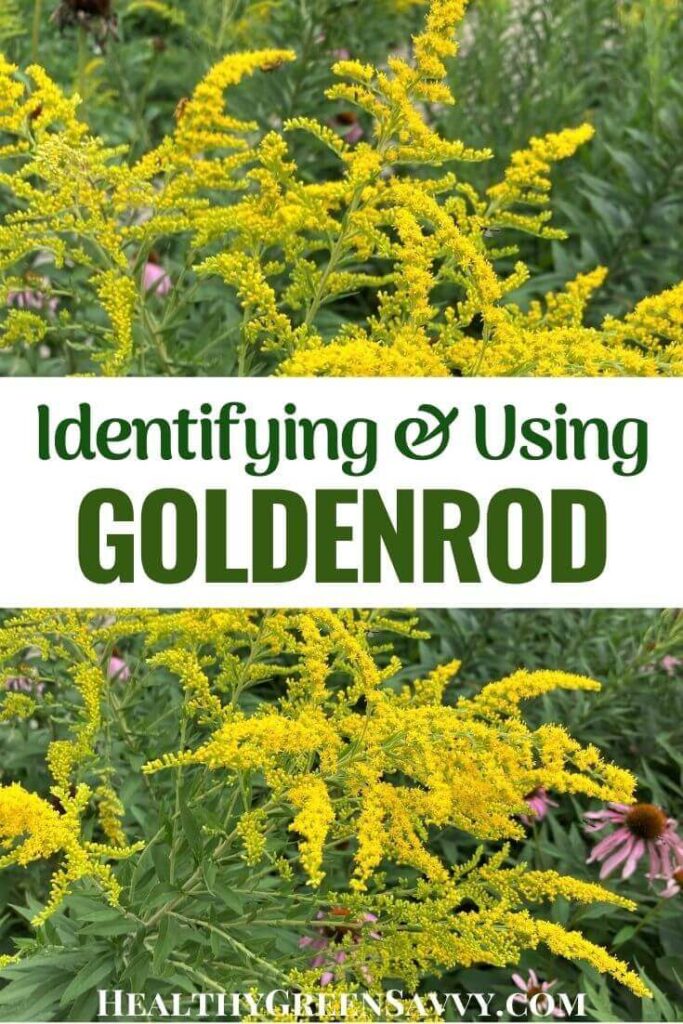
Pin to save this info on goldenrod identification and uses for goldenrod plant for later!

Disclaimer: I’m a health & foraging enthusiast, not a medical professional. Content on this website is intended for informational purposes only and is not meant to provide personalized medical advice. I draw on numerous health sources, some of which are linked above. Please consult them for more information and a licensed professional for personalized recommendations.
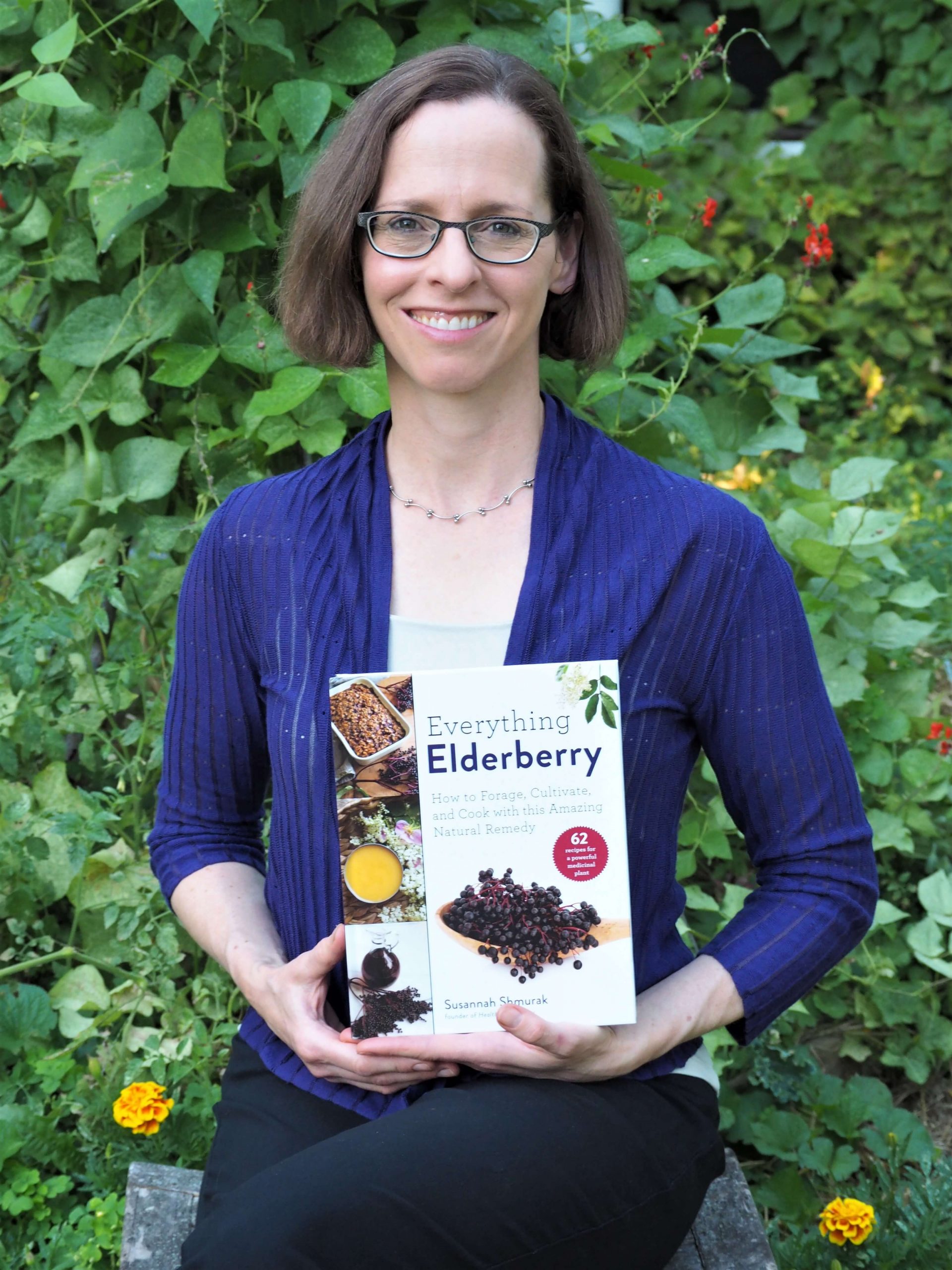
Susannah is a health and environmental writer focusing on gardening, foraging, medicinal plants, and sustainability. Her work has appeared in Mother Earth Living, Ensia, Northern Gardener, Sierra, and on numerous websites. Her first book, Everything Elderberry, released in September 2020 and was a #1 new release in holistic medicine, naturopathy, herb gardening, and other categories. Find out more and grab your copy here.

 Hi, I'm Susannah, a garden geek, energy nerd, and fan of healthy food and natural remedies. Need some simple, practical solutions for living healthier and greener? You've come to the right place! More about me and my green projects