Does your work require you to be on a computer much of the work day? If you’ve dealt with neck pain, shoulder pain, or back pain and wondered how you could avoid it but still do your job, these pain relief tools and tips might be just what you’re looking for.
As someone with hypermobility and a sedentary profession, I’ve spent decades working to find ways to combat the muscle tension and pain that can come from working long hours at a computer. Through research, testing, and consultations with an excellent physical therapist, I’ve found a lot of strategies and tools that help minimize the pain of a job requiring a lot of time on my laptop.
These are my top strategies and tools for preventing and addressing the back, shoulder, and neck pain that can happen when you sit too long at a desk or computer. I hope they provide you some pain relief as well!
PAIN RELIEF FOR BACK, NECK, AND SHOULDERS
If your job involves working at a computer much of the day like mine does, you’re probably no stranger to neck, shoulder, and back pain. Over the years I’ve learned that sitting for too long makes my neck, shoulders, and hips uncomfortably tight, and the best thing I can do for them is get up. Often. Or avoid sitting altogether.
One of the best ways I’ve found to relieve the muscle tension that can result from sitting all day in front of a computer is to avoid it altogether by NOT sitting all day at a computer.
Below are my favorite pain prevention tools, the ones that make it less likely you develop pain in the first place.
PREVENTING PAIN: STANDING OR WALKING DESK
While some sitting is inevitable, most people spend the vast majority of their day sitting, which turns out to be terrible not only for their necks and backs, but also for their overall health. Now called sitting disease by many experts, prolonged sitting has been linked to incresed risk of numerous diseases.
The way our bodies tend to behave when seated in chairs is what generally causes our backs and necks to ache. When you lean back in a chair or slouch over your laptop, you develop tightness in your muscles and strain your neck and spine.
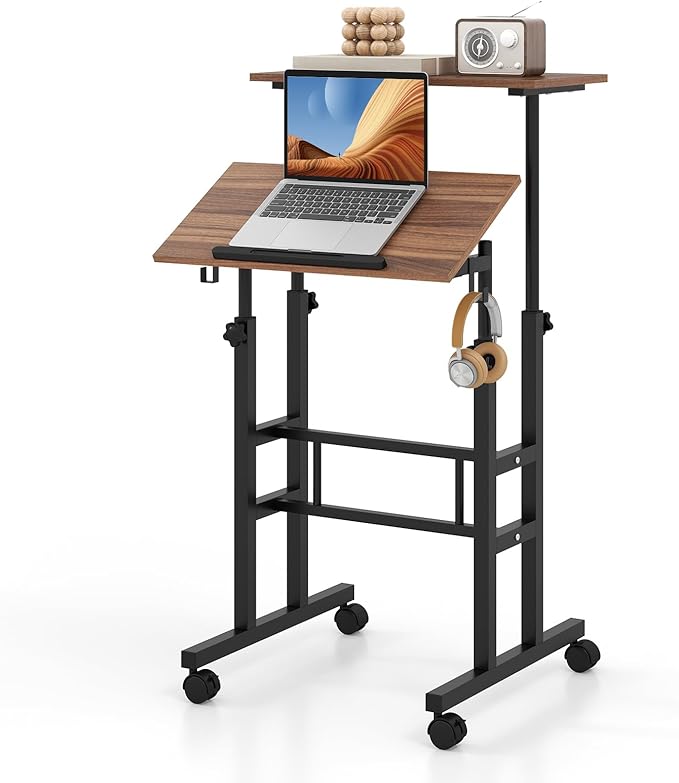
Many years ago, I set up a small standing work station to help alleviate the neck and shoulder pain I was experiencing while sitting and working on my laptop for many hours each day.
Standing instead of sitting helped my back, and having my keyboard at a much lower height than my screen let me keep my neck in a neutral position, so my upper body was much more relaxed and comfortable overall.
But after an hour or so of standing, my knees would start to get tight, and no amount of shifting from one leg to the other made that better.
If you’re comfortable standing for longer periods, the simplest standing desk set up with a keyboard near waist level and your screen at the same level as your eyes could be a game changer for you. “Tech neck” is a result of staring down at a screen too long, so if you can bring your screen up enough to let you look straight ahead, that may help quite a bit.
Note that experts recommend breaking up periods of standing and sitting, as being in either position too long may cause pain.
Better still: Add a walking pad or treadmill so you can walk some of the time you’re working.
Recently I finally figured out how to set up an ergonomic treadmill desk I’m happy with, so motion is a key tool I rely on to avoid getting neck and shoulder pain. Walking at a slow pace keeps me from holding any one position, so I don’t wind up with all the chronic tension stillness causes.
As an added bonus, I get so much more exercise every day than I used to.
–> Find out what you need to create an inexpensive treadmill desk like the one I’m using, including details on setting it up and using it while you work.
It’s pretty inexpensive and straightforward, using just a compact standing work station paired with a walking pad. There are plenty of additional options to consider and some workarounds you can use if you already have a treadmill you like.
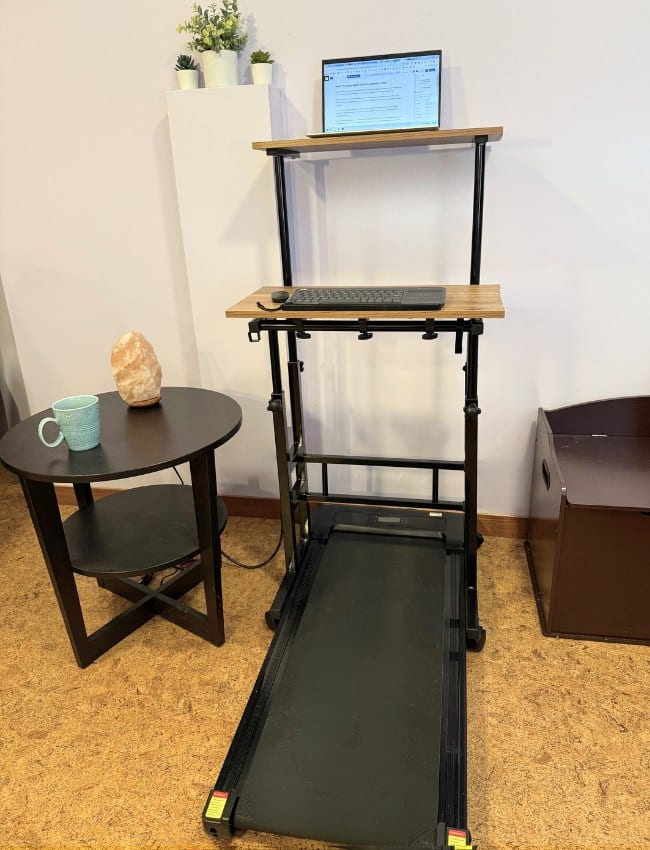
It takes a little getting used to, but you’ll be amazed how you can get work done while you walk mile after mile at low speeds.
PAIN PREVENTION: ZERO GRAVITY CHAIR
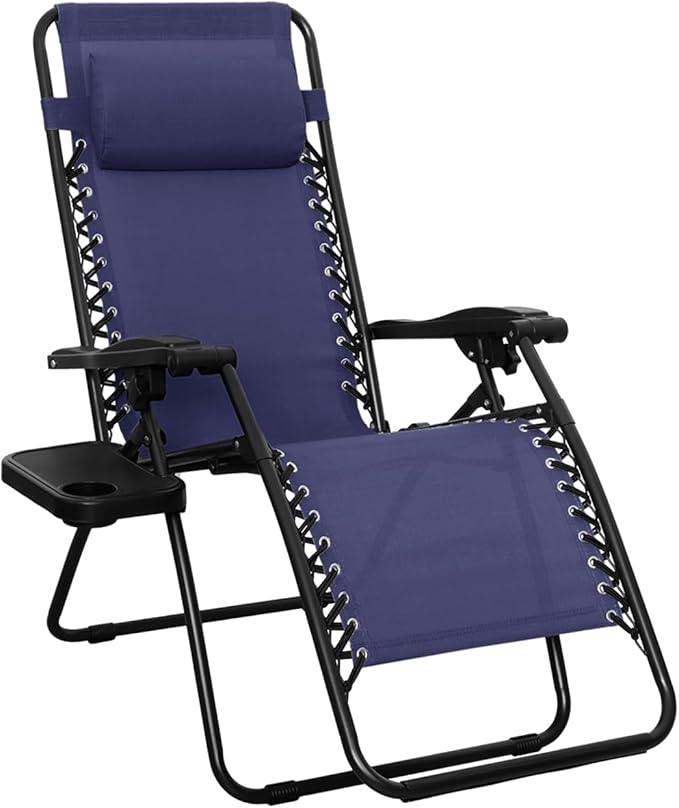
Prior to my walking desk, one of the most effective methods I’d found to keep neck and shoulder pain at the bay is working lying down so my head is supported rather than angled down looking at my laptop screen.
I have a zero gravity chair on our porch that I like to work in, especially in the summer when it means I can get outside and listen to birds and breezes surrounded by my beloved grapevines. In winter I have another zero gravity chair inside, or I can recline on the sofa (not quite as good, but still having my head supported helps a lot.)
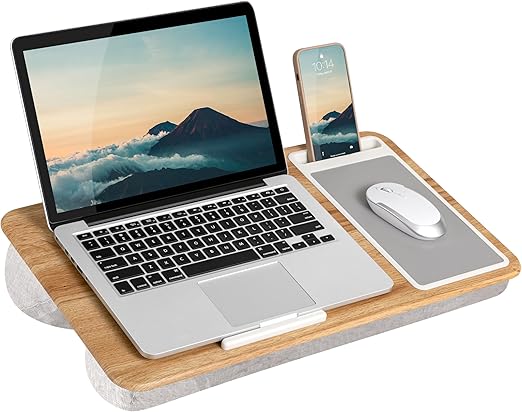
A zero gravity chair supports your head so your neck and shoulders don’t have to work so hard. Use a simple lap desk to bring your laptop up a bit and lessen neck strain even more.
My other go-to for computer-related pain: See a physical therapist. They can help release tension, mobilize stuck joints, and give you exercises that can help strengthen weak areas so you’re better able to do your work without pain.
Over the years I’ve learned that insufficient power in my upper back was causing tension in the front, so I’m diligent about doing the exercises my fabulous PT gave me for my triceps and shoulders.
PAIN RELIEF: TOOLS I LOVE
Reclining and walking while I work help quite a bit, but that doesn’t mean at the end of the day some of my muscles couldn’t use a little extra TLC. My favorite tools for addressing tight muscles are a hard foam roller, some cork balls, and a little tool called The Stick that my physical therapist recommended to me.
FOAM ROLLER
You may have come across one of these foam rollers at your gym. If your muscles and fascia are very tight, you may prefer one of the softer rollers. I like the hardest ones available, which I find more effectively work tight spots, especially like the hard-to-get IT bands. I’ve had this one for over a decade and use it regularly.
I find this type of roller too soft, but lots of people swear by it. I’ve used this one at the gym and it has thousands of positive reviews. Here are tons more options to choose from.
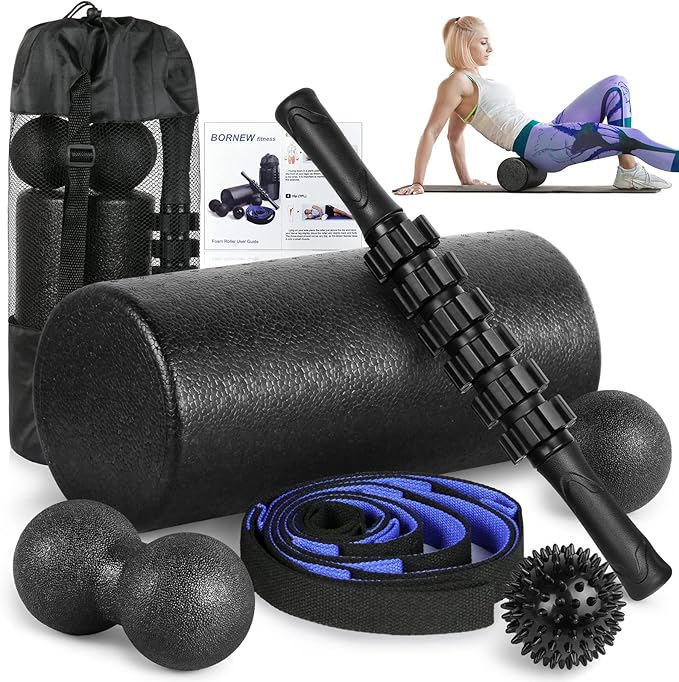
This set includes a hard roller like mine along with and massage balls, a stick roller, and a stretching strap.
MASSAGE BALLS
I’m a huge fan of cork massage balls. You can use them individually or put them together in a sock, which you can then put on either side of your spine to roll the tight muscles down your back. If cork is too hard for you, racquetballs are another choice. The roller sets above and below contain something that works similarly, with two spheres you can roll down either side of your spine.
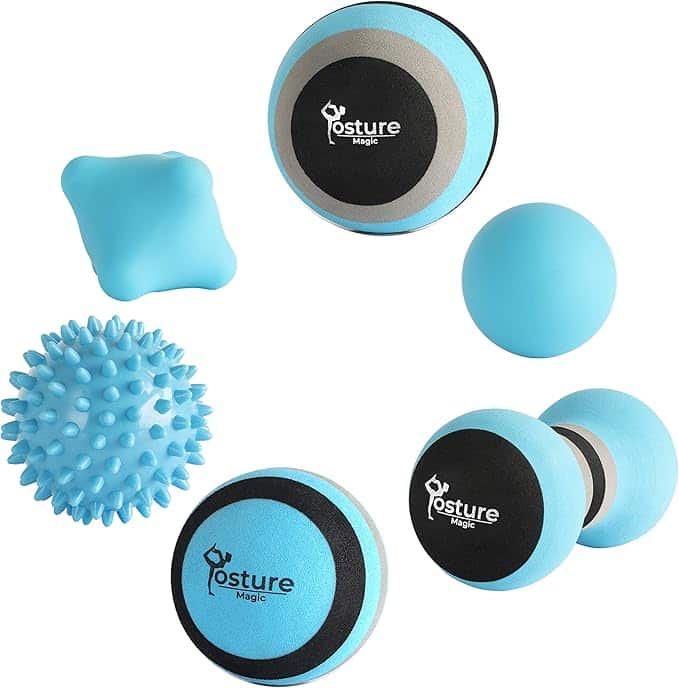
I also like these spiky massage balls, which are softer than cork. Rubber balls are another option.
You can get a bunch of different massage ball options in this set, which contains 6 different types so you can find out which work best for you.
MASSAGE ROLLER STICK
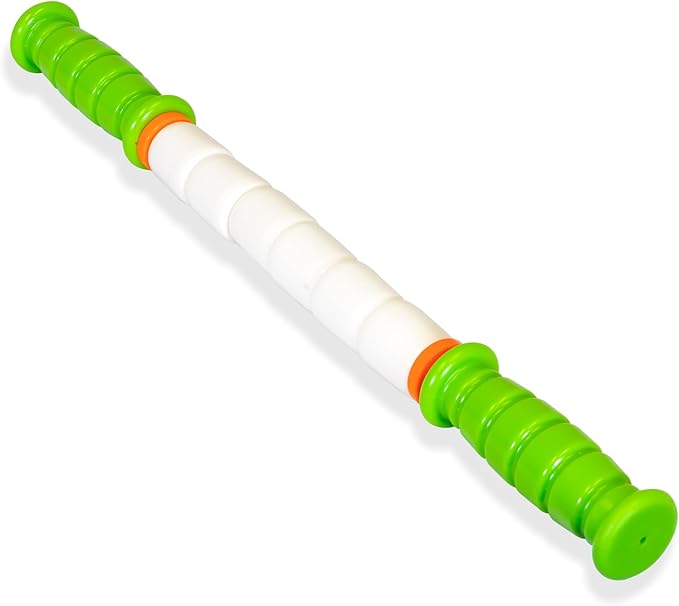
The other pain relief tool I use regularly for addressing tight spots is called The Stick. It’s a made from a series of plastic beads that you can roll along tight muscles. It targets muscles slightly differently than a foam roller and allows you to exert pressure as needed in smaller areas.
ACUPRESSURE MAT
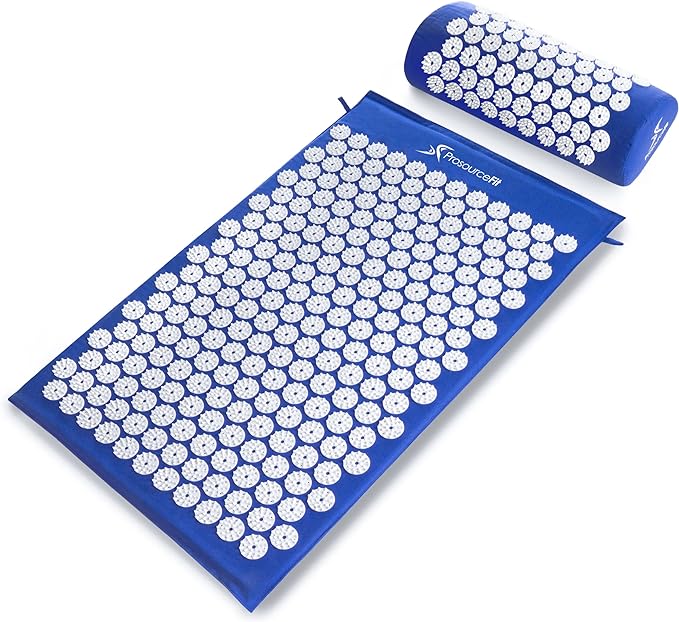
Acupressure mats are a great tool for settling everything down at the end of the day. They have thousands of tiny plastic nubs that put pressure on fascia and muscles and help release tension. They’re meant to stimulate acupressure points.
While there’s not a lot in the way of research to support their effectiveness, many people find them helpful for releasing tension. I have one like this and find lying on it helpful. I especially like it for my feet, which can be hard to address with other strategies.
They take some getting used to, especially for more sensitive people. If you lie on one with a towel or even a shirt between you and the nubs, you may not feel much. But putting your skin directly on them — especially if with something like a foot bearing all your weight — can be too much for some people, especially at first. Start slow, put some cloth between your skin and the mat, and be cautious about placing all your weight on it.
You may feel a tingling sensation as points are stimulated. When you’re done, the area should feel less tense and more free.
TOPICAL PAIN RELIEF
If you don’t have time to use a roller or acupressure mat, or your neck is acting up in the car, topical relief is great to have at the ready. I have two handy roll-ons I turn to for instant pain relief.
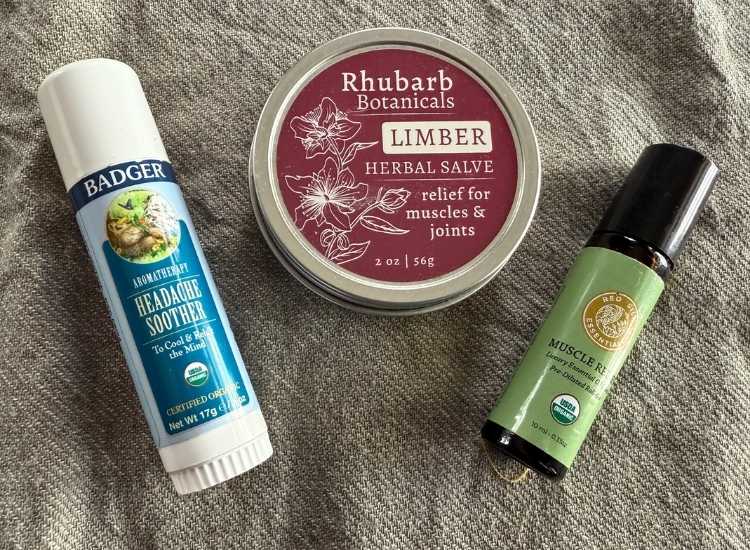
This essential oil roll on from Silk Road Organic and Badger’s solid Headache Soother stick always makes my neck feel better. I’ve tried a bunch of different roll-ons for pain, and these are the two I’ve found most useful for quieting neck tension. I take them with me when I travel, and it’s great to have something to turn to when you’re stuck in a car for hours.
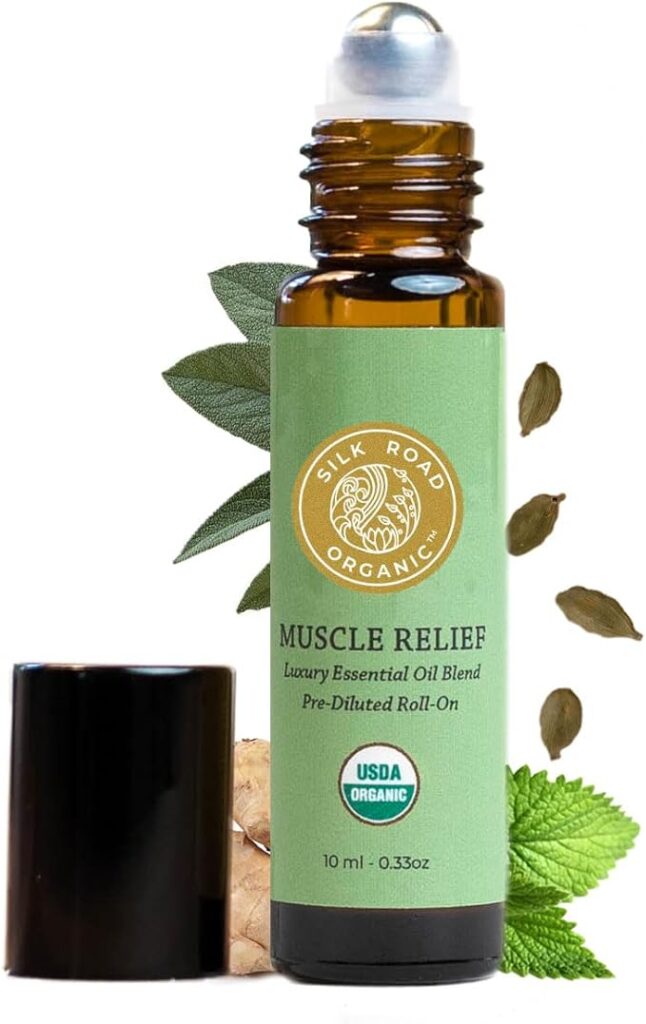
The lavender scent of the headache stick is more relaxing and the peppermint more energizing, so I keep the peppermint roll-on in my purse to use when I have to drive longer distances. The solid stick would also be prone to melt in warmer temperatures, making it not always the best choice for a purse.
I also can’t say enough good things about Rhubarb Botanical’s Limber Salve. It contains St. John’s wort, cotton bud, and goldenrod. It’s fantastic for soothing sore muscles and joints.
You can use any of these together with some gua sha tools to help with tension relief.
One other tool I’ve turned to from time to time is a microwaveable heat wrap, which has helped when I’ve had neck or shoulder tightness to soothe. In general I find as long as I’m using my zero gravity chair or walking desk, I rarely need it anymore. But if you’d like one, there are lots of options in different sizes to choose from here.
I’m always trying new things to help prevent and address pain, and there are plenty I haven’t gotten around to yet. Do you have top pain relief tools to recommend? Please leave a comment if so!
Love health hacks and tips? Check out these posts:
- How to Eat For Better Sleep
- Why You Need a Water Filter
- Immune Boosting Foods
- Easy Ways to Reduce Cortisol
- Get Outside! (Easiest Health Hack Ever)
Save these pain relief tools for later!
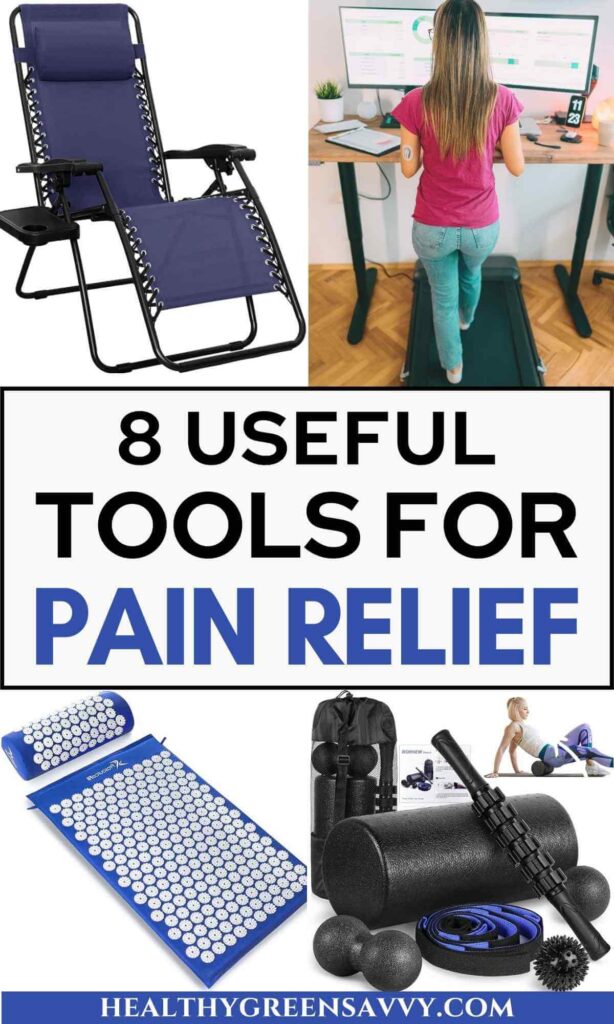
Photo credits in cover and pin: Walking desk photos — martin-dm ; woman on acupressure mat — Kaspars Grinvalds
Disclaimer: I’m a health enthusiast, not a medical professional. Content on this website is intended for informational purposes only and is not meant to provide personalized medical advice. I draw on numerous health sources, some of which are linked above. Please consult them for more information and a licensed professional for personalized recommendations.
Susannah is a health and environmental writer focusing on gardening, foraging, medicinal plants, and sustainability. Her work has appeared in Mother Earth Living, Ensia, Northern Gardener, Sierra, and on numerous websites. Her first book, Everything Elderberry, released in September 2020 and was a #1 new release in holistic medicine, naturopathy, herb gardening, and other categories. Find out more and grab your copy here.
 Hi, I'm Susannah, a garden geek, energy nerd, and fan of healthy food and natural remedies. Need some simple, practical solutions for living healthier and greener? You've come to the right place! More about me and my green projects
Leave a Reply