
I may receive commissions from purchases made through links in this article at no additional cost to you. Read full disclosure.
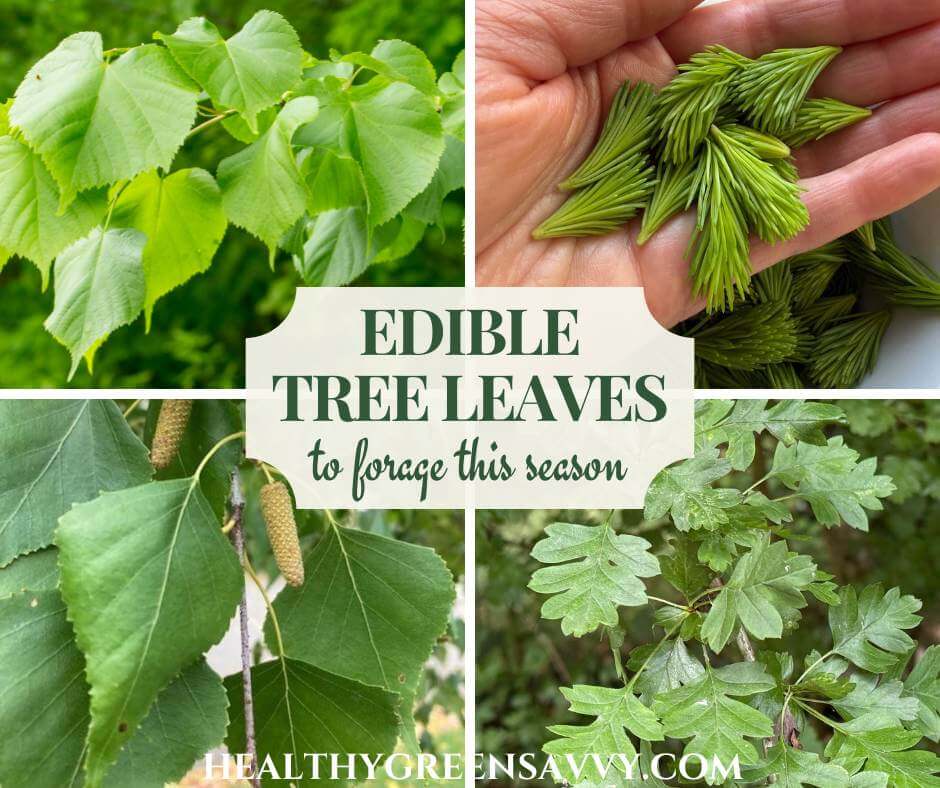
Did you know there are many tree leaves you can eat? Next time you’re out foraging, knowing about edible tree leaves will greatly expand what you can harvest. Find out about common trees with edible leaves to add to your foraging repertoire.
You Can Eat Tree Leaves?
Foragers spend a lot of time looking down, whether it’s in search of tender purslane or tasty wood sorrel. But a lot of great foraged food can be found growing above our heads.
When most people think of edible trees, they imagine apples, oranges, or nuts, but many trees offer far more than fruit. Even many more experienced foragers might not realize the abundance of edible tree leaves, which can be used for salads, soups, or tasty and medicinal teas and syrups.
In many cases, tree leaves were sought-after seasonal foods, especially in early spring, when fresh greens were scarce and wild foods provided badly-needed nutrients. Traditional herbal medicine also makes use of tree leaves for natural remedies for common ailments like colds or digestive issues.
Modern science has begun to validate what traditional cultures have long understood: Many tree leaves contain vitamins, minerals, and numerous beneficial plant compounds. They’re also fun to forage!
Of course, not every tree leaf belongs on your plate or in your teacup. Some are bitter, and others can be dangerous. But with a little knowledge and careful identification, edible tree leaves can expand your foraging options significantly.
Below are some of the best edible tree leaves to know and how to use them safely.
Important Safety Notes Before Eating Tree Leaves
It’s vital to remember that not all wild plants are edible and positive identification is a must before consuming.
Before harvesting any wild plant:
Always:
- Positively identify the tree species
- Harvest from unsprayed, clean areas
- Avoid polluted roadsides
- Try small amounts first
Never:
- Eat unidentified leaves
- Assume edible fruit means edible foliage
- Consume tree leaves you haven’t positively identified
The descriptions below focus on how to use these edible tree leaves. To correctly identify them, you need to look plants up using a trustworthy foraging guide and positively identify it using all its features, bark, leaves, flowers, fruit, growth habit, and habitat.
–> The best guide I’ve ever found is Sam Thayer’s Field Guide to Edible Wild Plants.

Also note that many plants used medicinally may have contraindications with certain medications and conditions. Always consult with your physician before consuming leaves from medicinal trees.
If you’d like to gain more confidence in your foraging skills, consider taking a class with a local guide or explore the Herbal Academy‘s online foraging course.

Edible Tree Leaves
Linden (Tilia spp.)
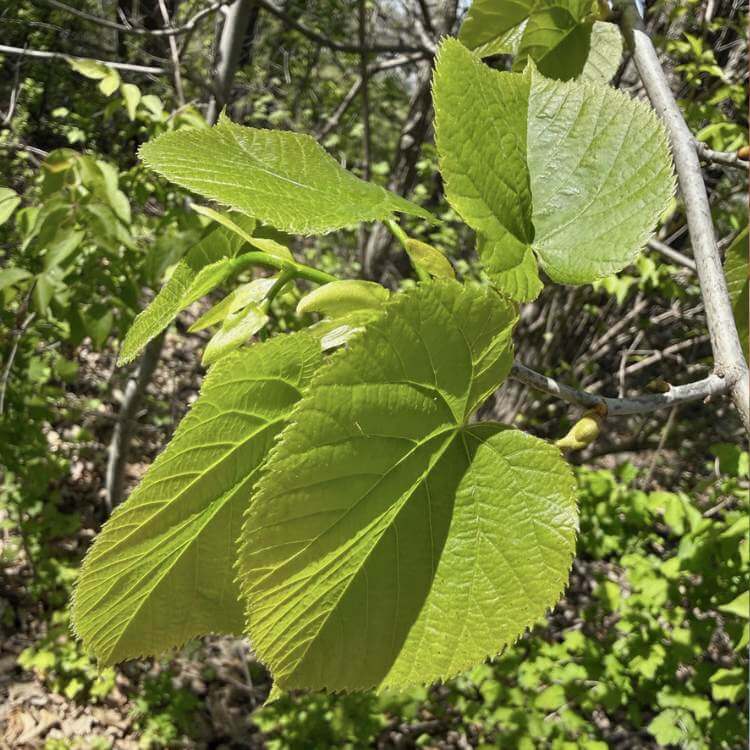
Also known as basswood, linden leaves are an excellent place to start with edible tree leaves. Note that in the UK linden is often referred to as lime, causing some confusion with the leaves of the citrus fruit tree.
Food Uses: Linden leaves emerge in spring as tender, rolled green buds that you can enjoy as a spring vegetable, though you shouldn’t harvest too many, as the tree needs those to make new leaves.
Once they emerge, the young leaves can be used as a raw green. Foraging expert Samuel Thayer lists linden leaves among the “best raw salad greens.” Larger leaves can be added to smoothies and used as wraps. Some adventurous foragers have made a dish akin to stuffed grape leaves using linden leaves.
Medicinal Uses: Linden’s flowers and leaves have traditionally been used to promote relaxation and address colds. Linden’s demulcent properties make it helpful for soothing digestive issues.
Mulberry Leaves (Morus spp.)
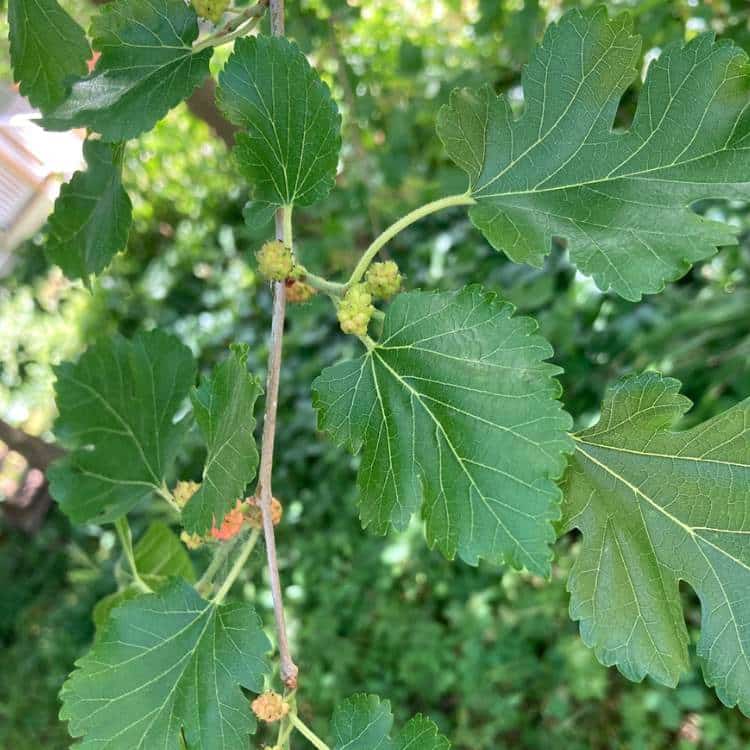
In spring, the youngest mulberry leaves may be tender enough to enjoy as raw greens, while larger leaves can be cooked, stuffed, or preserved much like grape leaves.
I think mulberry leaf tea’s smooth taste is really wonderful, and its antioxidant profile makes it even more appealing.
Food Uses: Very young leaves can be eaten raw. If your leaves aren’t tasty when you try them raw, try them steamed or sautéed, or as wraps. See this Stuffed Mulberry Leaves Recipe from Edible Wild Food.
You can also use them fresh or dry to make a smooth, refreshing tea.
Medicinal Uses: Mulberry leaf has a history of use for blood sugar and metabolic support. It’s also a rich source of antioxidants and is considered anti-inflammatory.
Mulberry leaf is one of many ingredients you can use in foraged wild tea.
Hawthorn Leaves (Crataegus spp.)
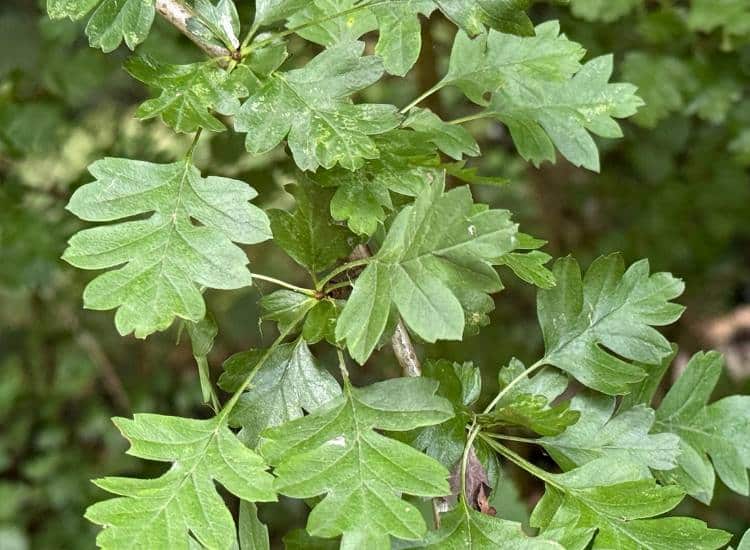
Hawthorn’s berries often get the attention, but the young leaves are edible and medicinal as well. Historically known as“bread and cheese” in parts of Europe, young hawthorn leaves were enjoyed as a ready snack right off the tree.
Food Uses: Raw in salads, or in tea.
Medicinal Uses: Hawthorn leaf is often combined with flowers as a medicinal tea thought to support cardiovascular health. It’s one of several wild herbs you can likely find growing near you.
Pine Needles (Pinus spp.)
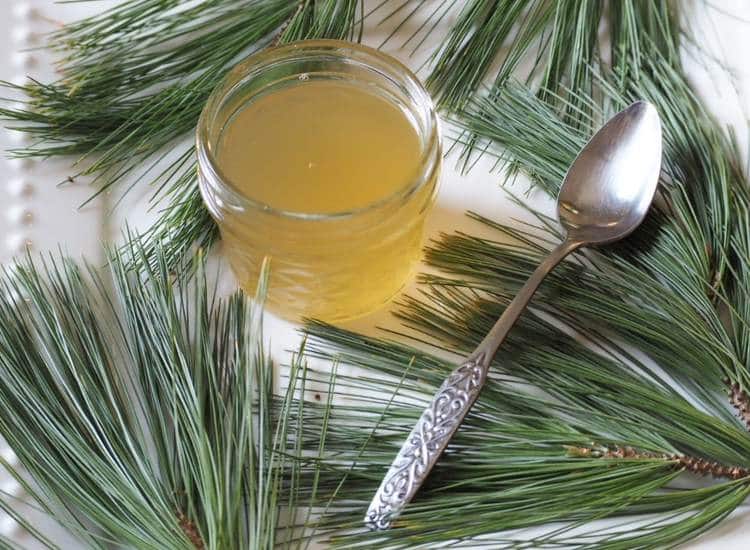
Pine trees’ leaves are its needles, which are a gift to the forager looking to enjoy wild foods in winter. Pine needles make delicious teas and syrups that can be enjoyed for their flavor or used medicinally.
Food Uses: You can eat finely-chopped or ground pine needles as a spice, though pine needles are more often infused in liquid to give it flavor rather than consumed directly. Pine needle tea or pine syrup can be enjoyed for their lovely flavor any time or taken to help with cold symptoms.
Here are additional uses for pine needles to explore.
Medicinal Uses: Traditionally used for colds, pine needles contain vitamin C as well as other anti-inflammatory compounds. In addition to tea and syrup, pine tincture is a helpful way to keep this valuable medicinal on hand.
Cautions
Extra reminder to be careful in identifying wild plants: Not all evergreens are pines, and some are highly poisonous. Please reference this guide to common conifers and learn how to differentiate between safe and unsafe evergreens.
Spruce Needles (Picea spp.)
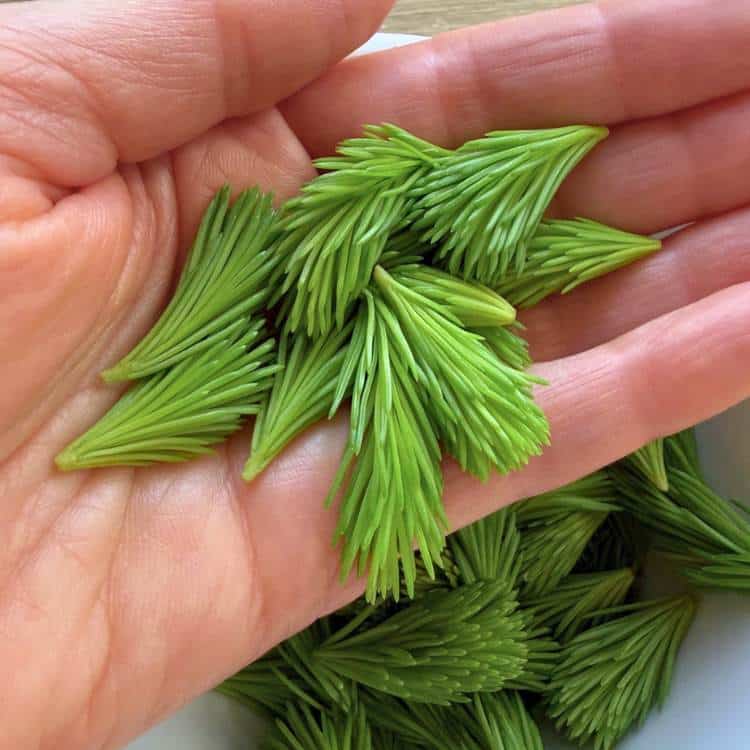
Like pine, spruce needles can be brewed into tea all year round. Spruce trees also produce tasty young tips you can harvest in mid spring.
Food uses: Spruce tips are a highlight of spring foraging. Tender new growths appear at the ends of spruce tree branches for a few weeks in mid spring. The citrusy young tips are delicious in salads and other savory dishes as well as in a variety of sweet treats. This collection of spruce tip recipes should give you plenty of inspiration. Find out more about foraging spruce tips.
Harvest spruce tips sparingly only from mature trees so you don’t interfere with the tree’s new growth. I try to pick side shoots where a new branch will cross another or those hanging so low that someone trimming to clear the way for pedestrians would be taking off the branch soon anyway.
Spruce needles make a pleasant-tasting tea that you can enjoy for its taste or use medicinally, like pine needle tea. Here’s how to make spruce tea.
Medicinal uses: A source of vitamin C when nothing else is growing in winter, spruce tea is a traditional remedy for colds and respiratory illness.
Birch (Betula spp.)
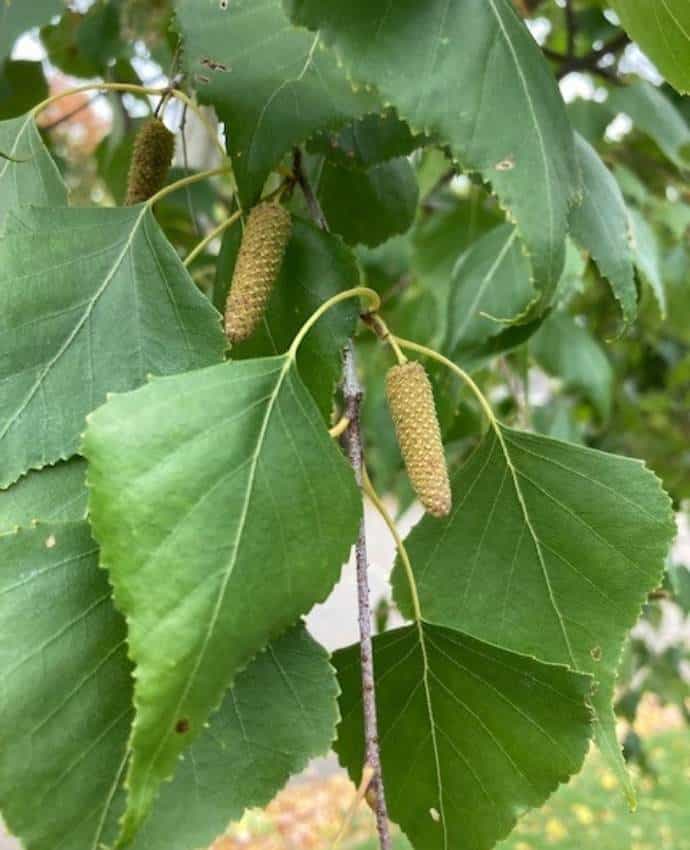
Birch leaves can be used to make a pleasant birch tea throughout the growing season, and very young leaves can be used as a salad green.
Food uses: Youngest leaves as a tender green to add to salads or sandwiches. Leaves anytime during the growing season to make a mild, slightly fruity tea. Young leaves harvested in spring make tea with a brighter flavor than tea made from older leaves.
Medicinal uses: Birch contains compounds that make it a traditional remedy for urinary issues and pain. Learn more about birch’s medicinal uses in this post about birch tea.
Birch and aspen are often confused. Find out how to identify birch vs aspen.
Caution:
Anyone allergic to birch pollen should not consume birch. In The Green Pharmacy, James Duke suggests that those allergic to aspirin also avoid birch.
Beech Leaves (Fagus spp.)
For a short time each year, you can harvest the newly-emerged growth of beech leaves. While very young and tender they can be enjoyed raw as a salad green or used to add a citrusy tang to sandwiches.
Eatweeds recommends dried beech leaves gathered in winter for tea.
Sassafras Leaves (Sassafras albidum)
Sassafras leaves have a root beer scent and can be used to make tea. The leaves are prized in Creole cooking, where dried sassafras leaf is made into an ingredient for gumbo called filé, which is used to thicken and flavor the signature Creole dish.
Maple Leaves (Acer spp.)
Some maple species have edible leaves when they’re very young. In spring, newly unfurled maple leaves can be tender enough for occasional use as a seasonal green, particularly when still soft and translucent. They become tough pretty quickly, though, so get them as early as you can. *check Thayer
The ones I’ve tried didn’t have an especially appealing flavor, but they likely vary by species, region, and weather. Based on my own experience and what I’ve read, I wouldn’t put maple at the top of your list of edible tree leaves to enjoy on their own in spring. I’m putting it at the bottom of mine and including it mainly because maples are so easy to find.
However, if you’re up for a bit more effort and enjoy fried food, apparently deep-fried maple leaves are a delicacy in Japan. Karen at Edible Wild Food has an interesting write-up about her experience replicating them in southern Ontario.
Ginkgo
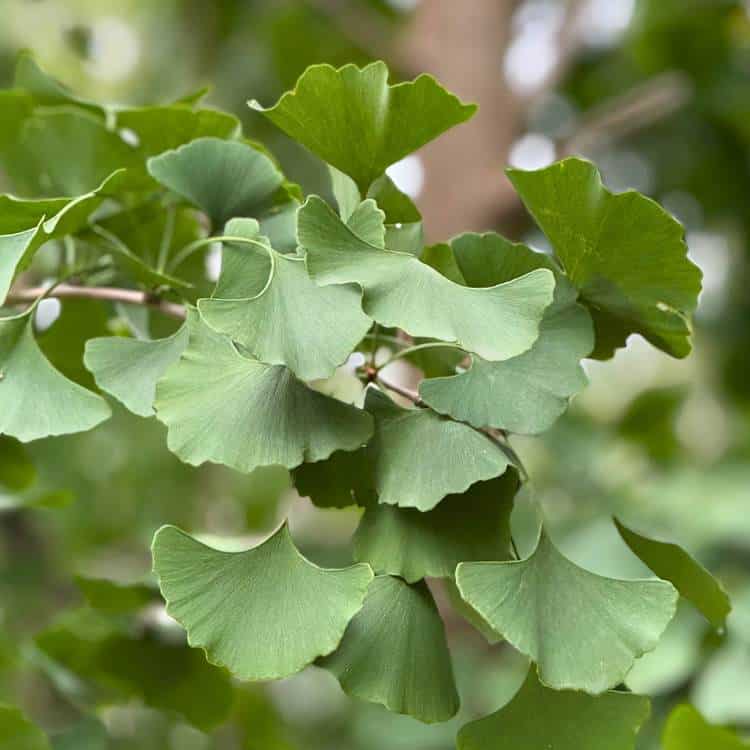
This beautiful tree is a common choice in residential landscapes and an extract made from its leaves has received a good deal of attention for its effect on cognition.
Not many people consume the leaves, though I did find one intriguing recipe for a ginkgo pesto. More common is tea made from the leaves. You can find more about identifying and using ginkgo leaves in my post about making ginkgo biloba tea.
Additional Tree Leaves You Can Eat
I’ve focused on some of the most palatable and common trees with edible leaves you’re likely to find in North America and parts of Europe. There are many others growing in these places as well as other parts of the world. If you want to explore further you could look into these trees:
- Moringa
- Baobab
- Arborvitae/Eastern White Cedar
- Western Red Cedar
- Balsam Fir
- Fig
- Hazel
- Spicebush
- Walnut
- Willow
- Curry Tree
Eric Tonsmeier (permaculture expert and author of Perennial Vegetables) put together a guide to growing trees with edible leaves as crops. He includes more than 100 trees if you need more to choose from.
Save this info on edible tree leaves for later!
Disclaimers: Though HealthyGreenSavvy and EcoSavvy Writing LLC always aim to provide thorough and accurate information, we assume no liability or responsibility for any consequences, health issues, or symptoms that arise from ingesting or touching any plant described on this website. It is always the reader’s responsibility to ensure accurate plant identification and use multiple reputable sources to confirm. If you have any doubts about the identification of any plant, do not eat it.
Additional photo credits: Photo of linden leaves in cover and pin by Alla Vanahs (all other photos by Susannah Shmurak)

Susannah is a health and environmental writer focusing on gardening, foraging, medicinal plants, and sustainability. Her work has appeared in Mother Earth Living, Ensia, Northern Gardener, Sierra, and on numerous websites. Her first book, Everything Elderberry, released in September 2020 and was a #1 new release in holistic medicine, naturopathy, herb gardening, and other categories. Find out more and grab your copy here.

 Hi, I'm Susannah, a garden geek, energy nerd, and fan of healthy food and natural remedies. Need some simple, practical solutions for living healthier and greener? You've come to the right place! More about me and my green projects
Leave a Reply