I may receive commissions from purchases made through links in this article at no additional cost to you. Read full disclosure.
Have you heard that you’re supposed to eat 30 plants a week? If this number sounds daunting to you, don’t worry – it’s a lot easier than you think!
What’s the Deal with 30 Plants a Week?
You’ve no doubt heard that variety is the spice of life. It turns out that variety is also critical to your gut health.
The focus on 30 plants per week here comes from The American Gut Project, which gathered samples from more than 15,000 participants together with information about their lifestyle, diet, and health. It ran for seven years, wrapping up in 2019. It has since transformed into the Microsetta Initiative.
Using samples from participants from around the world, The American Gut Project found that people who ate at least 30 different kinds of plants each week had more diverse species of bacteria residing in their guts. Since gut diversity has been linked to better health, one of the takeaways of the study was the benefit of 30 eating different plants a week.
You can find a good overview of The American Gut Project here.
You may have heard that the trillions of microbes that live in our guts really like fiber, which is one of the reasons we’re encouraged to eat more plants. But fiber is only one piece of the story. The balance of microbes in our guts really depends on having a wide variety of foods available to feed different microbes, since they don’t all use the same nutrients.
If you’re eating the same foods every day, you’re likely depriving some of your microbes of things they need to thrive, and that can throw off the delicate balance of bacteria that helps regulate our immune systems and keep us healthy.
Why all the fuss about gut health? Because what goes on in your gut doesn’t stay in your gut.
In addition to controlling how we convert food into energy and the compounds our bodies use to repair themselves, our gut microbes may also affect our mood, how our immune systems function, and which diseases we get.
One of the very first articles I published on this site more than ten years ago included an interview with Robynne Chutkan, MD, author of The Microbiome Solution and now host of a great podcast about gut health. Back in 2015, research on the microbiome was relatively new. Now it’s pretty widely accepted that, as she told me then, “There is a direct connection between species diversity in the gut and inflammation, allergy, obesity, autoimmune diseases and likely several other conditions.”
Taking the health of your gut microbiome seriously and trying to nourish it is a smart move if you care about feeling well and supporting your long-term health.
What Does Eating 30 Plants a Week Look Like?
While 30 plants may sound like a lot at first, it’s surprisingly easy to hit this target.
If that number sounds daunting, I promise it’s not actually difficult. Unless you’re eating fast food all the time (you’re not, right?) or are *super* picky, you really shouldn’t have any trouble at all.
When we’re counting up 30 plants per week, we’re not just talking about fruits and vegetables. All the spices, nuts, seeds and grains you eat count toward this total as well.
So yes, lots of colorful salads are terrific, but they’re far from the only way to reach your 30 plant goal.
Let’s walk through the meals you might eat each day to get a sense of how this works.
Breakfast

If you really like cereal with milk for breakfast, choosing one made with a variety of whole food ingredients is a first step to increasing diversity.
While a box of corn flakes (or worse, processed cereal made with lots of sugar and chemical colors and flavors), may contain just one type of plant (in this case, corn), a box of mixed-grain flakes can include a lot more. Consider upgrading to something like Heritage Flakes, which contain not only wheat, but also oats, spelt, barley, millet, and quinoa. That’s 5 more plants in one bowl and requires only switching to a new kind of cereal. Top with some raisins and slivered almonds if you like. Or mix it up even further with black currants, which have some additional health benefits.
Or if your go-to breakfast is eggs and toast, a whole grain bread made with a variety of grains and seeds can push the number of plants in your breakfast far higher.
Or try an overnight oats recipe made with fiber-rich oat, flax, hemp, chia seeds, and sunflower seeds. Top it with cinnamon, walnuts, and raisins, and you’ve just gotten 7 different plants in one bowl.
If you’re a smoothie fan, change up your ingredients. Do mixed berries, broccoli, and spinach one day, and peaches, kale, and banana the next. Toss in different seeds and nut butters as well. Consider foraging some wild greens from your yard. I’m a fan of purslane, violets, and lambsquarters. This anti-inflammatory smoothie recipe with purslane and pineapple is delicious!
Add some fruit, maybe an orange one day, and an apple the next. Or make it a bowl of mixed berries and you’ve had 3 or 4 more plants before your day’s even started. You’re already a third of the way to 30 plants a week in your very first meal.
Lunch
(Photo credit: TrueCreatives)
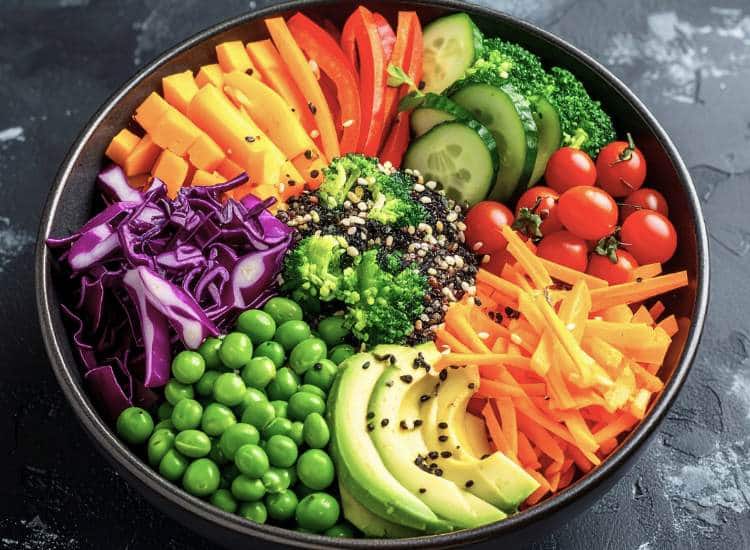
At lunch enjoy multiple toppings on salad, whether that’s sliced tomato, pepper, chickpeas, or pumpkin seeds, and try a salad dressing made with multiple herbs. Use a base of mixed greens for even more variety.
If you like sandwiches, go heavy on the veggies, and change them up as often as you can. One day use lettuce, tomatoes, and cucumbers, and the next swap in some peppers or sprouts.
Different soups filled with vegetables and legumes are another way to work plenty of different plants into your lunch.
Dinner

(Photo credit: Tatiana Volgutova)
At dinnertime lean on things like stir fries, curries, and soups, each of which might contain eight or more plants. You see how these numbers will add up quickly, and you’ll likely eat considerably more than 30 plants in just a couple of days.
Try this satisfying vegan white bean soup for 4-5 plants, and add a side salad or a slice of whole grain bread. Homemade split pea soup is another filling and tasty option.
Pile any veggies you have on hand onto this flexible and delicious wild rice bowl.
Some of these high protein vegan dinner recipes contain more than 10 different types of plants!
Don’t forget your drinks! Herbal teas are a great way to work in a lot more plant polyphenols, especially if you make herbal tea blends or drink lots of different types of tea throughout the day.
Once you’ve hit your 30 plants goal, challenge yourself to get that number to 50. If each meal includes 7 or more types of plants and you don’t eat the same thing every day, you’ll probably blast through that goal without difficulty.
More ideas to help you add variety and get to 30 plants a week:
- Roast mixed vegetables as a side dish to enjoy with whatever main you’re having
- Make grain bowls and top with 6 of your favorite veggies and some tofu
- Have a bean burrito or fresh taco with a big helping of pico de gallo and cilantro
- Change up the veggies you add to your omelet
- Look for 7-grain breads made with whole grains and seeds. I’ve seen some with 21 grains!
- Mix up the ingredients you add to your favorite healthy smoothie recipes
I always recommend buying organic whenever you can. No one likes to eat poison. That includes your gut microbes
30 Plant Checklist
Grab a notebook and jot down everything you’re eating today. Here are the broad categories you’re tracking while you’re trying to evaluate how diverse your diet is:
- Vegetables (fresh, frozen, cooked)
- Fruit (fresh, frozen, dried)
- Legumes (e.g., lentils, peas, beans, peanuts)
- Nuts and seeds (e.g., sunflower, pumpkin, hemp, chia)
- Whole grains and pseudo grains (e.g., wheat, barley, buckwheat, quinoa, wild rice)
- Herbs & spices (use a heavy hand if you’re counting seasonings toward your totals)
If you’re having a bowl of soup or a stir fry, list the different plants in the ingredients rather than simply writing ‘stir fry.’
The act of writing everything down can help you become more intentional about choosing varied foods. If you notice you’re having the same meals day after day, you can take steps to mix things up more, even if you just swap your banana for an apple or one type of breakfast cereal for another. Every little bit of variety helps!
Extra Credit
While adding lots of variety is an excellent way to promote healthy gut diversity, experts also remind us that avoiding things that tend to impair gut health is also critical. So in addition to piling your plate high with colorful veggies and a variety of other plants, limit how much you eat of the following
- Highly processed foods with artificial flavors, colors, and preservatives
- Animal products
- Foods high in sugar (Find out more about how much sugar is OK according to recent research)
Missing Nutrient: Dirt!
If you really want to do your gut a favor, spend more time in the garden or anywhere you come in contact with the earth. Research suggests that our exposure to microbes in the soil have a positive impact on gut diversity and overall health.
Like a processed food diet, sterile indoor environments deprive the gut of the diversity it needs to thrive. So in addition to eating a wide range of foods, get outside to spend time in nature however you can. In addition to the benefits of contact with soil microbes, you’ll also get vital exposure to sunlight, which our cells need to function optimally.
Learn more about why dirt is good for you, the health benefits of nature, and how light exposure may affect your health.
How close do you get to 30 plants a week? What strategies have worked best for you? Please share in the comments!
Save this info on eating 30 plants a week for later!
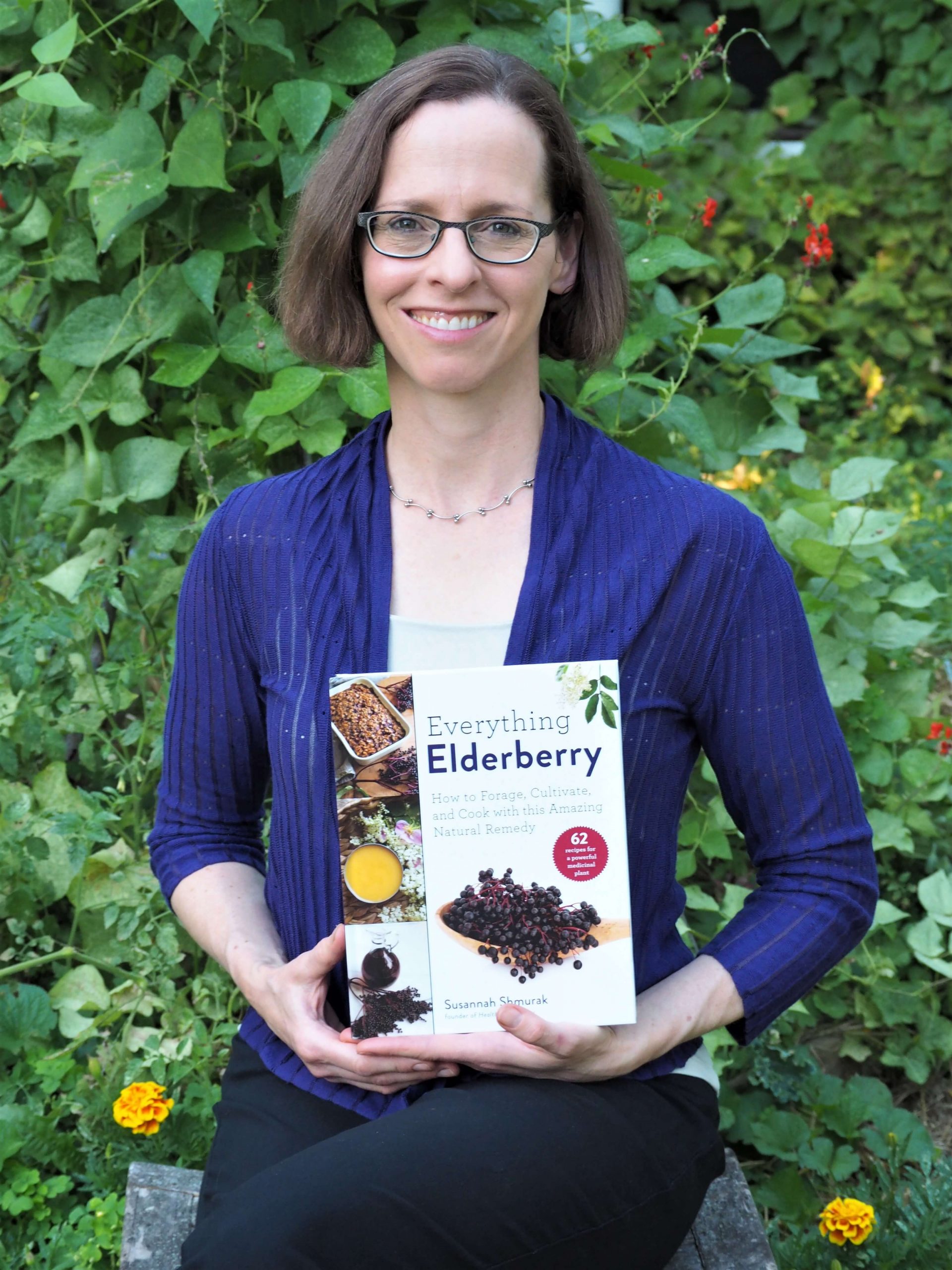
Susannah is a health and environmental writer focusing on gardening, foraging, medicinal plants, and sustainability. Her work has appeared in Mother Earth Living, Ensia, Northern Gardener, Sierra, and on numerous websites. Her first book, Everything Elderberry, released in September 2020 and was a #1 new release in holistic medicine, naturopathy, herb gardening, and other categories. Find out more and grab your copy here.

 Hi, I'm Susannah, a garden geek, energy nerd, and fan of healthy food and natural remedies. Need some simple, practical solutions for living healthier and greener? You've come to the right place! More about me and my green projects
Leave a Reply