I may receive commissions from purchases made through links in this article at no additional cost to you. Read full disclosure.
Want to grow tulsi to harvest for delicious, soothing teas? Tulsi basil or holy basil is an incredible herb for calming stress and is easy to grow in the garden or as a house plant. It’s absolutely delicious fresh or dried in tea. Find out why you want this herb in your life and how to grow tulsi in your garden or indoors.
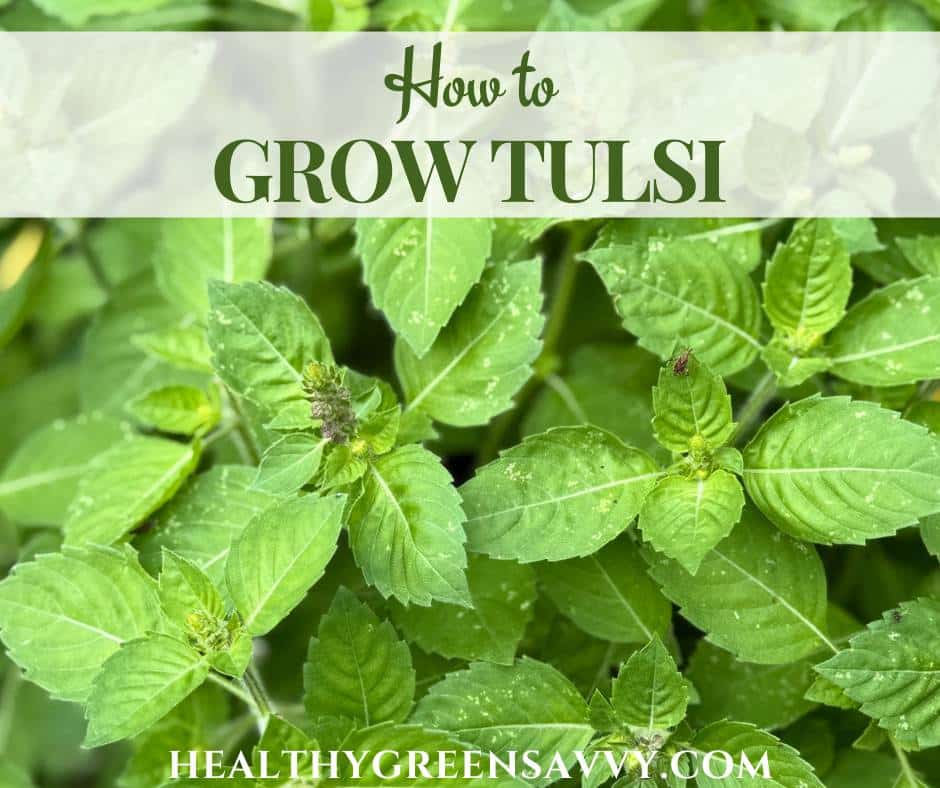
I wait eagerly each summer for my tulsi plants to size up so I can start harvesting their abundant, fragrant leaves and flowers. If you’ve only ever tried dried tulsi, as with so many herbs, you’ll find the fresh plant has a very different flavor profile.
While dried tulsi has an earthy, licorice-y taste, tea made from the fresh leaves is light and slightly floral.
What is Tulsi / Holy Basil?
Also known as holy basil (Ocimum tenuiflorum), tulsi has been cultivated for thousands of years throughout India and Southeast Asia. Considered the “Queen of Herbs” in Ayurvedic medicine, tulsi is considered an adaptogen, something that helps support the body’s resilience. A top calming herb for stress, holy basil is also used to encourage focus and promote sleep.
Here’s more about the benefits of tulsi.
While tulsi is often associated with tropical climates, those of us gardening in cooler climates can grow it as an annual herb and overwinter it indoors.
A prolific summer annual up here in the north, or a tender perennial if you live in zone 10 or warmer, this delightful tropical plant is one of my top picks for an herbal tea garden or home medicinal herb garden.
The plants attract bees and beneficial insects, thrive in summer heat, and produce abundant harvests of leaves for tea, tinctures, and culinary uses.
A member of the mint family (Lamiaceae) and a close relative of sweet basil (Ocimum basilicum), tulsi is used more often medicinally than in cooking. I find it has licorice notes, and none of the sharper pungency you’d expect from culinary basil.
Native to the India, tulsi has a long history of use in Ayurveda. The plant is typically grown for its aromatic leaves, which are commonly used fresh or dried in teas and herbal preparations.
Like sweet basil, it’s extremely sensitive to frost and needs to be harvested or brought indoors when temperatures fall below
Here’s everything you need to know about growing tulsi in your garden, as well as propagating, harvesting, and preserving it.

Why Grow Tulsi?
There are so many reasons to add tulsi to your garden!
Delicious Herbal Tea Ingredient
Fresh tulsi makes an absolutely delicious relaxing tea.
Fresh tulsi tea has a light floral flavor with just a hint of the licorice flavor that I find a bit too strong in dried tulsi. Some people quite like dried tulsi, but I use all I grow fresh because the flavor it so lovely. Tulsi tea made from either fresh or dried tulsi can be enjoyed either hot or cold.
If you grow enough extra, you can dry some to use when the growing season ends.
Attracts Pollinators
Tulsi flowers continuously through much of the growing season, and attracts bees, butterflies, and other beneficial insects.
It’s a great choice for a pollinator-friendly garden, along with other long-blooming medicinal and edible flowers like borage and calendula.
Pretty & Easy to Grow
Tulsi has attractive foliage and pretty flower spikes. You could plant it an ornamental bed as well as in a vegetable or herb garden.
Tulsi tolerates summer heat and continues producing leaves throughout the growing season. Once established, it doesn’t take much care beyond consistent water to do well.
How to Grow Tulsi Plants
Light Needs
Like other basils, tulsi does best in full sun but can handle shadier conditions. It’s one of many herbs for shade you can grow in less sunny locations.
It will produce best given at least six hours of direct sunlight daily. In very hot regions, tulsi plants may benefit from a bit of afternoon shade during periods of extreme heat.
Soil
Tulsi prefers fertile, well-drained soil with moderate organic matter.
Heavy clay soils can lead to poor growth and root problems, particularly during wet periods. If your soil drains poorly, amend it with compost before planting.
Consider using a container or plant tulsi in raised beds if you have heavy soil. I have raised beds 6 raised beds where I grow tulsi along with other herbs and veggies because my clay soil isn’t great for growing food.
Spacing
Tiny tulsi plants will grow into great big bushy ones, so leave 18 to 24 inches between plants to prevent crowding.
Temperature
Tulsi is a warm-weather herb that grows best in temperatures between 70°F and 90°F (21°C–32°C). Growth will slow significantly when temperatures drop below 60°F (15°C), and frost will kill tulsi plants.
In USDA Zones 10 and 11, tulsi may survive year-round as a short-lived perennial shrub. In most of North America, it is grown as an annual, though you can bring it indoors for the winter.
Water Needs
Tulsi plants want consistent moisture, but can suffer is you overwater them. I use an automated drip irrigation system to keep the soil moist but not overwet. Automating watering has been a game-changer for my garden, saving me loads of time hand watering and keeping my plants happier than I’ve ever seen them.
You can let the top inch of soil dry slightly between waterings. Established plants will tolerate brief dry periods, but consistent water will encourages more abundant growth.
How to Grow Tulsi from Seed
It’s not easy to find tulsi plants at nurseries, so starting tulsi from seed may be necessary. It’s quite simple and also the least expensive way to grow tulsi.
How to Plant Tulsi Seeds
Gardeners in colder climates should start seeds indoors about six to eight weeks before your last expected spring frost.
- Fill seed trays or small pots with a quality seed-starting mix.
- Sow seeds on the surface and lightly cover them with soil.
- Keep the growing medium consistently moist but not saturated.
- Maintain temperatures between 70°F and 80°F (21°C–27°C).
- Provide bright light after germination.
Seeds typically germinate in one to two weeks.
Once seedlings develop several sets of true leaves, they can be transplanted into larger containers or hardened off for outdoor planting.
Gardeners in warmer climates can direct sow tulsi after all danger of frost has passed and soil temperatures have warmed.
Direct Sowing Tulsi:
- Place seeds in prepared soil.
- Cover with a thin layer of compost or fine soil.
- Keep the area consistently moist until seedlings emerge.
Note that tulsi self-sows readily, so allowing some of your tulsi flowers to set seed will ensure you have new tulsi plants coming up when the soil warms next season.
Growing Tulsi from Cuttings
Tulsi also roots readily from stem cuttings.
To propagate:
- Cut a healthy stem 4–6 inches long.
- Remove the lower leaves.
- Place the stem in water or moist potting mix.
- Keep in bright, indirect light.
Roots develop within one to three weeks.
This method is particularly useful for bringing plants indoors before winter.
Planting Tulsi in the Garden
Wait until nighttime temperatures remain consistently above 50°F (10°C) before transplanting seedlings outdoors.
Space plants approximately 18 to 24 inches apart to encourage good air flow and healthy growth.
Water well and keep soil consistently moist throughout the growing season.
Caring for Tulsi Plants
Tulsi requires relatively little maintenance once established. Keep it well watered and use mulch to conserve moisture and suppress weeds.
Pinch for Bushier Growth
One of the best ways to improve yields is regular pinching.
When plants reach 8–10 inches tall, pinch out the growing tips. This encourages branching and results in fuller, bushier plants.
Harvesting the tips for tea will naturally accomplish this.
Harvesting Tulsi
You can begin harvesting once plants are well established and approximately one foot tall.
Regular harvesting will improve production by encouraging branching.
To harvest:
- Pinch individual leaves as needed.
- Cut young stem tips for larger harvests.
- Never remove more than one-third of the plant at a time.
Morning harvests provide the best flavor and aroma.
Drying Tulsi
It’s easy to dry tulsi for use when the growing season ends.

I highly recommend a collapsible drying screen. I love that it has tons of space for laying out the many different herbs I gather each season but folds up into a small circle that I can tuck away out of season.
I’ve used it to dry huge quantities of foraged Canadian wood nettle, plantain, linden flowers, goldenrod, elderflowers, birch leaves, and so much more.
To dry:
You can harvest leaves and flowers and let dry them on a screen throughout the season. If you’re trying to bring in a lot of tulsi before a frost, you might want to cut stems en masse to save time fussing with individual leaves.
- Cut stems at the base.
- Gather into small bundles.
- Hang upside down in a warm, well-ventilated area.
- Allow leaves to dry completely.
- Store in airtight glass jars away from direct light.
Dried leaves stored properly retain good flavor and aroma for many months.
Overwintering Tulsi
If you’d like to enjoy fresh tulsi over the winter, you can bring plants indoors before the first frost.
Indoor plants grow more slowly during winter but can continue producing fresh leaves year-round if they have a bright south-facing window or grow lights. Here’s more about growing vegetables indoors.
You can either dig up an entire plant or grow new ones from cuttings to harvest throught the winter.
Saving Tulsi Seeds
If you’d like to save seeds for the following season, allow flower spikes to mature and dry on the plant.
When the seed heads become brown and brittle, collect them and gently crush them to release the tiny seeds.
Store seeds in a cool, dry place until planting time. An airtight container with a desiccant packet is ideal.
Tulsi will often self-seed in your garden, so don’t be surprised if you find little tulsi plants growing the following season.
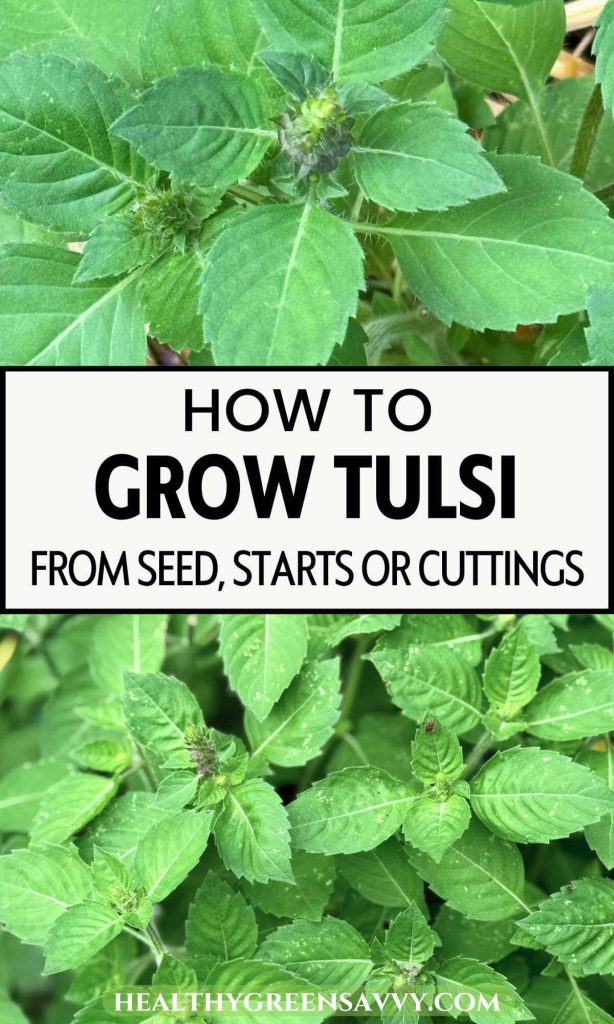
Save this info on how to grow tulsi basil for later!
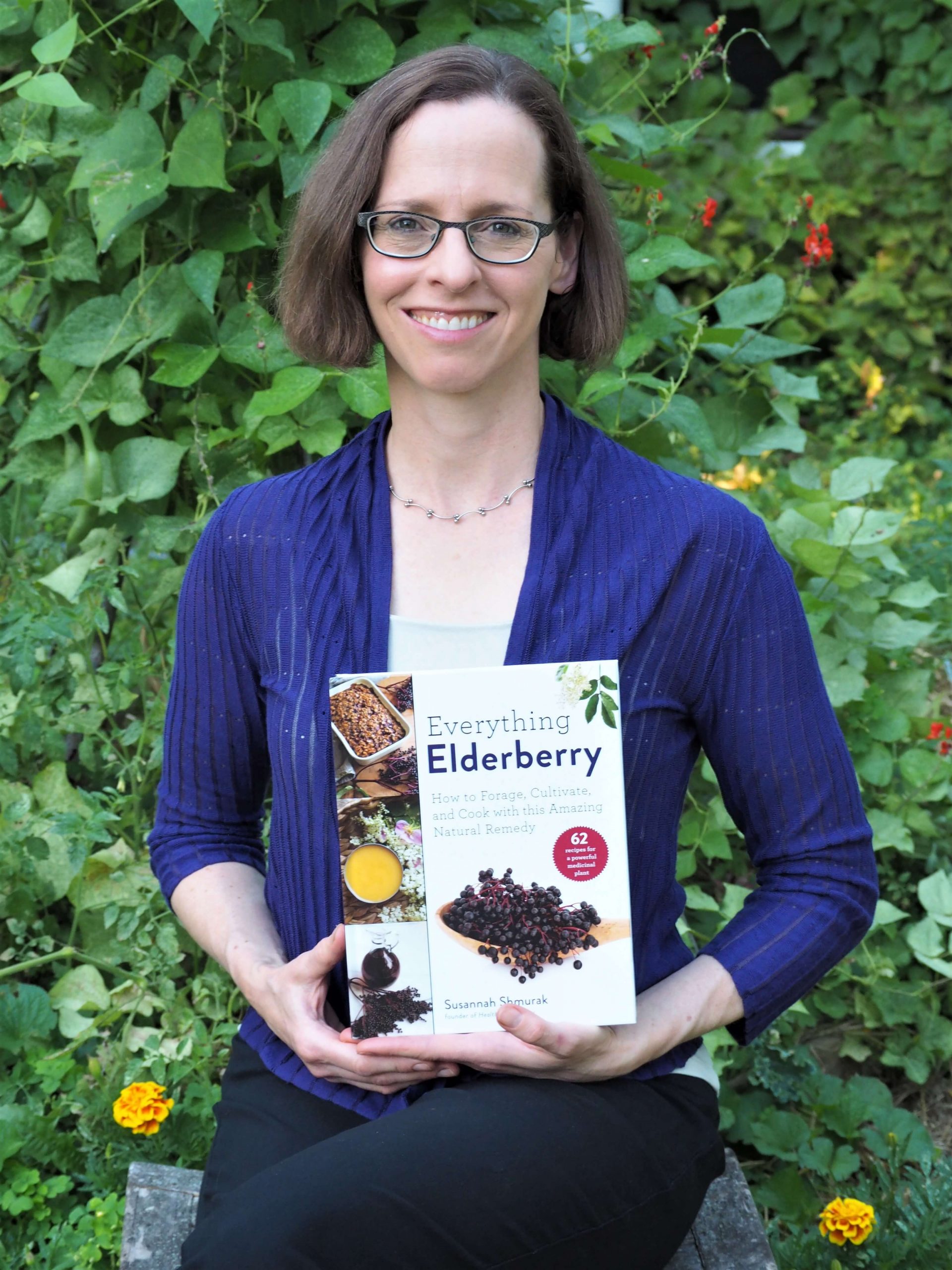
Susannah is a health and environmental writer focusing on gardening, foraging, medicinal plants, and sustainability. Her work has appeared in Mother Earth Living, Ensia, Northern Gardener, Sierra, and on numerous websites. Her first book, Everything Elderberry, released in September 2020 and was a #1 new release in holistic medicine, naturopathy, herb gardening, and other categories. Find out more and grab your copy here.

 Hi, I'm Susannah, a garden geek, energy nerd, and fan of healthy food and natural remedies. Need some simple, practical solutions for living healthier and greener? You've come to the right place! More about me and my green projects
Leave a Reply