I may receive commissions from purchases made through links in this article at no additional cost to you. Read full disclosure.
Jewelweed is a common wild plant with some excellent edible and medicinal uses. It’s a valuable medicinal plant to know, especially for addressing poison ivy and other skin irritations.
Getting to Know Jewelweed
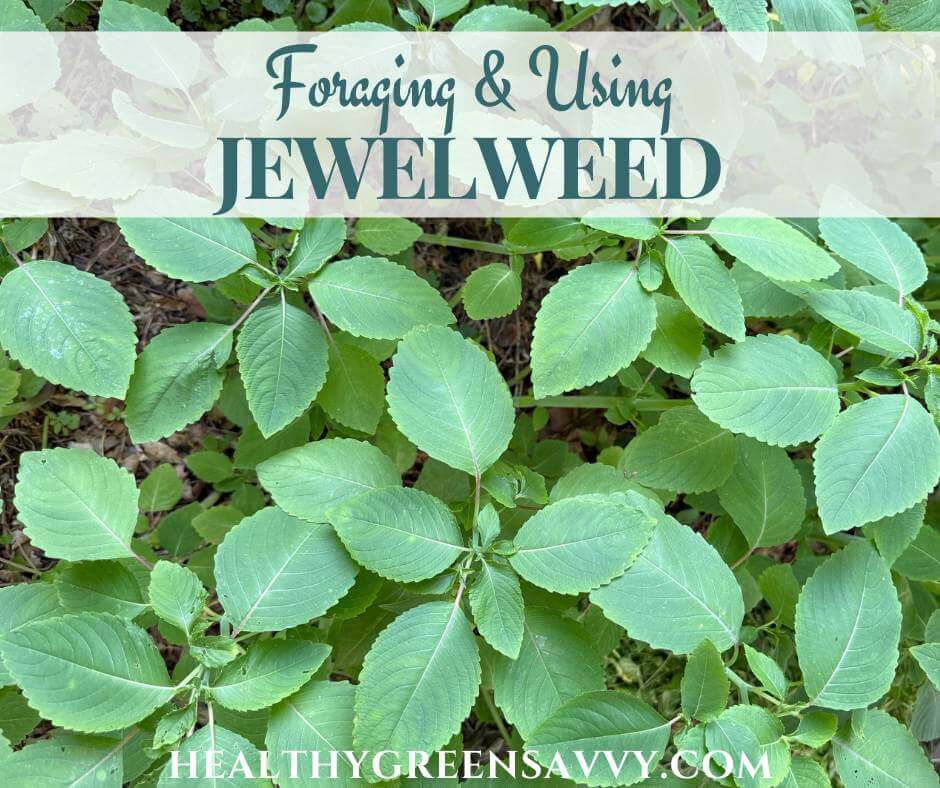
Have you spotted this plant growing in a shady part of your garden or a neighbor’s? Its translucent stem and shimmering leaves give it a somewhat otherworldly appearance.
I have areas of my yard where jewelweed has reliably popped up every year. It turns out that Japanese beetles like it well enough to pause their annual destruction of my grape leaves, so I guessed they might be on to something.
We’d never done anything much with it but try to squeeze out a little juice from the succulent stems onto itchy bug bites, but I knew it was edible and had other uses, so I’ve always wanted to get to know it better.
Then this happened:
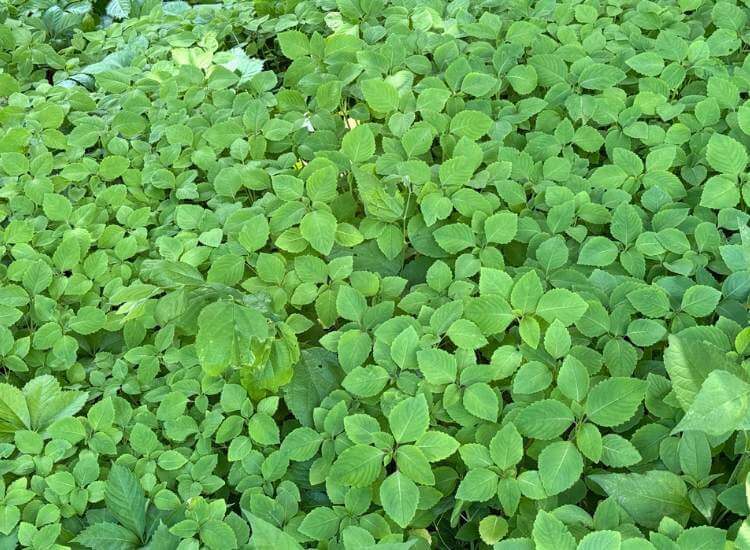
This spring, a massive colony of jewelweed decided to take up residence in my sunchoke patch. There must be hundreds of plants growing there. I took it as a sign it was time to get out my favorite foraging books and learn more about this interesting little plant.

Safe Foraging
Before foraging, it’s critical to familiarize yourself with the fundamentals of safe foraging:
- Positively identify any plant you intend to consume: Misidentifying a plant can be dangerous, even deadly. Use a trustworthy field guide and make absolutely sure you correctly identify any plant you forage. When in doubt, don’t eat it.
- Forage sustainably: Take only what you will use, and leave plenty for wildlife and plant regeneration. 10% of what’s there is a good guideline, depending on how many other people forage the same spot — unless it’s an invasive like garlic mustard, in which case, pull up all you can!
- Obey the law: Some places have regulations about foraging, particularly national and state parks. Always check local guidelines and get permission from property owners if you want to forage on private property.
Always consult a thorough and trustworthy foraging guide. The best guide I’ve ever seen is Sam Thayer’s Field Guide to Edible Wild Plants. It covers of hundreds of edible wild plants and includes a useful system for identification he devised. Because it covers so many plants, it’s a bit heavy, so check out some additional foraging books that cover fewer plants but weigh less in your pack when you’re out in the field.

What is Jewelweed?
The name jewelweed (also spelled jewel weed) is commonly applied to two plants, Impatiens capensis (common jewelweed, spotted jewelweed, orange jewelweed) and Impatiens pallida (pale jewelweed or yellow jewelweed). You might also hear it called touch-me-not because of the way the ripe seed explodes from the pod if you touch it.
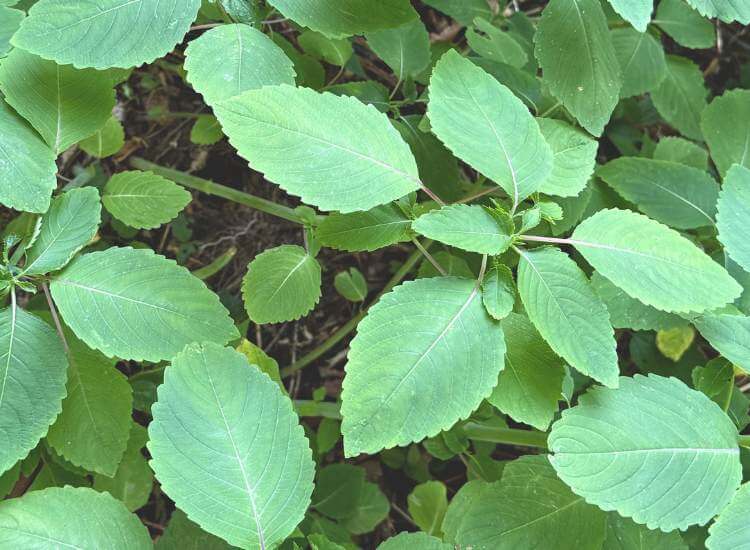
It’s an annual plant that self-seeds prolifically, as you can tell from the photo above. Native to North America and naturalized in Europe, jewelweed’s relatives Impatiens noli-tangere can be found in Europe, Asia, and Western North America, while Impatiens balsamina grows in Asia.
It’s a common wild plant you’ll find growing in gardens and out of the way spots where there’s some shade and ample moisture.
Though much of the jewelweed plant is edible, its primary use is as a topical. Leaves are reportedly high in oxalic acid and must be prepared correctly before consuming. Seeds are tasty but not easy to gather in quantity.
Medicinal Uses of Jewelweed
If you’ve heard anything at all about jewelweed, it’s likely you’ve been told that it’s helpful for poison ivy rashes. A traditional poison ivy treatment, scientific studies have shown it actually works, in large part by washing away the rash-causing oil similar to the way soap does.
Study authors note that plain soap is actually more effective, so jewelweed is something to turn to if you don’t have soap and water handy, for instance on a hike or foraging expedition. They also note that only the fresh plant helps, and extracts and soaps made with jewelweed didn’t work any better than soaps made without it.
Often found growing near poison ivy and stinging nettle, it’s helpful to know that you have a useful remedy at hand if you get a rash. It can also be used for poison oak as well as insect bites and stings.
In The Green Pharmacy, James Duke recommends jewelweed for hives as well as poison ivy and nettle stings. Some peopleapply it before possible encounters with poison ivy to prevent the oil from causing a rash.
Components of jewelweed have antifungal properties and may be useful for athlete’s foot and dandruff.
Some people puree the fresh plant during the growing season and freeze it in ice cube trays to use at other times of year for rashes and insect bites.
The fullest discussion I found on medicinal uses of jewelweed was in a Herbal Academy Herbarium monograph. For a small annual fee, you can get access to a huge library of plant monographs and masterclasses. I highly recommend it!
They also have a fantastic array of herbalism courses, which you can explore here.
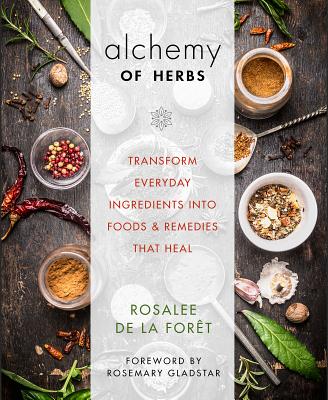
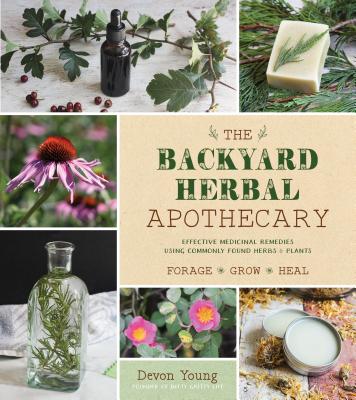
Below are some of the best herbalism books I’ve found if you’re curious to learn more about the wondrous array of plants you can use to enhance health and treat common ailments.

Edible Uses for Jewelweed
The leaves and stem are rarely used as food because of high concentrations of minerals and oxalic acid, though some foragers report eating them in small quantities after boiling and throwing away the cooking water twice. (That’s too much trouble IMO when there’s so many other delicious plants to forage that take almost no preparation!)
Oxalic acid is in plenty of foods we enjoy, like spinach and rhubarb, but it’s not something you want to eat a ton of because it competes with other nutrients and in very large amounts could cause kidney stones. It’s the reason we’re told not to eat rhubarb leaves.
The blossom is one of many edible flowers you can forage in your yard or neighborhood, along with other common wild plants like dandelions, dame’s rocket, clover, and wild violets, just to name a few.
The part of the plant most used for food are the edible seeds, which have a flavor similar to walnuts and can be eaten fresh or used in baking or to top overnight oats.
They can be hard to harvest, though, because of the cool mechanism the plant has for expelling its seed. When touched, the seed pod will send its contents flying out, making it a fun challenge for the determined forager.
Identifying Jewelweed
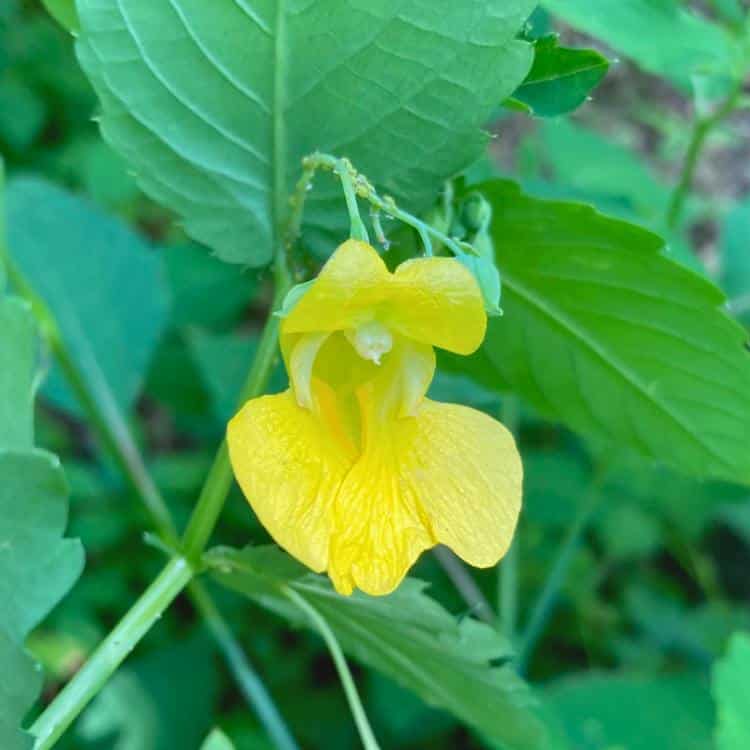
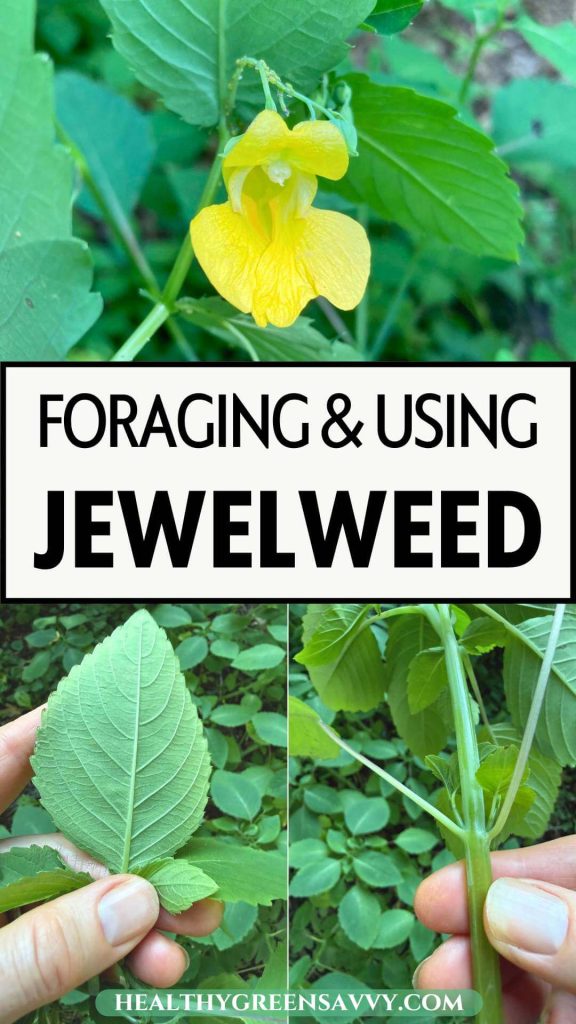
Note that the photos here are of the yellow or pale jewelweed (Impatiens pallida) I have growing in my garden. If you have Impatiens capensis, leaves and flowers will look different.
Impatiens pallida has yellow flowers rather than orange and typically grows taller than Impatiens capensis. I’ve found some plants growing four feet tall some seasons.
Habitat
Jewelweed grows in much of North America, with a reported range from zones 2 to 11. It prefers moist, shaded locations, though it can tolerate some sun.
If you find it growing in your yard, it will often colonize an area where little else will grow, so it’s worth letting it have that spot to keep it close at hand. It’s very easy to pull, so if you decide you want to thin it, it’s not hard to get rid of the way something like creeping Charlie is.
Since I’ve read it’s high in minerals, I add the plants I pull to the mulch in my vegetable garden or compost pile.
Jewelweed is among the plants the Xerces Society for Invertabrate Conservation includes in its regional lists of plants that can support invertabrates throughout the season. You can download a guide for your region here.
Stems
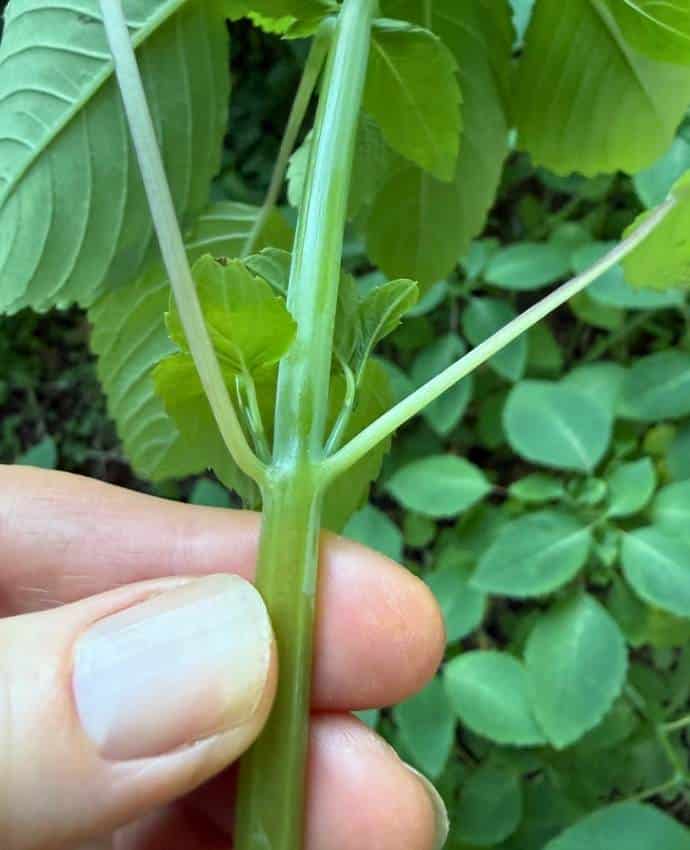
The stems are perhaps the most identifiable part of the plant. They’re translucent, hollow, and succulent, and could make a passable straw if you needed one for some reason.
The nodes where stems branch out are reportedly the richest source of jewel weed’s juice, so be sure to include them if you’re trying to extract some.
Leaves
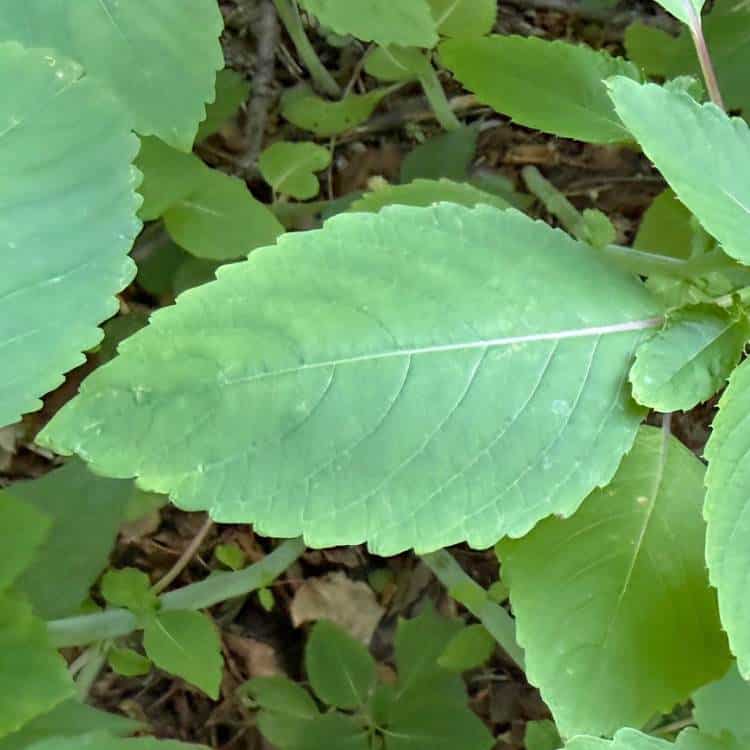
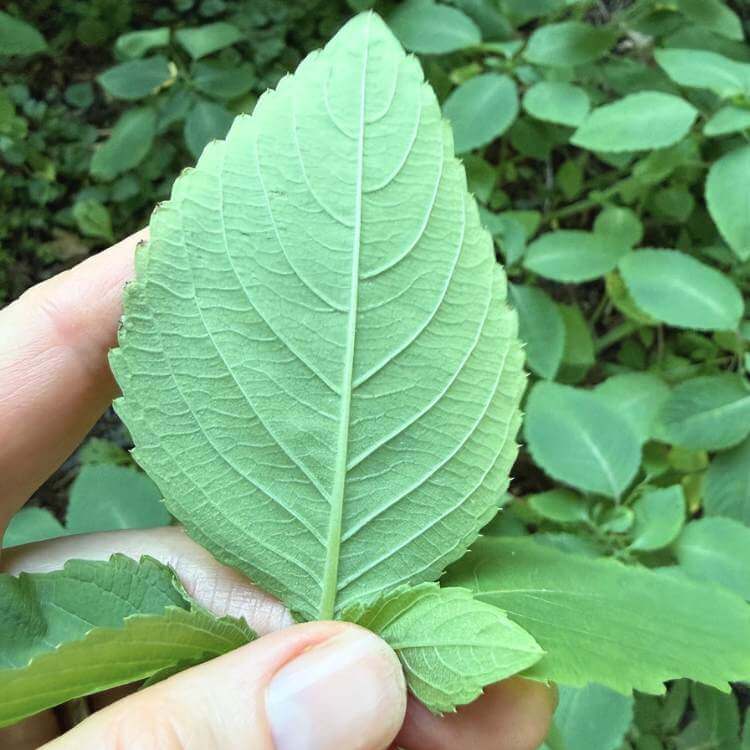
Leaves are smooth and oval shaped with slightly toothed edges. The midvein is usually lighter and slightly depressed on the top surface of the leaf.
Seedling leaves are paired, while the leaves on mature plants alternate.
Flowers
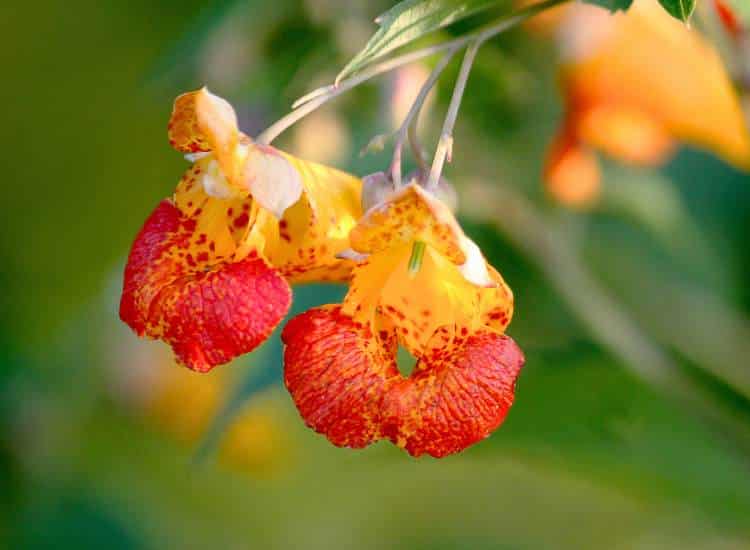
Yellow jewelweed has pale yellow flowers, while common jewelweed has orange flowers with spots.
Seeds & Seed Pods
It’s a little too early in the season for seedpods, and I’m afraid I didn’t find a photo in my plant-filled photo library. I’ll add one as soon as they appear!
Seed pods are green and elongated. When seeds mature, the pods burst open and disperse their seeds, typically 4 or 5 per pod.
If you’re trying to harvest seeds, grasp pods by the stems and point into your mouth. Seeds will shoot in
The pod is also edible.
How to Use Jewelweed
The simplest way to use jewelweed topically is as a poultice made by chopping the fresh plant and placing over the affected area.
If you want to preserve jewel weed for topical use, pureeing the plant, straining the liquid, and freezing it in an ice cube tray is one way to have its soothing properties at the ready when you need it. The cold adds more soothing power for things like stings and bug bites.
Another way to preserve jewel weed is in vinegar, which is another useful remedy for insect bites and stings. To infuse vinegar, place chopped jewel weed leaves and stems in a jar with apple cider vinegar and infuse for 3 weeks, before straining. It can be applied to soothe itchy areas.
You can also infuse witch hazel with jewel weed for a handy anti-itch spray. Get the clever Forager’s Jewelweed Spray recipe from Unruly Gardening.
Another go-to wild plant to know about for bites, stings, and sunburn is plantain. It’s an incredible first-aid plant you can find almost anywhere.
More Summer Foraging Guides
Looking for tasty things to forage this season? Check out some of our many foraging guides!
- Foraging Wild Fruits & Berries
- Foraging Wild Greens
- Wild Herbs to Forage This Season
- Identifying & Foraging Wild Black Raspberries
- Foraging Wild Spinach
- Foraging Mulberries
Save this info on foraging jewelweed for later!
Disclaimers: Though HealthyGreenSavvy and EcoSavvy Writing LLC always aim to provide thorough and accurate information, we assume no liability or responsibility for any consequences, health issues, or symptoms that arise from ingesting or touching any plant described on this website. It is always the reader’s responsibility to ensure accurate plant identification and use multiple reputable sources to confirm. If you have any doubts about the identification of any plant, do not eat it.
Susannah is a health and environmental writer focusing on gardening, foraging, medicinal plants, and sustainability. Her work has appeared in Mother Earth Living, Ensia, Northern Gardener, Sierra, and on numerous websites. Her first book, Everything Elderberry, released in September 2020 and was a #1 new release in holistic medicine, naturopathy, herb gardening, and other categories. Find out more and grab your copy here.

 Hi, I'm Susannah, a garden geek, energy nerd, and fan of healthy food and natural remedies. Need some simple, practical solutions for living healthier and greener? You've come to the right place! More about me and my green projects
Leave a Reply