I may receive commissions from purchases made through links in this article at no additional cost to you. Read full disclosure.
Lady’s thumb (Persicaria maculosa) is a common wild plant you might find growing in your garden. Find out how to identify and use this valuable and lesser-known edible and medicinal wild plant.
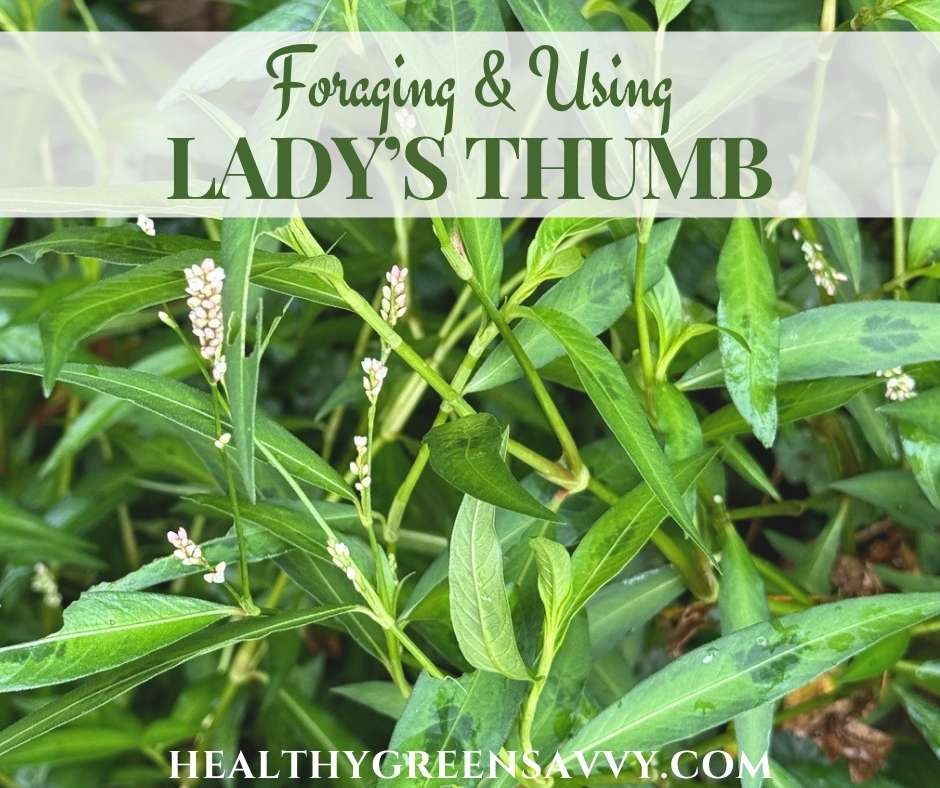
Meet Lady’s Thumb, an Overlooked Edible and Medicinal WIld Plant
Unlike so many of the wild edible plants that have popped up in my garden of their own accord, I think I must have unintentionally planted the first lady’s thumb here myself.
I’d never seen or used this valuable plant till I learned about it from the wonderful local herbalist who runs the medicinal herbs garden at my CSA. Lady’s thumb grows abundantly there, and on one of her wild plant walks, she mentioned it as especially helpful for moistening dry tissues.
I’ve been managing a dry eye issue for some time, so I decided to take some home with me and make the lady’s thumb tea she recommended. I’m sure I composted what came out of my teapot, and sometime after that, lady’s thumb became a permanent fixture in my garden.
Now it grows abundantly here as well, and I harvest it in great quantities to add to my fresh herbal tea blends all summer long.
Here’s what to know about identifying and using this lesser-known edible wild plant.

What is Lady’s Thumb?
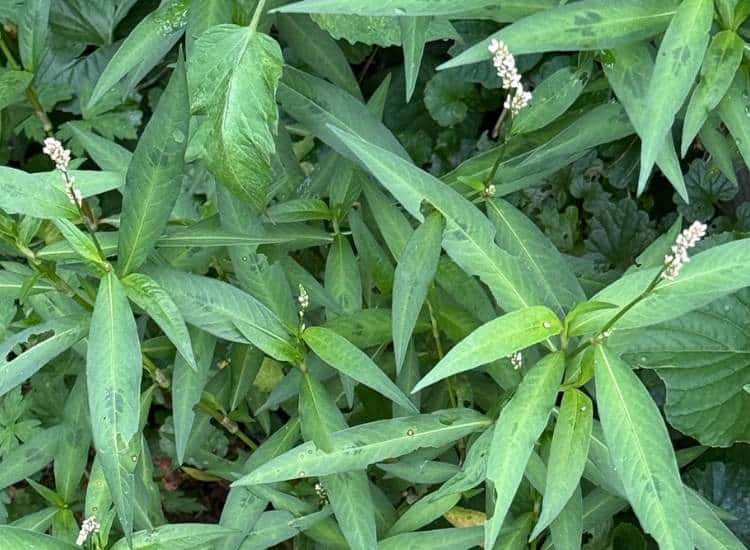
Lady’s thumb (Persicaria maculosa) is one of many useful wild plants that show up in our gardens that most people don’t realize is edible and medicinal. Over the years, I’ve come to know and appreciate so many undervalued plants that “volunteer” in my garden, including plantain, wild violets, dandelion, lambs quarters, and numerous others.
You’ll find lady’s thumb growing in vegetable beds and along pathways, anywhere the soil has been disturbed.
A type of smartweed, lady’s thumb looks a lot like other smartweeds, with its distinctive flowerheads and leaf pattern. Lady’s thumb has a marking that looks vaguely like a thumbprint on the leaf to help you distinguish it from other smartweeds.
Here’s why you’ll want to do that: Though all smartweeds are edible, some are PAINFULLY spicy, which is OK if you want to bring a lot of heat to a dish, but not if you’re making a soothing tea or taking a little nibble of a leaf. At a foraging workshop I took with Sam Thayer recently, we sampled some of his water pepper smartweed, and a *tiny* nibble of leaf set my mouth on fire. It was really hot!
Common lady’s thumb, on the other hand, has very little flavor, just a neutral green taste not unlike other mild greens.
Also known as redshank plant, spotted lady’s thumb, and several other names, lady’s thumb (Persicaria maculosa) is an annual herb in the Polygonaceae (buckwheat) family, along with yellow dock, rhubarb, and Japanese knotweed. Native to Europe and Asia, it’s naturalized throughout much of North America, Australia, and other temperate regions.
Like many other common “weeds,” lady’s thumb has a long history of use as both food and medicine. While not as famous as dandelion or plantain, it’s been used traditionally as a pot herb, astringent, mild digestive aid, and soothing skin remedy.
Is Lady’s Thumb Edible?
Yes, lady’s thumb is edible and can also be used medicinally. Young leaves and shoots are generally the most tender. Flowers can be eaten as well.
The seeds are also edible. Like other members of the buckwheat family, they contain starch and protein, although harvesting enough for a meaningful amount of food would take A LOT of effort.
Which Parts Do You Eat?
Young leaves, tender shoots, flowers, and seeds are edible. Leaves and flowers are used in medicinal preparations.
Culinary Uses
Lady’s thumb has a mild flavor and can be used as a cooking green. It doesn’t taste like much on its own, but it can be mixed with other wild greens like lambs quarters or amaranth leaves as a side dish or added to soups or eggs.
Seeds are a bit labor-intensive to collect, but you can use them in baking or add to your overnight oats.
Medicinal Uses for Lady’s Thumb
Herbalists in my area use lady’s thumb primarily for moistening dry tissues and recommend it as a tea.
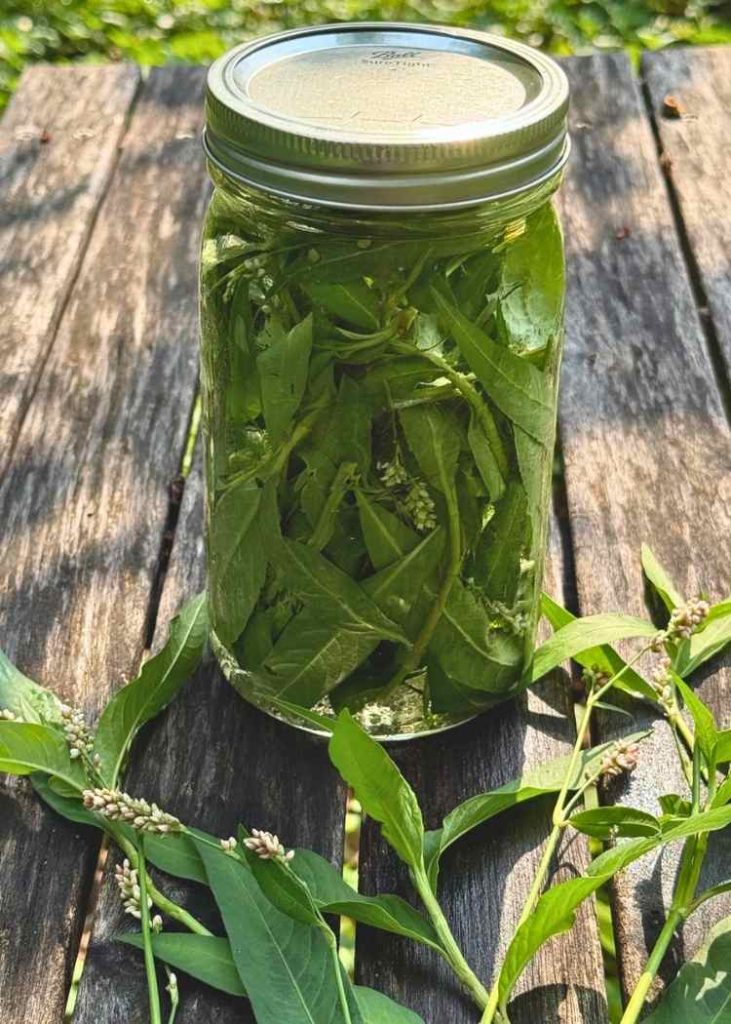
Generally cold infusions are considered most helpful for extracting mucilaginous compounds, so I usually put a handful of stems with leaves and flowers and in a mason jar and cover with cold water to steep. Its flavor is very subtle, but it’s a nice cooling drink with a little more interest than plain water when you want to hydrate on a hot day. I usually throw in a few borage leaves for flavor.
That mucilaginous quality also makes it an excellent topical for soothing skin irritations, along with jewelweed and plantain, other wild plants often used as herbal first aid. You can place chopped or ground lady’s thumb right on the area you’re trying to soothe.
You can also steep flowering tips and leaves in hot water as you would other plants to make an herbal tea. Its flavor is more prominent, but still very mild. I would describe it as ‘vegetal,’ with more prominent astringecy than when it’s infused in cool water.
One of my favorite books on medicinal plants, Matthew Alfs’ Edible and Medicinal Wild Plants of Midwest, highlights lady’s thumb’s use as a diuretic and astringent herb.
The Cherokee, Chippewa and Iroquois used it internally and externally to soothe pain and help poison ivy rash.
Herbalists have traditionally used the aerial parts for their astringent properties, digestive support, diuretic action, as well as for wound care. Astringent herbs help tighten tissues and reduce minor irritation, making them popular in traditional remedies for gut issues, oral health, and minor skin irriations. I’ve also heard lady’s thumb recommended for helping with food sensitivities.
Compared with some well-studied medicinal plants, Persicaria maculosa hasn’t received much scientific attention. While you might find hundreds or thousands of studies about medicinal uses for plants like dandelion and plantain, there are only a couple of studies exploring the phytochemicals found in lady’s thumb.
Cautions
Although lady’s thumb has a history of traditional use, a few precautions are worth keeping in mind.
Anyone pregnant or breastfeeding is generally advised to avoid many medicinal herbs because of the lack of safety studies.
People with kidney disease or taking medications that affect fluid balance should consult a healthcare professional before using any diuretic herb.
As always, start with very small amounts when trying a wild plant for the first time.
Also, remember that a closely related smartweed, water pepper or Persicaria hydropiper, is VERY spicy. Nibble a tiny portion of leaf to test, and be aware that some people also have skin reactions to water pepper the similar to that when handling hot peppers.
Though I haven’t noticed it, Alfs mentions that the juice of raw lady’s thumb can irritate membranes in the eyes, lips, mouth, and throat and advises against rubbing one’s eyes when handling the plant.
Safe Foraging Basics
Anytime you forage, be sure to use multiple features to correctly identify a plant. To positively identify any plant, evaluate the plant’s growth habit, arrangement of leaves, shape of flower clusters, and so on. You’ll find these details about lady’s thumb below.
Whenever you’re foraging wild plants, there are some basic rules to follow::
- Positively identify any plant you intend to consume: Misidentifying certain plants can be dangerous, even deadly. Consult a trustworthy field guide (see top foraging books I recommend, written by real human experts, not AI). When in doubt, DO NOT consume.
- Consider chemical contamination: Avoid gathering plants from contaminated areas such as roadsides, industrial or formerly industrial locations, contaminated lakes, rivers, or streams, or parks and yards where pesticides are used.
- Forage sustainably: Take only what you’ll actually use, and leave plenty for wildlife and plant regeneration. 10% of what you find is a good guideline, depending on how many others forage in the same spot — unless it’s an invasive like garlic mustard, in which case, pull up all you can!
- Obey the law: Know regulations about foraging, particularly if you’re foraging in national and state parks. Always check local guidelines and get permission from property owners if you want to forage on private property.
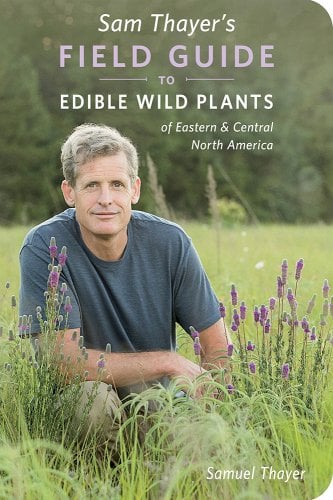
Always use a thorough and trustworthy foraging guide. The best guide I’ve ever found is Sam Thayer’s fantastic Field Guide to Edible Wild Plants. He covers of hundreds of wild plants and includes a helpful system for identification he devised.
Also consider taking a foraging class, either locally or online. The Herbal Academy’s online foraging course can help you master plant identification and gain confidence foraging edible wild plants. They also have numerous herbalism courses worth checking out. Tap the banner below to explore their extensive course offerings.

How to Identify Lady’s Thumb
Lady’s thumb has several distinctive characteristics that make identification easier once you know what to look for.
Lady’s Thumb Growth Habit
Lady’s thumb grows upright until it’s too tall to support its weight and flops over. Typically growing 1–3 feet tall, they can branch in many directions and create a dense planting.
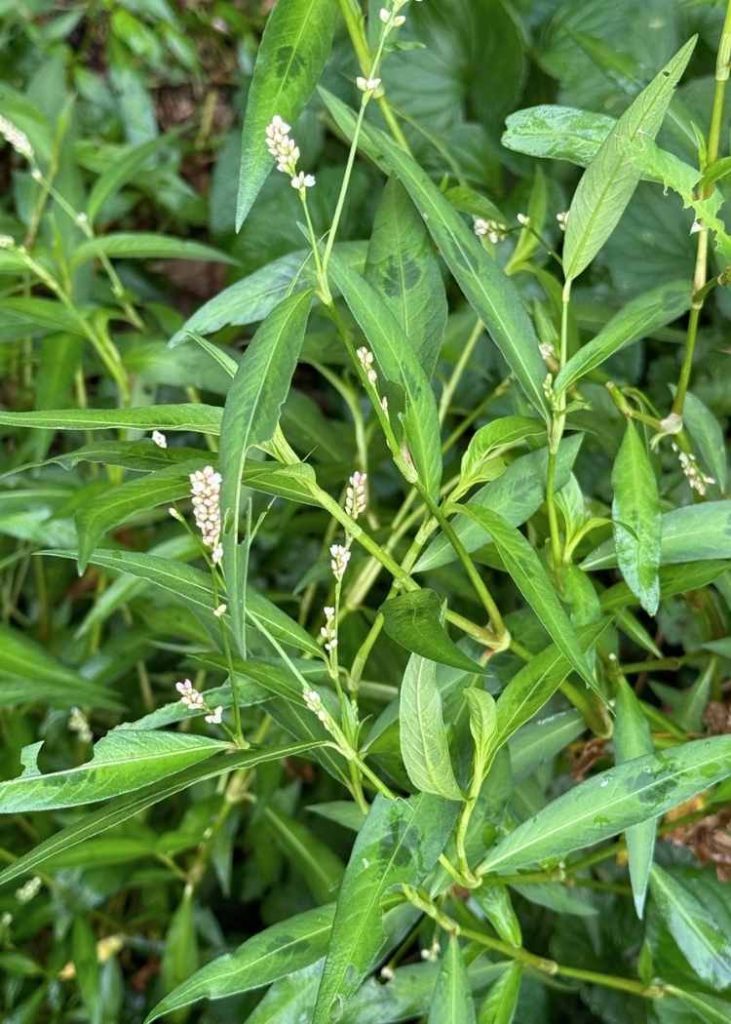
Lady’s Thumb Leaves
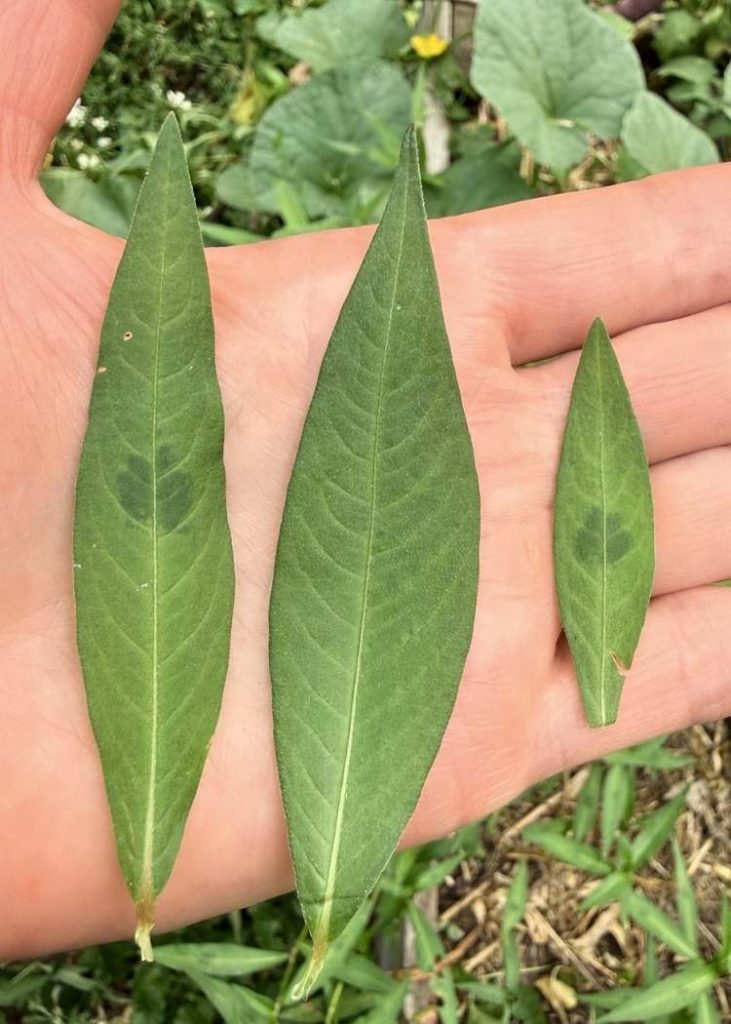
Leaves are narrow and lanceolate (longer than wide and tapering to a point) with smooth edges. They grow alternately along the stem and have very stort petioles, the little stalk that joins them to the stem of the plant. Leaves can be 1–6 inches long.
The most recognizable feature is the dark purplish blotch that often appears near the center of each leaf. This vaguely thumbprint-shaped marking gives the plant its common name. Note that it can vary quite a bit in appearance in different locales.
Don’t rely on the blotch on its own to identify lady’s thumb, as some leaves, or even whole plants lack it entirely.
Lady’s Thumb Flowers
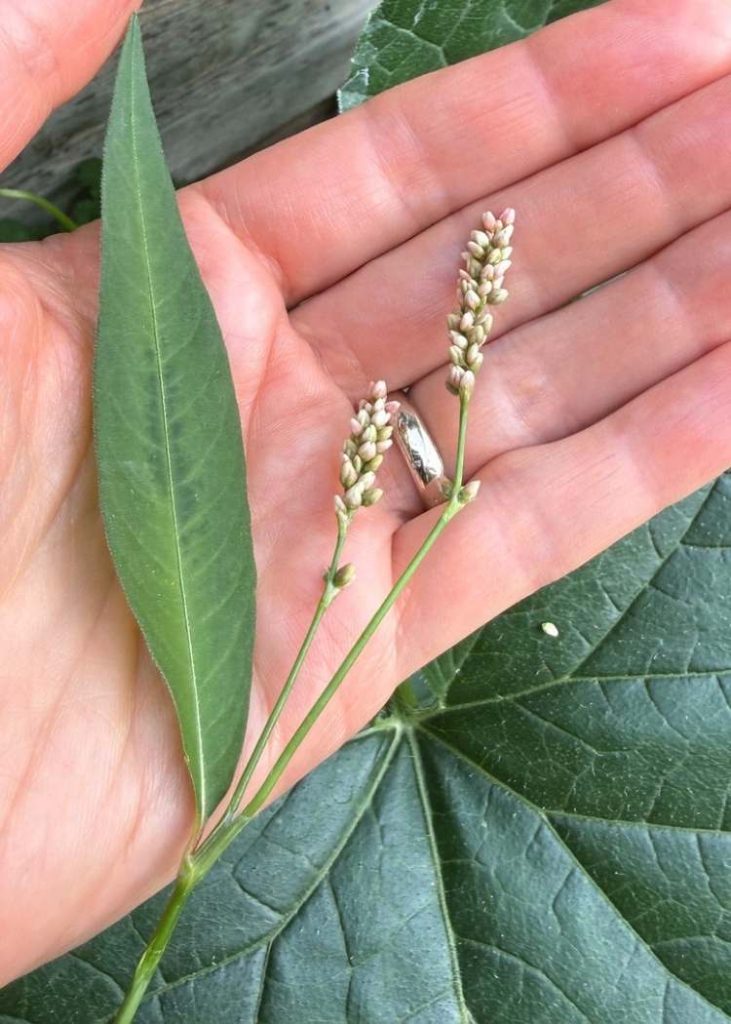
Lady’s thumb flower spikes make this plant quite easy to spot. Tiny flowers appear in dense, upright spikes at the ends of stems from midsummer through fall.
Individual flowers may be white or pink, or some mixture of the two. They vary quite a bit in color; mine are mostly white, while some may be dark pink, almost purple in appearance. Flowers do not have petals, but are composed of 4 to 5 tepals.
Discover additional weeds with pink flowers you might find when you’re looking for lady’s thumb.
Unlike many edible flowers, they don’t taste like much and are somewhat crunchy. Though technically edible, I don’t particularly recommend them as food, but they’re fine to use in your medicinal preparations.
Lady’s Thumb Stem
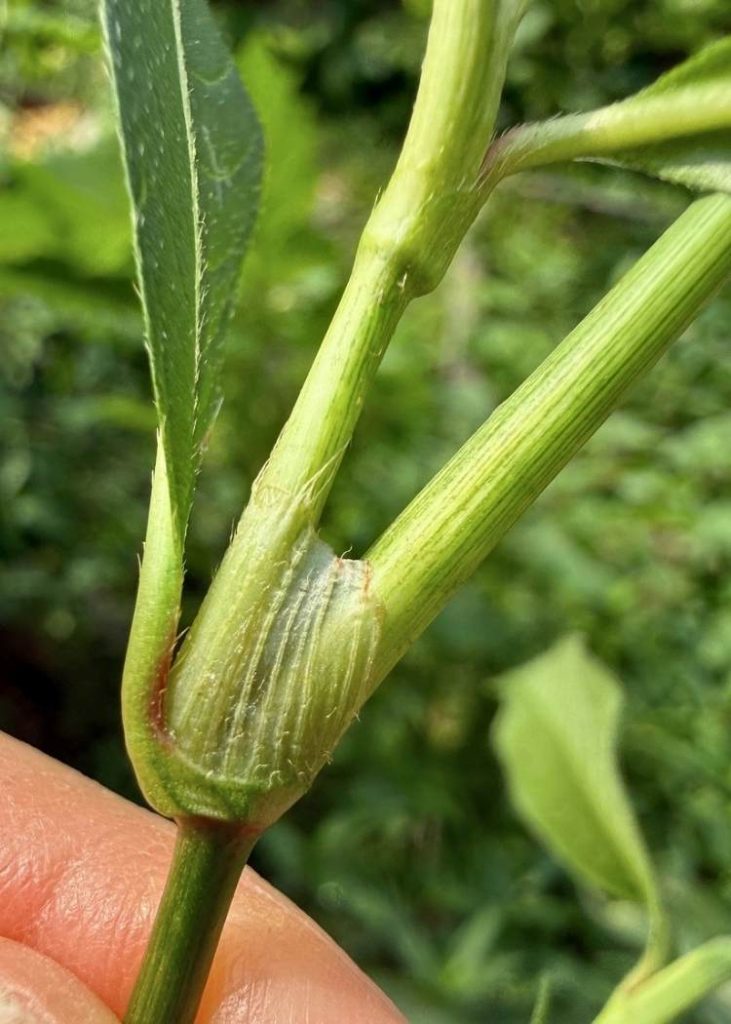
The stems are green or reddish (hence the alternate name redshank) and often branch, with slightly swollen nodes.
Like all members of the buckwheat family, lady’s thumb has papery sheaths surrounding each stem node called ocrea. These translucent collars are an important identification feature.
If you look really carefully, you’ll see that the sheath on lady’s thumb plants has tiny bristles, which can help you tell it apart from a very closely-related and also edible smartweed, Pennsylvania smartweed (Persicaria pensylvanica),
Lady’s Thumb Habitat
Lady’s thumb often turns up in disturbed soil, so you might find it growing in garden beds, farm fields, roadsides, and along the edges of marshes or streams.
Lady’s Thumb Look-Alikes to Know
Several other smartweeds resemble Persicaria maculosa. None are toxic, but some can be very spicy.
These include:
- Pennsylvania smartweed (Persicaria pensylvanica)
- Water pepper (Persicaria hydropiper)
- Swamp smartweed or false waterpepper (Persicaria hydropiperoides)
Some species have much stronger peppery compounds than others. Water pepper (P. hydropiper), for example, has an intensely hot, biting flavor that can irritate the mouth and digestive tract if eaten in larger amounts.
Other plants that could be mistaken for smartweed include Japanese stiltgrass, deer tongue, or basketgrass. Check out the linked posts to see images that will help you easily distinguish these plants from lady’s thumb. Though the leaf shapes bear some resemblance to Persicaria maculosa, you’ll see the growth habit and flowers are very different.
Harvesting and Preserving Lady’s Thumb
The best time to harvest for edible uses is late spring to early summer, before stems become tough. For medicinal uses, you can harvest anytime during the growing season.
As with most wild greens, the tender new growth is the most palatable. Collect tender tips, young leaves, and seeds for edible uses, and flowering tops for herbal preparations.
Snip the parts you want to use rather than pulling entire plants and you’ll be able to harvest more at another time.
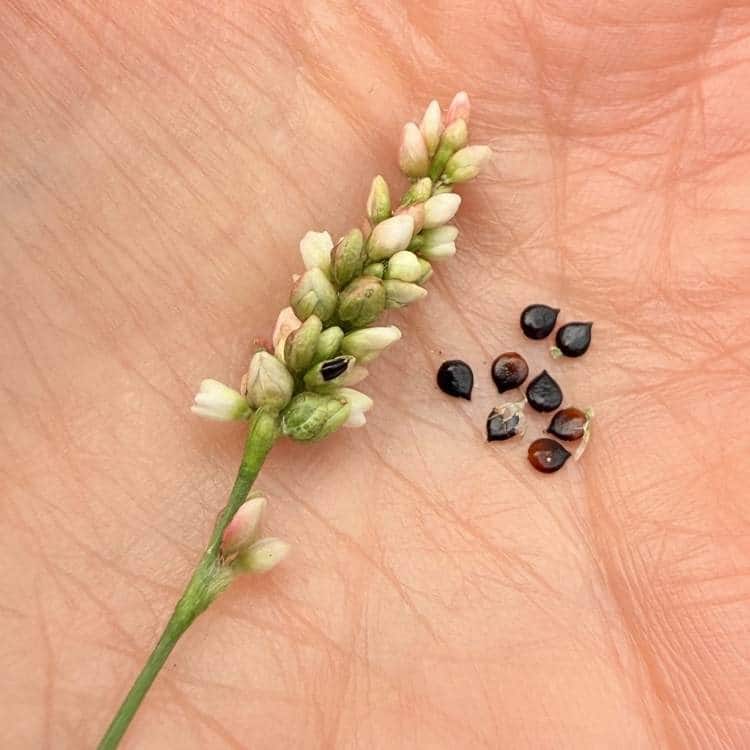
To harvest seeds, wait till the flowers have browned and use your hand to strip the seeds into a bowl. You can use them right away, or spread them out on a clean cloth to dry for a few weeks before storing.
Since lady’s thumb is an annual that reproduces by seed, leaving some plants to mature means you’ll have more appear the following season. You might not want to leave too many, though, as they like to take over the vegetable garden!
Drying and Storage
You can harvest and dry leaves for edible and medicinal uses, for tea or to make a wild greens powder to add to smoothies or soups.
Harvest healthy aerial parts, rinse to remove dust and insects, and dry in bundles or on a drying screen.

I highly recommend a collapsible drying screen. I love that it has tons of space for laying out the many different herbs I gather each season but folds up into a small circle that I can tuck away out of season.
I’ve used it to dry huge quantities of foraged Canadian wood nettle, plantain, linden flowers, goldenrod, elderflowers, birch leaves, and so much more.
Store in dried leaves and flowers in airtight jars in a cool, dark place. Properly dried and stored herbs should last about one year.
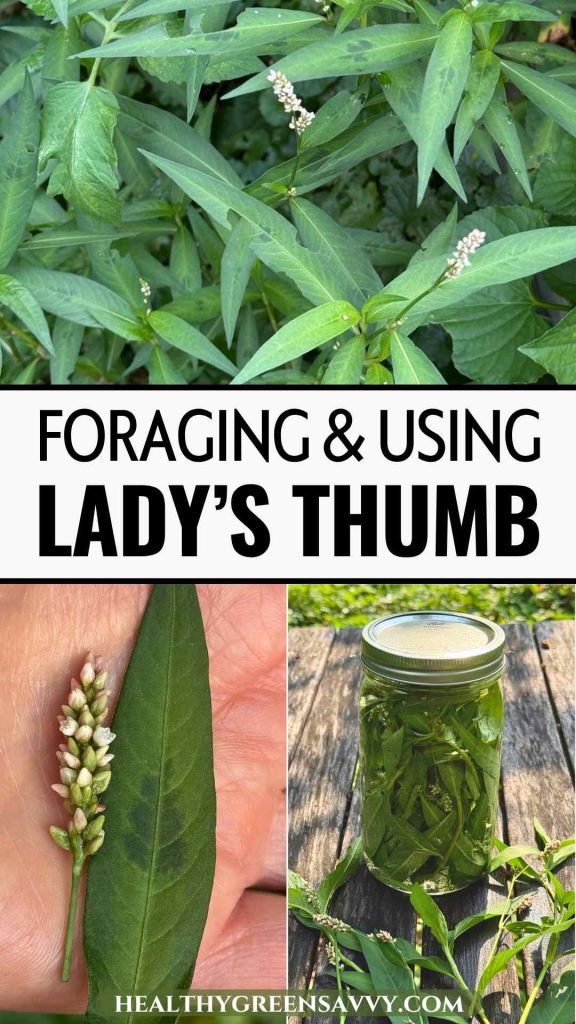
Save this info on lady’s thumb (Persicaria maculosa) for later!
Disclaimers: Though HealthyGreenSavvy and EcoSavvy Writing LLC always aim to provide thorough and accurate information, we assume no liability or responsibility for any consequences, health issues, or symptoms that arise from ingesting or touching any plant described on this website. It is always the reader’s responsibility to ensure accurate plant identification and use multiple reputable sources to confirm. If you have any doubts about the identification of any plant, do not eat it.
Susannah is a health and environmental writer focusing on gardening, foraging, medicinal plants, and sustainability. Her work has appeared in Mother Earth Living, Ensia, Northern Gardener, Sierra, and on numerous websites. Her first book, Everything Elderberry, released in September 2020 and was a #1 new release in holistic medicine, naturopathy, herb gardening, and other categories. Find out more and grab your copy here.

 Hi, I'm Susannah, a garden geek, energy nerd, and fan of healthy food and natural remedies. Need some simple, practical solutions for living healthier and greener? You've come to the right place! More about me and my green projects
Leave a Reply