


I may receive commissions from purchases made through links in this article at no additional cost to you. Read full disclosure.
Try something new in your teacup with refreshing rosemary tea! Made with fresh or dried rosemary, this easy rosemary tea recipe is rich in antioxidants and full of flavor.

Why Make Rosemary Tea
I absolutely adore the flavor of rosemary and add it to roast vegetables, homemade flatbreads, and soup, but I don’t ever seem to have enough ways to cook with it to use up all that I harvest from the two plants I grow every year.
When I learned you can make tea with rosemary, I was thrilled, but also a bit skeptical. Savory herbs aren’t necessarily what you think of when you think of tea, but like thyme tea, some are worth giving a try.
I drink a LOT of herbal tea, and sometimes it’s nice to shake things up. I drink fruity brews like lemon balm tea and elderberry tea, floral teas like linden or elderflower tea, and grassy infusions like nettle tea and oatstraw pretty much daily.
A lot of my teas come from my medicinal herb garden, while others are wild teas I forage, like mulberry leaf tea, birch tea, and ginkgo tea. When there’s less to forage from my yard or neighborhood, I make spruce tea and pine needle tea.
Sometimes you just want a completely different flavor, and that pine-y flavor of rosemary is just the thing. Plus rosemary has some fantastic benefits that make enjoying it often an easy way to get more valuable plant compounds into your diet.
Benefits of Rosemary Tea
Probably rosemary’s most well-known benefit is for memory. Both taking it internally and smelling the scent have been studied for their impact on cognitive function.
High in antioxidants, rosemary is considered an excellent anti-inflammatory, which is sometimes used to help relieve pain from arthritis. Its compounds have also demonstrated antimicrobial activity.
One of many herbs for colds and flu, rosemary can be helpful for fever and sore throats. It’s also often used to aid digestion and relieve gas.
Rosemary is also used to promote circulation and skin health.
Where to Get Rosemary for Tea
If you’re not growing your own rosemary, buy dried rather than fresh rosemary, since fresh herbs tend to be really expensive and come in wasteful plastic packages.
If you’re buying dried rosemary, I highly recommend trying the bulk section of a natural foods store, where you’ll be able to buy organic rosemary for a fraction of what you’d pay if you get rosemary in a jar. Some herbs cost up to 75% less bought in bulk, and you can bring your own jar to fill, making your tea zero waste.
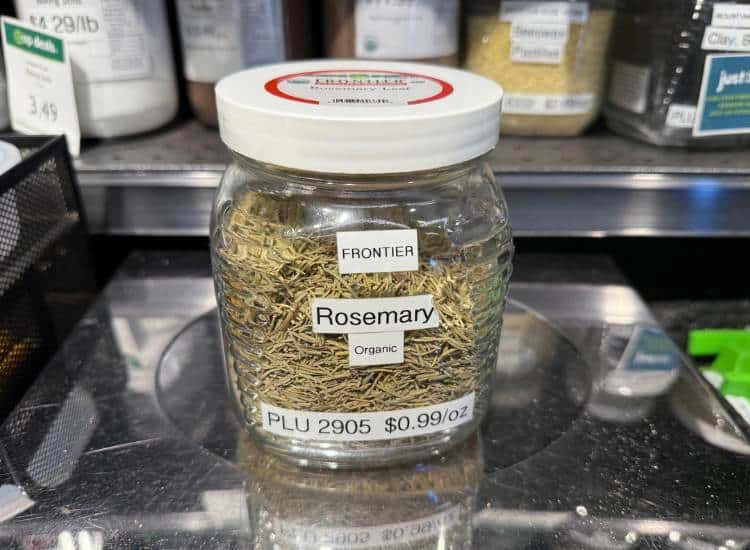
Buying from the bulk aisle not only saves money and cuts packaging waste, it means you can purchase just what you need rather than have a full bottle lose potency in your spice cabinet if you’re not going to use it all soon.
If you don’t live near a store that sells bulk herbs,you should be able to get a jar of rosemary in any grocery store or online.
If you have a garden, or even a pot you can place in a sunny location, I would try growing your own rosemary, so you can enjoy its lovely aroma in your garden and grow types you wouldn’t otherwise be able to buy. I especially like the bright green, fresh-tasting creeping rosemary called prostrate rosemary, which can work as a ground cover herb if you’re looking for some eco-friendly (and yummy!) grass alternatives.
Rosemary is one of many herbs to consider planting in an herbal tea garden.
Find out how to preserve herbs if you find yourself with a surplus of rosemary and enjoy your homegrown rosemary all year round.
Useful Tools for Making Rosemary Tea
Of course, all you need to make rosemary tea is some rosemary and hot water, but some helpful tea gear can
I strongly recommend filtering your water. Most municipal water contains scores of unregulated chemicals you don’t want to drink in your tea. Your city’s water quality report only measures a tiny fraction of common contaminants, and most water filters don’t remove pharmaceuticals or other pollutants found in most water supplies.
I spent ages researching the water filter I chose, and infuriatingly the company was bought up and no longer makes them (or the replacement filters thousands of customers need!). I’m in the process of figuring out which filter company to switch to and will update that post when I do.
Some other tools I find useful for making herbal teas:
- Teapot with infuser or tea strainer
- Electric kettle with tempertaure settings
- Herb scissors
- Infuser cup (perfect when you don’t want to make a whole pot)


Tips and Variations
One of my favorite herbalists, Rosalee de la Forêt recommends using water at 185 degrees or less to preserve the aromatics of the rosemary. I didn’t notice much of a difference when I made with hotter water, so you can decide for yourself whether you like it better that way.
Left too long, rosemary tea can become bitter, so it’s best to strain it within 5 minutes or so, but taste is so personal you should experiment with what appeals most to you. When I strain it after only three minutes, I find the flavor too subtle, but some people might prefer it less strongly-flavored.
I don’t sweeten tea, preferring to enjoy the flavor of the herbs on their own, but you can add sweetener if you like.
The amounts of herb in herbal teas can vary a lot depending on your preference, so use the recipe below as a guideline. Some people like strong infusions, others prefer their tea milder. I tend to err on the side of using more herb, since it’s easy to dilute with additional water if it’s too strong. If your tea’s too weak, on the other hand, you’re stuck with lightly-flavored water that doesn’t taste like much.
–>Tip for easier tea making: If you’re using sprigs of fresh rosemary, don’t bother stripping the leaves. You can just submerge whole sprigs in your teapot or cup.
How to Make Rosemary Tea from Fresh or Dried Rosemary

How to Make Rosemary Tea from Fresh or Dried Rosemary
This simple and refreshing rosemary tea recipe can be made from either fresh or dry rosemary.
Ingredients
- 1 teaspoon dried rosemary or about 1 sprig fresh rosemary
- 2 cups freshly boiled filtered water
Instructions
To make tea from fresh rosemary:
- Harvest rosemary in the late morning after the dew has dried.
- You'll need one small rosemary sprig per 8 ounces of water. You can place them directly in your cup or teapot without stripping the leaves.
- Rinse and place sprigs in a large teapot, saucepan, or mason jar.
- Cover with boiled filtered water and allow to steep, covered, for 3 to 5 minutes. Rosemary tea gets bitter if steeped longer. Taste after three minutes and steep longer if you'd like stronger tea.
- Strain and refrigerate what you won't drink immediately.
To make tea from dried rosemary:
- To brew tea from dried rosemary, use 1 level teaspoon per cup of water.
- Place rosemary in a large teapot or mason jar. Cover with boiled filtered water and allow to steep, covered, for 3 to 5 minutes. Taste after three minutes and steep longer if you'd like stronger tea.
- After steeping, strain the rosemary using a fine-mesh sieve or a tea strainer.
- Drink immediately, refrigerating any leftover tea.
Notes
Try using water below 185 degrees and see if you prefer the flavor to water that's come to a full boil. Sweeten with honey or add a slice of lemon if desired.
Looking for more herbal teas to try? Check out some of these other tea recipes featuring herbs you can grow or forage:
I get asked a lot about my favorite teas one can purchase rather than forage. Here are some of my go-tos, that I keep stocked in my (very full) tea cabinet:
- Traditional Medicinals Immune Zoom
- Clipper Snore and Peace (perfect for travel instead of carrying loose herbs for sleep)
- Rose tulsi tea
- Passionflower
- Hibiscus
- Chamomile
- Hawthorn berries
- Linden flower
- Oat straw
If you try making this rosemary tea recipe, leave a comment and let me know what you thought. Thanks a bunch!
Pin to save this info on how to make rosemary tea for later!

Susannah is a health and environmental writer focusing on gardening, foraging, medicinal plants, and sustainability. Her work has appeared in Mother Earth Living, Ensia, Northern Gardener, Sierra, and on numerous websites. Her first book, Everything Elderberry, released in September 2020 and was a #1 new release in holistic medicine, naturopathy, herb gardening, and other categories. Find out more and grab your copy here.

 Hi, I'm Susannah, a garden geek, energy nerd, and fan of healthy food and natural remedies. Need some simple, practical solutions for living healthier and greener? You've come to the right place! More about me and my green projects
Rachel says
Hi, I am absolutely amazed at your knowledge for brewing herbal teas, just tried my cuppa rosemary, so simple to make and quite enjoyable for a first. Thank you for sharing your expertise and I look forward to following your web for further info on herbs and their uses.
Susannah says
Thanks, Rachel! So glad you liked it. If you want to keep up with the latest things I’m doing, I hope you’ll sign up to get my free Substack newsletter: https://healthygreensavvy.substack.com/ Hope you’re brewing lots more yummy teas this season!