

I may receive commissions from purchases made through links in this article at no additional cost to you. Read full disclosure.
Looking for an unusual edible berry to forage or grow in your garden? American spikenard (Aralia racemosa) is an intriguing plant to know. Also known as Indian root or spice berry, this shade-tolerant plant produces flavorful edible berries and roots used in traditional medicine.
Here’s what to know about identifying and foraging American spikenard.

WHAT IS AMERICAN SPIKENARD / ARALIA RACEMOSA?
In the ginseng family, American spikenard (Aralia racemosa) isn’t something I’d come across until a neighbor planted it at the edge of our property line. Thanks for introducing me to it, Pat!
I was immediately intrigued by the berries’ resemblance to elderberries, and though there hasn’t been much in the way of scientific study about them, I suspect they’re also a source of antioxidants along with other dark purple berries, such as elderberries and up-and-coming superfood aronia berry (aka black chokeberry).
A point of clarification: Aralia racemosa, a plant native to Eastern North America, is completely different from the plant also called spikenard mentioned in the Bible. That spikenard (Nardostachys jatamansi) grows in the Himalayas and was the source of an aromatic essential oil used as a perfume and medicine in antiquity. I’ve found multiple sellers of dried Aralia racemosa claiming it’s the same plant.
To add to our confusion, the related plant wild sarsparilla (Aralia nudicaulis) is sometimes called small spikenard, and false Solomon’s seal (Maianthemum racemosum) is also sometimes called false spikenard. Word to the wise: Always look at the botanical names of plants you’re exploring to ensure you know which plant is which.

WHAT PART OF THE SPIKENARD PLANT DO YOU EAT?
The berries are a primary reason many foragers seek out American spikenard. Like elderberries, they can be used to make jam, wine, or infused liqueurs. (More ideas for using the berries and other parts of the plant at the end of the post.)
The aromatic root of Aralia racemosa has been used to make a kind of root beer and can be boiled to make tea, which was a remedy used by numerous Native American tribes for coughs, rheumatism, menstrual concerns, and many other ailments.
An 1828 book called Medical Flora includes numerous uses for Aralias both internally and externally:
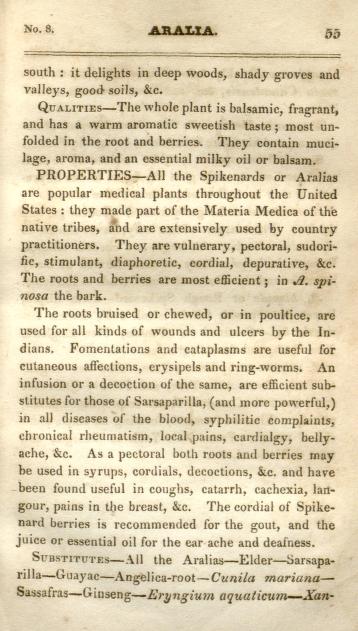
In The Earthwise Herbal, Matthew Wood praises Aralia racemosa as an “excellent remedy for upper respiratory allergies” and also recommends it for stimulating the adrenals and preventing blood sugar swings.
Rico Cech describes spikenard as having “a definite affinity for the upper respiratory, digestive, and reproductive organs. He recommends it as an expectorant and anti-tussive (making it one of many herbs for cough to consider) as well as an antimicrobial. In addition to the root and berries, he says the leaves of Aralia racemosa may be used as well, fresh or dried.
Following Native American practice, Cech notes that fresh spikenard root can be pounded to use as an anti-inflammatory poultice for swelling, bruises, and joint pain.
If you’re interested in learning more about using common plants as herbal medicine, be sure to check out these excellent herbalism books.
Researchers have examined the Aralia genus for medicinal compounds. One study evaluated American spikenard for its anti-tumor potential.
Sam Thayer reports that the shoots can be harvested in spring as “an excellent and interesting aromatic vegetable.” He calls them “a little-known exotic delicacy.”
WHAT DOES AMERICAN SPIKENARD TASTE LIKE?
The berries of Aralia racemosa have a very unique flavor. When fully ripe, they’re mildly sweet, with a subtle pine undertone. Less ripe berries are VERY piney, not unlike the flavor you get from nibbling an edible pine cone.
I haven’t found them in enough quantity to try, but I expect that cooked and sweetened, they would make for an interesting jam or fruit leather. Sam Thayer reports finding wild American spikenard plants with pounds of berries on them, but he and other foraging experts suggest consuming them in moderation rather than in large quantities.
I haven’t had the pleasure of trying spikenard root tea yet, but I’ve read the aromatic roots have a spicy flavor somewhat similar to licorice.
FORAGING AMERICAN SPIKENARD / ARALIA RACEMOSA
Whenever you’re foraging wild plants, there are some basic rules to follow:
1. POSITIVE IDENTIFICATION
The first rule of foraging is to ALWAYS positively identify a plant using all the features: growth habit, leaves, flowers, fruit, and bark. Trying to identify something from the berries alone, for example, has led people to nibble on things that aren’t safe to eat.
2. AVOID CONTAMINATED AREAS
Also make sure that where you’re foraging hasn’t been sprayed with pesticides. Also avoid areas near busy roads or places with histories of heavy industry. Contaminants like lead and arsenic can persist in the soil for decades and may be taken up by the plants growing there.
3. GET PERMISSION
Always make sure you have permission to forage wild plants. Many “public” areas like state parks have rules about harvesting plant material. Also be sure whatever you’re foraging isn’t threatened or endangered. You can check plants considered under threat here.
4. GET EXPERT ADVICE
If you’d like to hone your plant identification and foraging skills, consider taking a course like the Herbal Academy’s online foraging or wildcrafting courses.
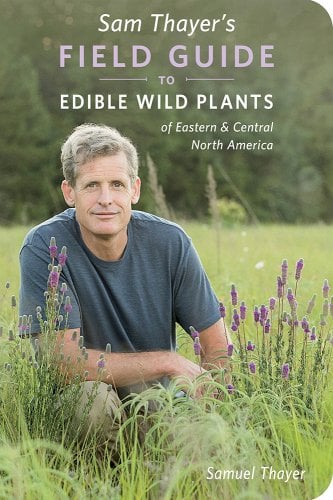
–> Having an excellent guide to wild plants is essential. Explore some of the best foraging books to have on hand. (Spoiler alert: Sam Thayer’s new Field Guide to Edible Wild Plants is the best foraging guide EVER!)
HOW TO IDENTIFY AMERICAN SPIKENARD PLANT / ARALIA RACEMOSA DISTINGUISHING FEATURES
HABITAT & GROWTH HABIT
American spikenard likes shady woodland spots. A large herbaceous plant, American spikenard can have a somewhat woody stem near the base. Unlike woody shrubs, however, spikenard will die back to the ground in winter.
A shade-tolerant plant, spikenard will often grow in the forest understory, forming colonies from its rhizomes and spreading by seed as well.
It can grow up to 4 feet tall at maturity so larger spikenard plants may resemble a small shrub.
ARALIA RACEMOSA LEAVES
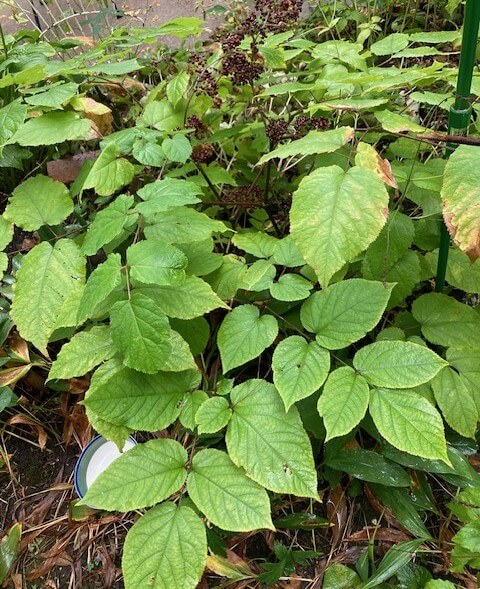
The large oval leaflets have toothed edges and grow compound and opposite along the branch, as you can see in the photo above. They grow on short petioles and have pointed tips.
FLOWERS
Tiny white-green flowers with 5 petals bloom in summer. I didn’t meet this plant till early fall, but I’ll try to remember to add photos of the flowers next season.
SPIKENARD BERRIES
The dark purple berries resemble elderberries when ripe. They don’t tend to turn the same dark purple-y black, but keep a reddish tint to them.

AMERICAN SPIKENARD LOOK ALIKES TO KNOW

The individual berries of the spikenard plant do resemble elderberries, but since you’re using all the features of the plant (you are, right?) to make your identification, you’ll easily notice the very different leaf shape, growth habit, and arrangement of berry clusters. Here’s what to know about elderberry identification if you need a refresher.
Of course, if you’ve found elderberries, that’s not a problem, since they’re not poisonous but in fact very good for you (and also delicious!). Check out some top elderberry uses to explore if you’ve got a big harvest.
Another member of the Aralia family, Aralia spinosa (aka devil’s walking stick) has leaves more like the elderberry than the American spikenard, but it’s important to know this possibly toxic plant. Its enormous thorns are a dead giveaway. Here’s more on identifying Aralia spinosa.
WHAT TO DO WITH AMERICAN SPIKENARD /ARALIA RACEMOSA
How to use American spikenard berries:
- Make into jam or jelly, on their own or with other fruits
- Combine with other fruit to make a unique homemade fruit leather
- Add to your favorite healthy smoothie recipes
- Infuse in vodka for an unusual cocktail or medicinal tincture
- Infuse in vinegar as you would elderberries or aronia and use to make a flavorful vinaigrette
How to use American spikenard roots:
Cech recommends using fresh or recently dried spikenard roots for making tinctures or decoctions. A strong decoction can be combined with honey to make a flavorful medicinal syrup.
If you don’t have access to a spikenard plant you can dig roots from, a number of online sellers carry dried spikenard root, including Mountain Rose Herbs, a favorite source of top-quality herbs. They also have an extract.
You can find seeds and dried roots from sellers on Etsy.
Other parts of Aralia racemosa to forage:
As mentioned above, Rico Cech says the leaves may be used as well, and Sam Thayer recommends the shoots. Just be certain you’ve positively identified your spikenard plant during the growing season, since in the spring you won’t have all the other features to help you ID it correctly.
If you’re looking for an unusual perennial fruit to add to your garden, you can purchase seeds and bare-root plants through Prairie Moon Nursery and other sellers of native plants.
I’ve read that birds like the berries as well, so planting spikenard in your garden may attract more feathered visitors to your yard.
If you’d like something a little less niche than American spikenard to forage, let me recommend some favorites to explore:
Need more ideas? Here are more than 40 wild fruits to seek out this season.
Happy foraging!
Save this info on foraging American spikenard / Aralia racemosa for later!

Disclaimers: Though HealthyGreenSavvy and EcoSavvy Writing LLC always aim to provide thorough and accurate information, we assume no liability or responsibility for any consequences, health issues, or symptoms that arise from ingesting or touching any plant described on this website. It is always the reader’s responsibility to ensure accurate plant identification and use multiple reputable sources to confirm. If you have any doubts about the identification of any plant, do not eat it.
Susannah is a health and environmental writer focusing on gardening, foraging, medicinal plants, and sustainability. Her work has appeared in Mother Earth Living, Ensia, Northern Gardener, Sierra, and on numerous websites. Her first book, Everything Elderberry, released in September 2020 and was a #1 new release in holistic medicine, naturopathy, herb gardening, and other categories. Find out more and grab your copy here.

 Hi, I'm Susannah, a garden geek, energy nerd, and fan of healthy food and natural remedies. Need some simple, practical solutions for living healthier and greener? You've come to the right place! More about me and my green projects
Leave a Reply