
I may receive commissions from purchases made through links in this article at no additional cost to you. Read full disclosure.
Interested in growing your own tea? Growing an herbal tea garden is easy and fun! You can harvest herbs from your garden to make delicious herbal teas to enjoy year round.
Hot tip: You may already have plants growing in your garden that you didn’t realize you could use for tea.
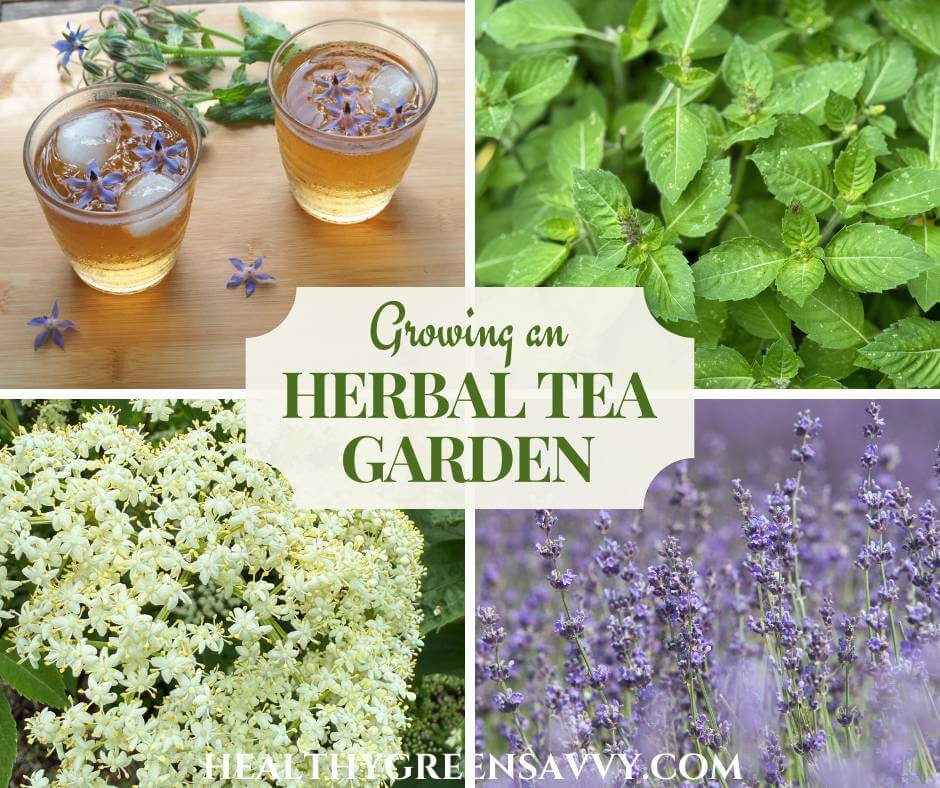
Why Grow an Herbal Tea Garden?
Though picking up a box of tea bags at the store is what most of us are used to when we think of tea, growing your own tea is a fun way to get the freshest tea without any waste.
No bags, boxes, shipping, or air pollution. It’s about as eco-friendly as you can get sourcing your tea ingredients.
Growing an herbal tea garden is such a delightful way to enjoy the bounty of your garden all year round.
Because in addition to making yummy and medicinal teas with fresh herbs, you can preserve some of your harvest to stock your herbal tea cabinet. Making delicious tea from herbs you grew yourself is such a satisfying way to enjoy the fruits of your garden, even in the middle of winter.
I’m a huge tea drinker, and generally prefer drinks flavored with some herbs rather than plain water. So I’ve tried and grown A LOT of herbs for tea. Below are my favorites, which I harvest every season for a wide variety of homegrown herbal teas.
‘Tea’ technically refers to leaves of the tea plant (Camellia sinensis), an evergreen shrub that gives us black, green, and white tea, most of the caffeinated teas people associate with the word tea.
The broader term tea is also used to mean any drink made by infusing leaves, fruit, roots, or bark in water. Called an infusion, the herbal teas you’re probably familiar with (such as peppermint or chamomile) fall into this category.
Growing an Herbal Tea Garden
When selecting your herbal tea garden plants, you have a number of choices to make.
Most important (in my opinion, anyway) is what you will actually drink. If you’re not a fan of chamomile, don’t plant it!
Second, it’s useful to think about whether the plants you’re considering are perennials or annuals.
Perennials are wonderful because they’ll come back every year without your having to fuss over seeds or buy expensive plant starts, but some wonderful plants for tea can only be grown as annuals and are worth the extra trouble if you enjoy them. Tulsi is one of those plants I will baby because fresh tulsi tea is so lovely and I like it so much better than the dried tulsi I’ve purchased.
Money-saving tip: For perennial plants you’d like for your tea garden, ask friends and neighbors or an online plant exchange for divisions so you can stock your herb garden for free. No need to pay for lemon balm, mint, or thyme. There’s surely someone near you who’d be happy to share. Here’s more about how to get plants free.
Another consideration is where you’d like to plant. Many of these herbs are beautiful and can work in a veggie or herb garden, or in a flower bed or containers.
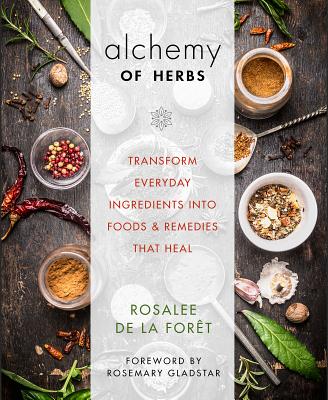
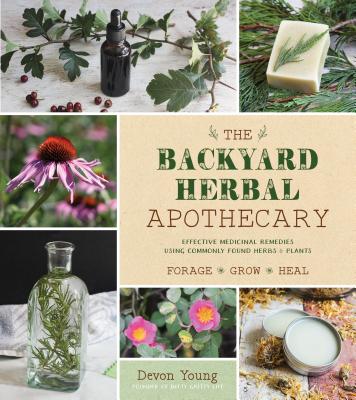
Curious to learn more about herbalism? These are some of the best herbalism books I recommend for the home library.

Plants for an Herbal Tea Garden
With so many choices, it can be hard to narrow down which plants to focus on. Below are my top suggestions. I grow them all in my tiny edible yard, along with a fantastic array of wild plants I also harvest for tea.
Lemon Balm
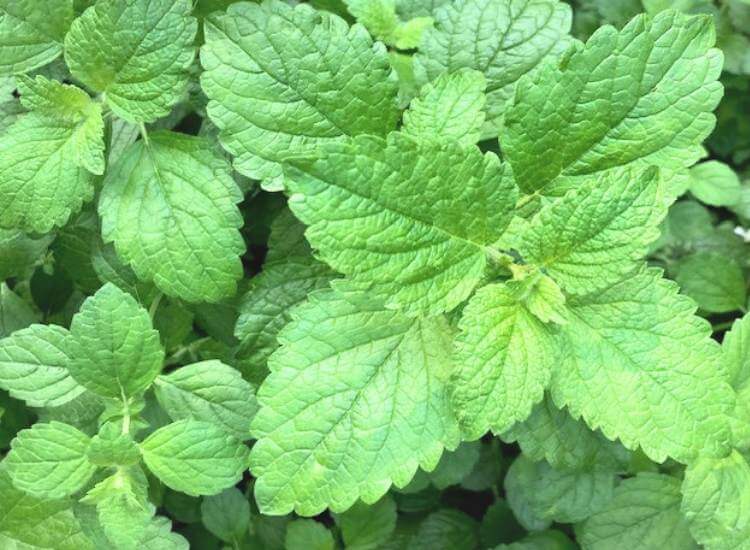
My favorite herb for tea, lemon balm is an attractive perennial plant that’s easy to grow. It’s a top herb for sleep, so I use it most evenings in my nighttime herbal tea blend. It’s relaxing but not sedating, so it’s fine to drink during the day as well. You can make lemon balm tea on its own, or combine it with other herbs. I tend to mix mine with the catnip growing in the yard as well some wild plants like yarrow and violet leaves.
Lemon balm is in the mint family and can be aggressive in some climates. Here in my northern garden it hasn’t been a problem, and since I love it so much, I’m happy to find more lemon balm babies popping up in new places. If you don’t want it to spread, be sure to cut it back when it flowers.
Mint
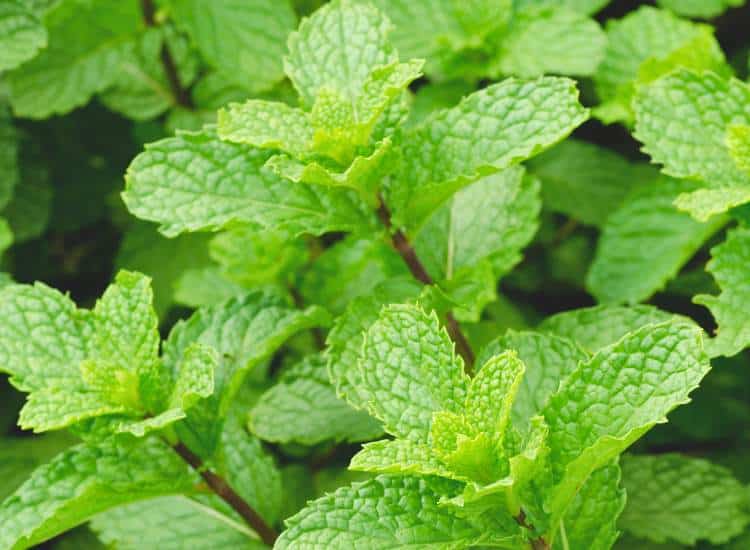
Mint is a top cooling herb, making it the perfect plant to have on hand for dealing with summer heat. You can make a simple mint-infused water for a quick refresher to help cool you off after working in your herb garden.
Steeped into tea, mint is often used for digestive issues and headaches. It’s also one of many useful herbs for colds and flu.
It’s one of many herbs you can use in sun tea, which uses energy from the sun to brew tea and keeps extra heat out of the house.
Mint is a notorious spreader, so plant it somewhere it will stay containe or plant it in a pot so it can’t spread.
Tulsi/Holy Basil
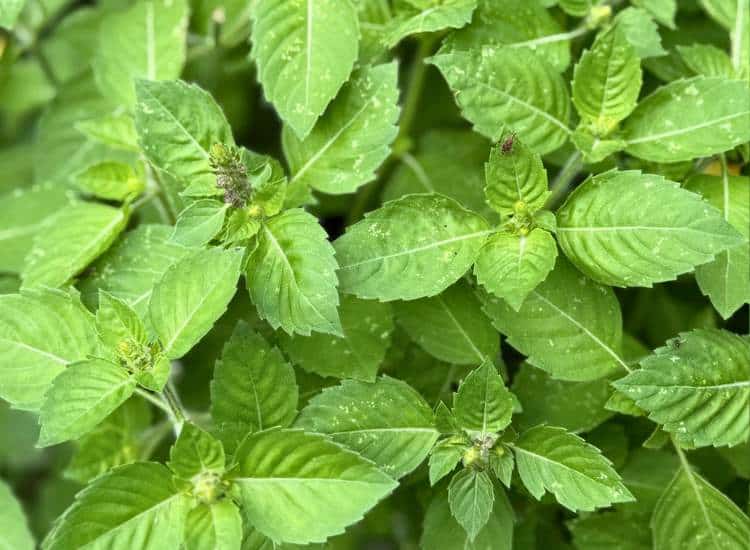
Fresh tulsi is one of my favorite herbs for tea in summer. It has a very different flavor from dried tulsi, and is a top calming herb recommended for stress relief.
It has a pleasant bushy habit and flowers that attract pollinators, and it’s very easy to grow. Check out this guide explaining how to grow tulsi and enjoy having this wonderfully relaxing herb on hand.
Borage
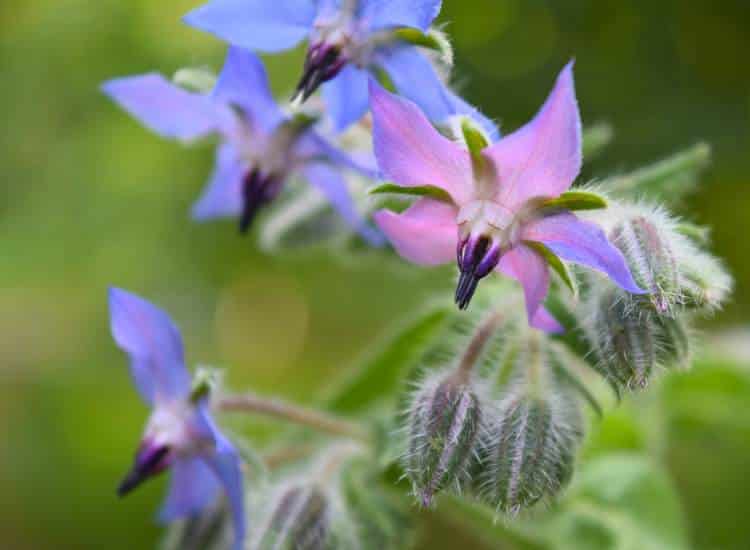
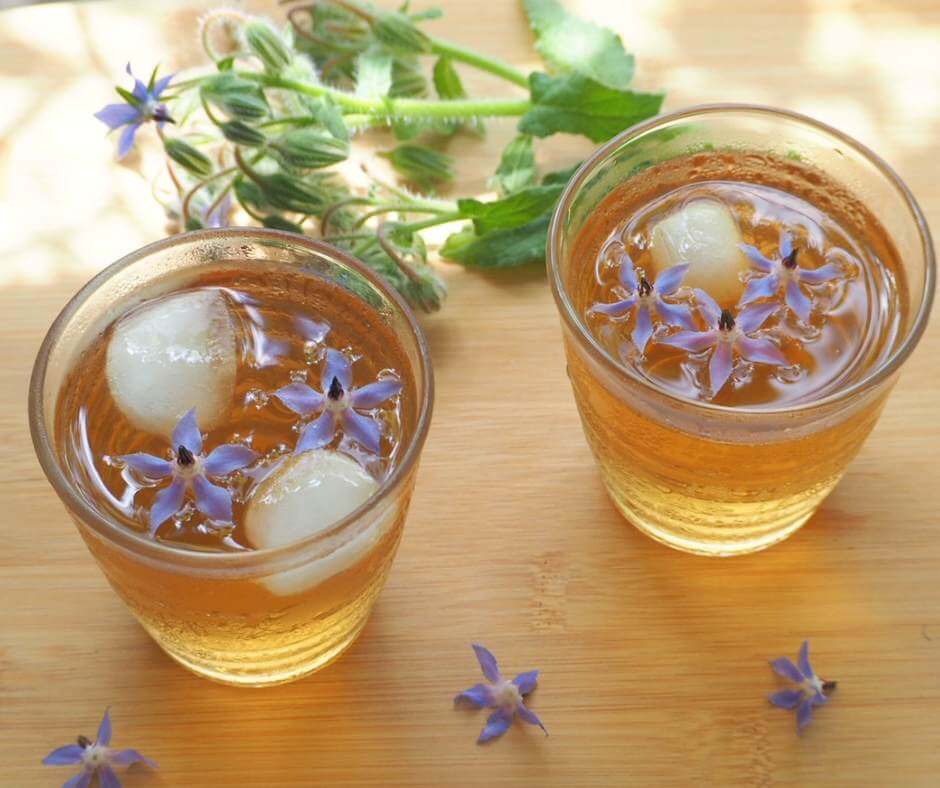
A prolific self-seeder, once you plant borage, you probably won’t ever have to plant it again. It has adorable edible blue flowers and abundant leaves that make a delicious melon-flavored tea.
I like to use them to flavor homemade seltzer and steeped into borage tea, using either fresh or dried leaves.
Catnip
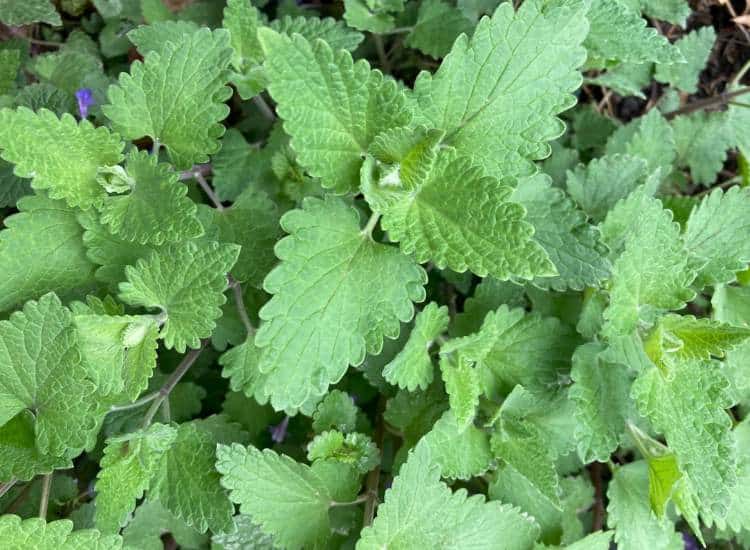
Even if you don’t have a cat, catnip is worth growing in the herbal tea garden for its medicinal properties. I love it for nighttime tea, but catnip has other valuable uses as well.
A member of the mint family, catnip promotes relaxation and digestion, and has antimicrobial and antiviral compounds. You can combine it with other herbs or enjoy it on its own. Here’s a simple catnip tea recipe to get you started.
Note that a lot of people confuse catnip with catmint. Here’s how to tell these plants apart: Catnip vs. catmint.
Chamomile
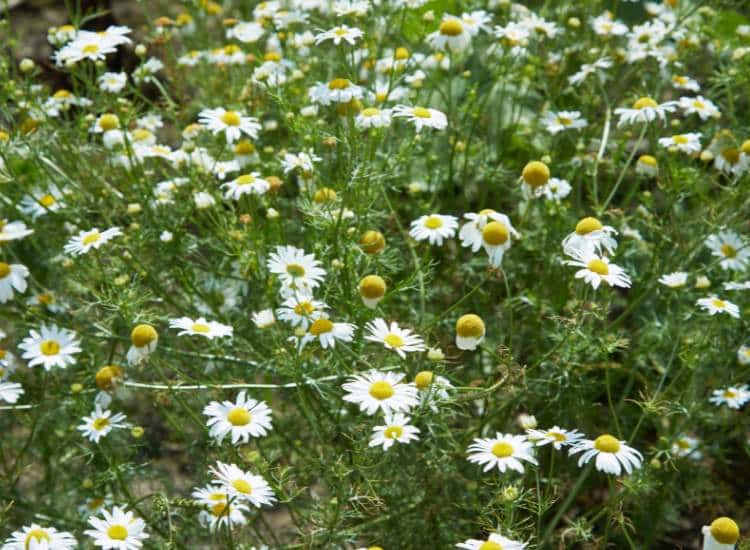
Chamomile is a wonderful sleep-promoting herb that’s also good for digestion. It contains anti-inflammatory compounds and is sometimes use to help pain or colds. I love it combined with lemon balm and lavender.
The type of chamomile grown for tea is usually German chamomile, which is an annual plant. It will self-seed freely, so you’ll likely find new chamomile plants growing in subsequent seasons.
Roman chamomile is a perennial that can also be used for tea, but it has more of a creeping habit and won’s be as easy to harvest.
Thyme
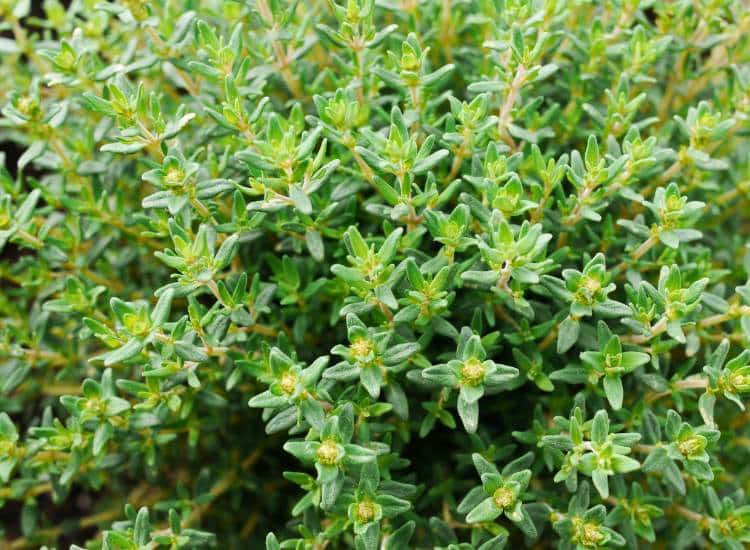
You can use thyme in cooking, but it also makes a tasty herbal tea with excellent medicinal properties. Often used for colds, thyme is one of the best herbs for coughs, whether in a syrup or a soothing thyme tea. Thyme also helps with digestive issues and sore throats.
There are numerous types of thyme you can grow, including lemon thyme, variegated thyme, and wooly thyme. Creeping thymes make an excellent herbal groundcover, but they’re much harder to harvest if you want a lot of thyme on hand for tea. Upright thyme plants will work better for these purposes.
Learn how to dry thyme so you can preserve plenty of this excellent herb for tea and cooking.
Rosemary
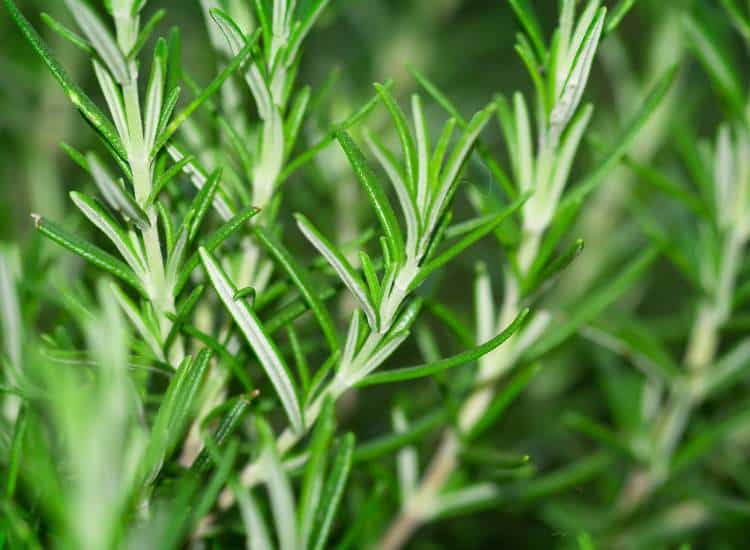
Rosemary is a beautiful culinary herb, and it’s unexpectedly yummy in rosemary tea. Prized for its concentration of antioxidants, rosemary is anti-inflammatory and promotes focus, digestion, circulation.
I’m partial to the greener creeping rosemary, but the silver upright rosemary also makes tasty tea fresh or dried.
Elderberry & Elderflower
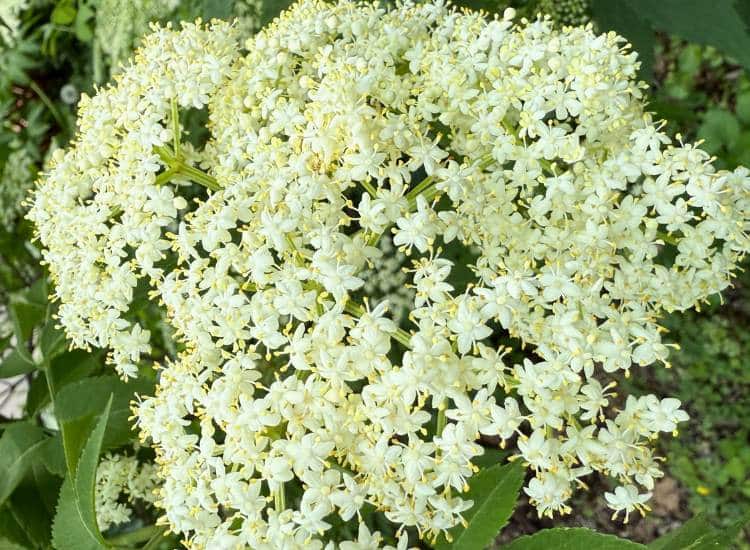
I highly recommend growing elderberry in your garden. This wonderful plant offers you two delicious, medicinal tea options: elderflower and elderberry.
Elderflower tea is a yummy floral tea to enjoy fresh or dried. It’s useful for colds as well, so it’s a good one to keep on hand for cold season. Note that if you pick the flowers, the plant won’t form berries, so plan accordingly.
Elderberry tea is a little different from the other teas on this list, because it’s made by simmering the berries on the stovetop instead of simply pouring water over them as you do with leaves and flowers. Technically the teas made by steeping in hot water are infusions, and elderberries are made into a decoction, but for simplicity’s sake most of us just call them all tea.
Here’s an elderberry tea recipe to try, and here’s more about growing elderberry and elderberry varieties to consider adding to your garden.
Lavender
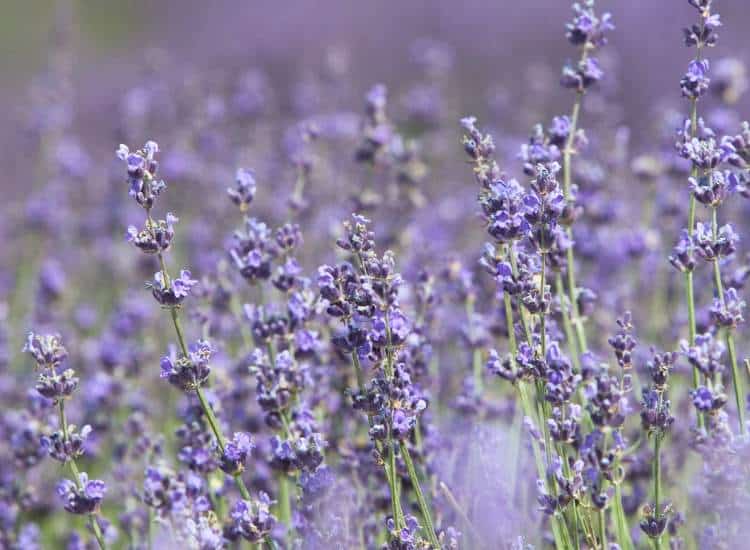
Lavender’s wonderful soothing scent makes it many people’s favorite herb, and it can work in tea as well if you grow the right kind. You’ll want English lavender (Lavandula angustifolia); other lavenders can be quite bitter.
Note that lavender leaves as well as buds can be used for tea, as well as things like lavender sachets and lavender bath salts.
Other Plants from Your Garden You Can Harvest for Tea
You can expand your homegrown herbal tea options by learning which of the plants already growing in your yard can be used for tea, from common landscaping trees to wild plants you may have viewed as weeds.
Here are some of the many teas I’ve made from edible tree leaves and wild plants harvested in my yard or neighborhood.
- pine needle tea
- spruce tea
- linden tea
- dandelion tea
- rose petals and rosehips (rosehip tea)
- goldenrod tea
- raspberry and blackberry leaf tea
- birch tea
- wild violet tea
- mulberry leaf tea
- ginkgo biloba tea
- ground ivy tea
- nettle leaf tea
Here are even more wild teas to explore.
Preserving Your Herb Harvest
Many of these teas can be brewed with freshly-harvested plants, but you’ll want to preserve some of these herbs to enjoy when the growing season’s over.

I highly recommend a collapsible drying screen. I love that it has tons of space for laying out the many different herbs I gather each season but folds up into a small circle that I can tuck away out of season.
I’ve used it to dry huge quantities of foraged Canadian wood nettle, plantain, linden flowers, goldenrod, elderflowers, birch leaves, and so much more.
Ready to grow a delicious herbal tea garden? Pick your favorites and start planting!
Save this info on growing an herbal tea garden for later!
Disclaimer: I’m a health enthusiast, not a medical professional. Content on this website is intended for informational purposes only and is not meant to provide personalized medical advice. I draw on numerous health sources, some of which are linked above. Please consult them for more information and a licensed professional for personalized recommendations.
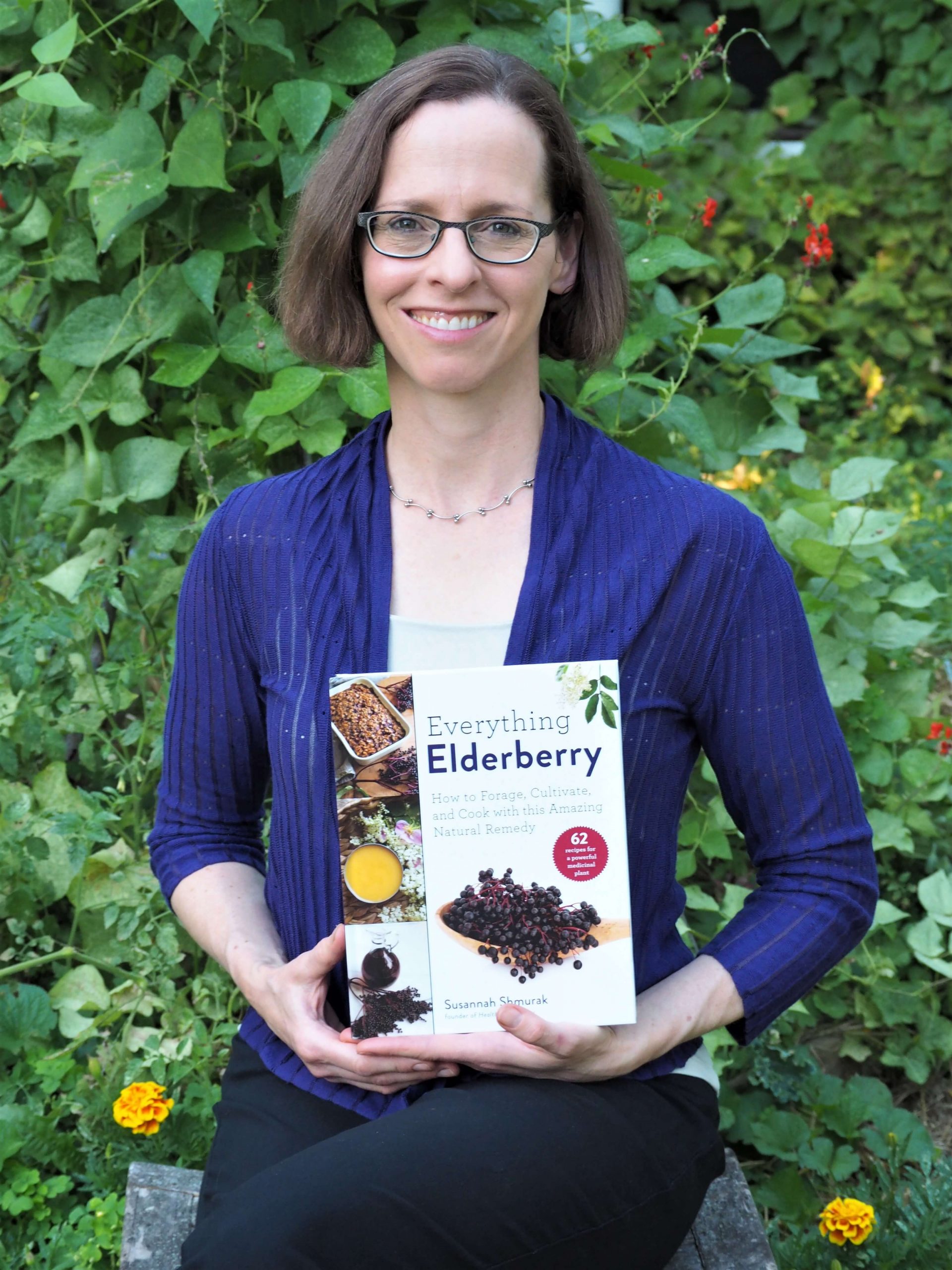
Susannah is a health and environmental writer focusing on gardening, foraging, medicinal plants, and sustainability. Her work has appeared in Mother Earth Living, Ensia, Northern Gardener, Sierra, and on numerous websites. Her first book, Everything Elderberry, released in September 2020 and was a #1 new release in holistic medicine, naturopathy, herb gardening, and other categories. Find out more and grab your copy here.

 Hi, I'm Susannah, a garden geek, energy nerd, and fan of healthy food and natural remedies. Need some simple, practical solutions for living healthier and greener? You've come to the right place! More about me and my green projects
Leave a Reply