
I may receive commissions from purchases made through links in this article at no additional cost to you. Read full disclosure.
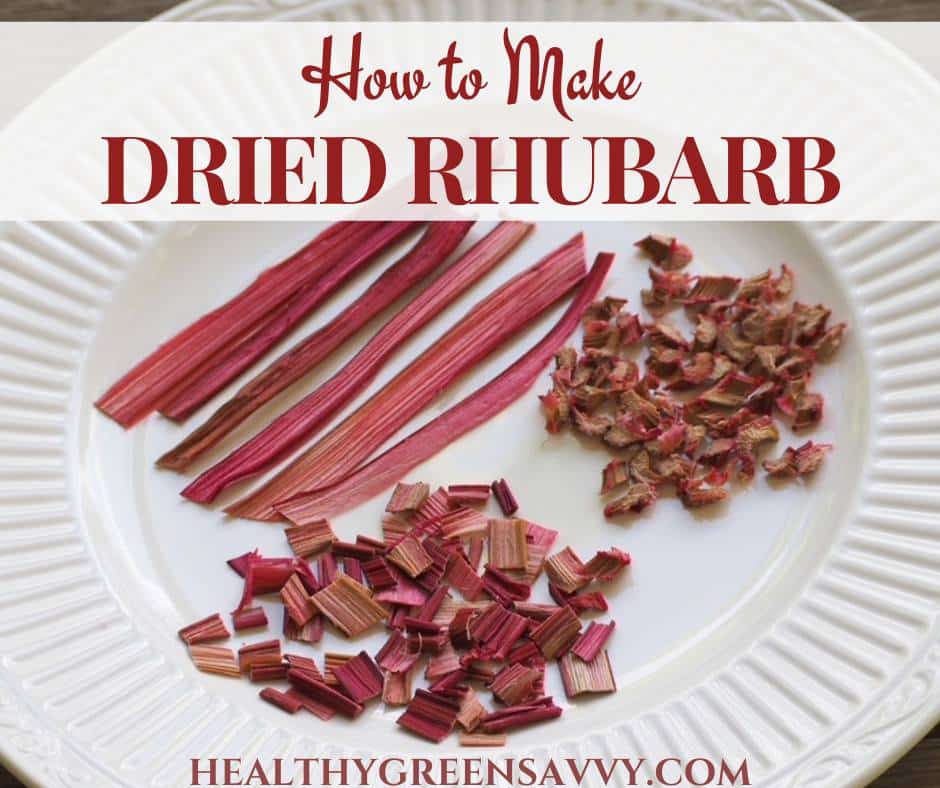
Did you know you can dehydrate rhubarb? Drying rhubarb is an easy, space-efficient way to store your surplus rhubarb. Here’s what to know about drying rhubarb and what to do with your dehydrated rhubarb supply. Plus a time-saving tip you won’t see anywhere else!
WHY DEHYDRATE RHUBARB?
If you grow rhubarb you know how much rhubarb you can wind up with. While you’ll of course enjoy plenty fresh in rhubarb crisps, rhubarb sauce and delicious breads and muffins, you’ll inevitably wind up with more rhubarb than you can use.
I’ve often frozen a lot of my harvest, but gallons of frozen rhubarb can fill a freezer fast! Dehydrated rhubarb, on the other hand, takes up far less space and can be easily stored in a cabinet till you need it.
Rhubarb is a very juicy vegetable, so you’ll be stunned by how little dehydrated rhubarb you wind up with when you’ve removed all that water.
Dehydrating fruits and vegetables is one of the easiest food preservation methods, far simpler than canning. You just slice your fruits or vegetables, lay them on a dehydrator tray or oven rack, and let them dry until they’re crispy.
As with other dried fruits and vegetables, the easiest way to dehydrate rhubarb is using a dehydrator, but it’s possible to use your oven instead. You’ll find instructions for both methods of drying rhubarb below.
–> If you’re not already growing rhubarb, you should definitely consider adding it to your garden. This incredibly easy perennial vegetable produces in abundance with so little work, I can’t imagine paying for rhubarb. Here’s what to know about how to grow rhubarb.
HOW TO DEHYDRATE RHUBARB
Harvest rhubarb stalks, making sure to discard all the leaves. (Here are some uses for rhubarb leaves, which are poisonous and shouldn’t be eaten.)
Rinse stalks to remove dirt and insects. Trim off the ends where the stalk met the leaf and the root, and pat try with a clean dish to
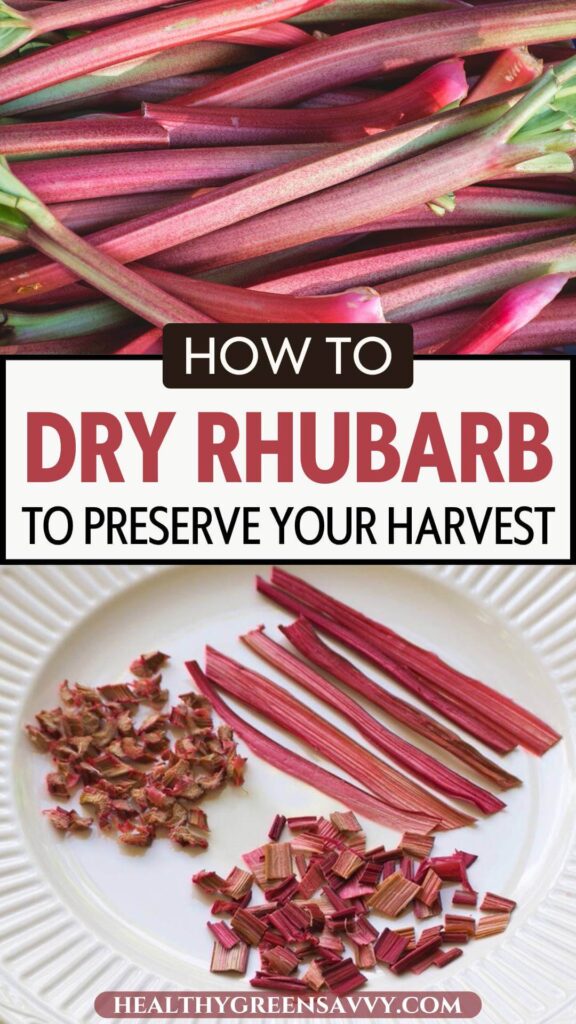
Now, if you were using rhubarb fresh, you’d likely be inclined to chop along the stalk, making lots of little coins, like the ones at the top of the photo below.
BUT if you do when making dehydrated rhubarb, you’ll spend quite some time laboriously arranging all those little pieces on your dehydrator tray. Trust me, it’s a pain when you have a lot of rhubarb to dry!
Here’s what I recommend instead: Use the largest rhubarb stalks you can, and slice them the long way, so you have far few pieces to arrange on the dehydrator. Once the rhubarb dries, you can take a pair of scissors and quickly snip the strips into smaller pieces.
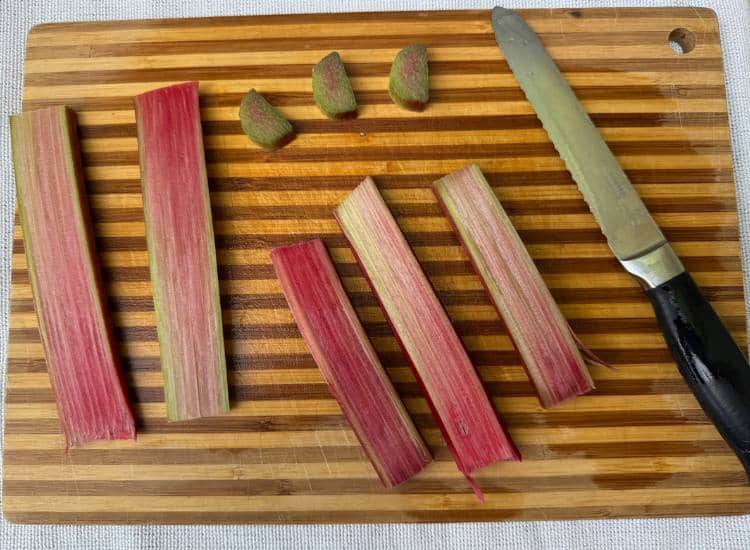
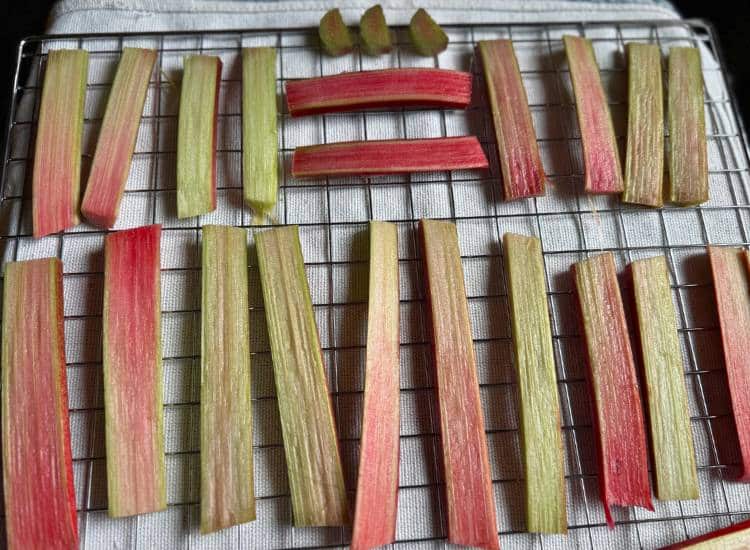
However you choose to cut it, aim for 1/4 inch to a 1/2 inch thickness. Thinner pieces will dry more quickly, but larger ones will probably work better in recipes like pies and crisps. Smaller ones are fine for tea, sauce, juice, and jam.
Rhubarb tends to dry more thoroughly and quickly this way as well. The little chunks I dried remained chewy, while the longer strips became crispy.
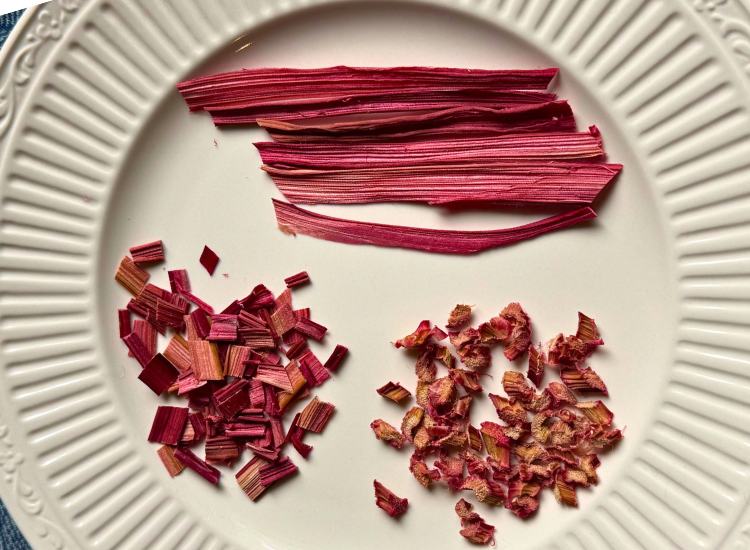
Using this method, you can make tiny pieces of dried rhubarb that are perfect for adding to homemade tea blends, or larger ones you can rehydrate for adding to muffins and crisps.
Drying Rhubarb with a Dehydrator
Arrange chopped rhubarb on a dehydrator tray, making sure the pieces don’t overlap.
Set the dehydrator to 135 degrees and allow to dehydrate for 8 to10 hours. Drying time will vary quite a bit depending on the humidity of your house and how thick you’ve cut your rhubarb.
Check your rhubarb after 5 or 6 hours. Completely dehydrated rhubarb should feel crisp rather than pliable or succulent.
Allow dried rhubarb to sit out for a day before transferring to an airtight container.
Drying Rhubarb in the Oven
If you don’t have a dehydrator, you can use your oven, but maintaining the low temperature setting can be a challenge.
Arrange your chopped rhubarb in a single layer on a baking sheet lined with parchment paper or a silicone mat, making sure they’re not touching or overlapping.
If you have a cooling rack, placing the sliced rhubarb will help air circulate and speed up the process. Put on a baking sheet to catch any drips.
Place the baking sheet with the sliced rhubarb in the oven. (You don’t need to preheat the oven, which just wastes energy.)
Set the oven to the lowest setting, usually 175-200 degrees Fahrenheit. If your oven temperatures can be set lower, aim for around 130. To save energy, you can turn off the oven and check the temperature from time to time, turning it back on if the temperature falls below 130.
You don’t need to fret about keeping the temperature constant. When you’re drying rhubarb — rather than baking a cake — even temperatures aren’t important.
Dry rhubarb for about 2 hours, then check it. If you’re not using a rack of some sort, flip the rhubarb pieces to allow air to reach the underside. Allow to dry for another hour, or until they are completely dry and crispy.
The drying time will depend a lot on the thickness of the slices and the humidity in your house. Thicker pieces will take longer to dry completely.
Fully dried rhubarb will be brittle and snap when you try to bend it.
Once the rhubarb is fully dried, remove from oven and allow to cool.
You can also dehydrate rhubarb using free solar energy from the sun, or make use of the hot, dry air in your car, though it may smell a bit like rhubarb for awhile afterwards.
If you have a little extra time and want an extra-tasty way to enjoy dehydrated rhubarb, I highly recommend trying rhubarb fruit leather.
HOW TO USE DEHYDRATED RHUBARB
Now that you have a nice little stockpile of dried rhubarb, what to do with it?
Use dried rhubarb pieces to add flavor to homemade herbal tea blends or granola.
If you have a sour tooth, you can try chewing on dehydrated rhubarb pieces as an extremely tart fruit chew.
–> Note that you don’t use dried rhubarb the same way as fresh. To use it for things like muffins, you need to rehydrate your rhubarb first.
How to rehydrate dried rhubarb: Put your dehydrated rhubarb in a large measuring cup (I use one like this) or bowl, and pour approximately twice as much boiling water over it.
Allow the rhubarb to soak about an hour, then drain, saving the liquid to use as you would rhubarb juice, which tastes incredible in seltzer. If you’re measuring it for recipes, wait to measure until your rhubarb has been rehydrated.
If you’re making a rhubarb sauce, you can skip draining and let the rhubarb and liquid cook down on the stove.
Dried rhubarb can also be used in some of these creative uses for rhubarb.
If you want to preserve rhubarb in its fresh rather than dried form, here’s what to know about freezing rhubarb.
FAQS
Can you use dehydrated rhubarb in a crisp or muffin?
Yes, dried rhubarb works in baked goods. Follow the instructions above for rehydrating rhubarb.
Do you need to peel rhubarb before dehydrating?
No, it’s not necessary to peel the outer layer of rhubarb.
Do you have to blanch rhubarb before drying?
No. Blanching can preserve the color, but it’s not necessary before drying rhubarb. Mary Bell does say, though, that blanching can reduce dried rhubarb’s acidity, so you can use less sweetener in whatever you’re making with it.
Love the idea of having homegrown dehydrated foods on hand? Learn about dehydrating food of all sorts, and try preserving the season’s bounty by dehydrating peaches and nectarines in summer and pears and apples in fall. Learn how to dehydrate apples or make this incredible sugar-free apple pear fruit leather.
If you’re running the dehydrator, be sure to add some bananas. Chewy dried bananas are out-of-this-world delicious!
Need more ideas for using abundant rhubarb? Check these out:
Save this tutorial on dehydrating rhubarb for later!
Susannah is a health and environmental writer focusing on gardening, foraging, medicinal plants, and sustainability. Her work has appeared in Mother Earth Living, Ensia, Northern Gardener, Sierra, and on numerous websites. Her first book, Everything Elderberry, released in September 2020 and was a #1 new release in holistic medicine, naturopathy, herb gardening, and other categories. Find out more and grab your copy here.

 Hi, I'm Susannah, a garden geek, energy nerd, and fan of healthy food and natural remedies. Need some simple, practical solutions for living healthier and greener? You've come to the right place! More about me and my green projects
Leave a Reply