
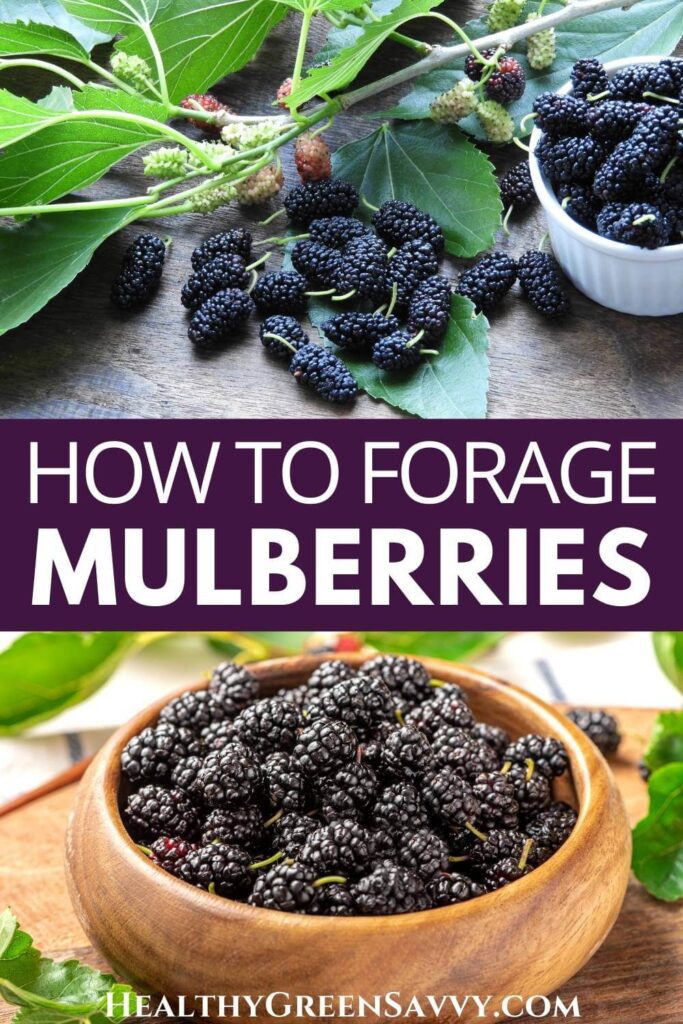

Have you noticed what look like blackberries dangling from trees in your neighborhood? If you’ve ever wondered to yourself whether you can eat mulberries, you’ll be thrilled to know that not only are mulberries edible, they’re delicious and easy to forage! They’re excellent on their own or used in numerous delicious mulberry recipes.
Here’s what to know about identifying edible mulberries for yummy summer eating.
ALL ABOUT EDIBLE MULBERRIES
Though there are some rumors circulating on the interwebs that mulberries have worms or are toxic to humans, these are just misunderstandings, and you can indeed eat mulberries safely.
Mulberries are not only edible and tasty, they’re really good for you! Mulberries are high in fiber and rich in anthocyanins and resveratrol, some of the anti-inflammatory compounds that can help combat oxidative stress. Here’s more on mulberries’ nutritional content if you’re curious.
Low in calories and rich in polyphenols, mulberries are being studied for their health benefits. Research suggests they have a beneficial impact on cholesterol, blood sugar, and fatty deposits in the liver. Some research has also explored mulberries’ effect on stress responses.
Benefits aside, we forage tasty mulberries because they’re delicious on their own or in many scrumptious desserts.
One caveat: Unripe berries may give you a stomachache. Stick with the ripest berries, and avoid ingesting the milky sap (latex) that can make you very ill and can cause allergic reactions in those with latex allergies.
Added bonus for foragers in the know: Mulberry leaves are also edible and nutritious. Harvest the early leaves as a fresh or cooked green, and use older leaves in mulberry tree leaf tea, which is both delicious and full of healthy compounds as well. Foraging expert Samuel Thayer highly recommends the leaves of the red mulberry over other species if you’re able to find one. I have a white mulberry, and the leaves make a very nice tasting tea.
FORAGING MULBERRIES

If you’ve read a bit on this blog, you might have noticed I’m a little obsessed with ways to find *free* healthy foods in unexpected places. Maybe you are, too? If so, keep reading!
That’s why I’ve studied up on making the most of my edible weeds, learned to make spruce tea in winter and harvest spruce tips in spring, discovered numerous uses for dandelions, found recipes using our abundant wild violets, and created a truly delicious anti-inflammatory smoothie using a superfood/weed called purslane. I also harvest yarrow and plantain for medicinal uses.
That’s just the stuff I didn’t plant! I have loads more perennial food growing to harvest all season long. Here’s how I grow a ton of food in a small space with minimal work.
How fun is it to come home with a big container full of juicy berries? In addition to abundant mulberries, you can indulge in loads of delicious juneberries and wild black raspberries as the season progresses. So many fun foraged flavors to explore — check out our collection of more than 40 wild fruits to forage this season!
–> Foraging delicious wild food is just one strategy for making the healthiest food affordable. Find 13 other savvy ways to make healthy food affordable in my e-book, Eating Healthy On A Budget.
Just be sure you’ve got the right plant anytime you forage. There isn’t much out there you’d mistake for a mulberry tree, but read over the identification tips below to be sure of what you’re looking for.
I also highly recommend having a good foraging guide on hand to help you identify other wild plants you might find. Here are the best foraging books to consider for your home library.
IDENTIFYING EDIBLE MULBERRIES
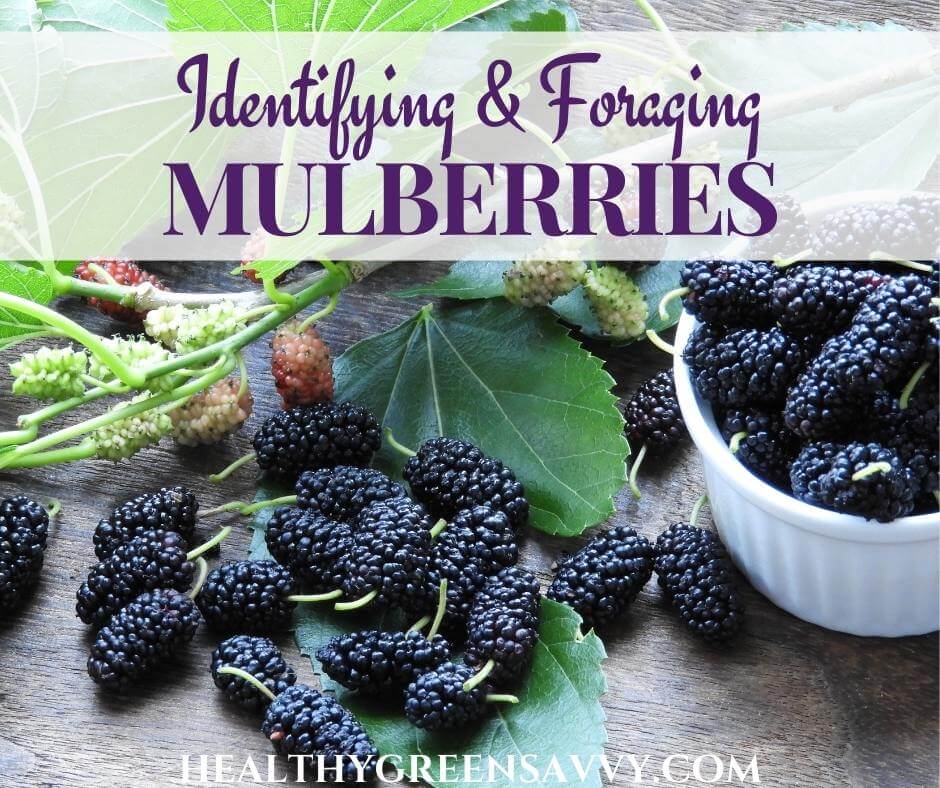
Mulberries are a snap to identify once the fruit is forming, since mulberries are the only trees that look like they have blackberries dangling from their branches. The leaves are quite distinctive as well, described in more detail below.
Mulberries have a long season, starting in early summer, around the same time as juneberries. Because mulberries ripen over many weeks, you can harvest ripe berries and come back for more several times over the course of the season.
In the Morus genus, the mulberry trees commonly found in North America are usually Morus alba, or white mulberry, a species hailing from Asia. (Note that the fruit of the white mulberry is often a dark purple-black, though some trees produce white fruit.) Morus rubra (red mulberry) and Morus microphylla (Texas mulberry) are native to North America but not as common as white mulberry. Morus nigra (black mulberry) is another introduced species and grows primarily in the southern United States.
Foraging expert Samuel Thayer notes that berry color isn’t a reliable way to identify mulberry species, as Morus alba (white mulberry) berries are most often dark purple when ripe. He calls Morus alba trees ‘Asian mulberry’ to lessen confusion. He calls the native Morus rubra American mulberry.
LEAVES
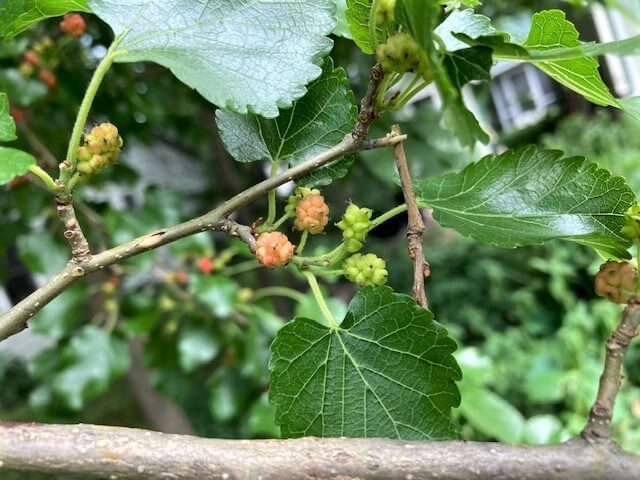
Mulberry leaves are often lobed or heart-shaped, though they vary in shape by variety as well as on an individual tree. The deeply-lobed leaves resemble those of fig trees, which, incidentally, are in the same family.
Leaves grow in an alternate pattern and have short petioles, the stems that attach the leaf to the branch. They tend to have serrated edges and a glossy surface. They may have fine hairs on the underside of the leaf, though you need to look pretty carefully to notice them.
You can see how different leaves from a single tree can look in the collection from one of our mulberry trees below.

BERRIES
Mulberries resemble elongated blackberries. They have a pithy center that remains when you pick the berry (as opposed to wild black raspberries, which are hollow when picked). Mulberry trees can produce black, red, or white berries. Berries vary in size from under 1/2″ to over 1 1/2″ long, depending on variety and growing conditions.
Mulberries can be quite small, just a 1/2 inch or less, or much longer, up to 1 1/2 inches or more.
Here are the little green berries forming on our tree in mid-June.
BARK
Mulberry trees have grey-brown bark, which is smoother on younger trees. Older mulberry trees will have fissures in the bark. Below is a photo of the trunks of one of the mulberry trees growing at the edge of our yard:

EDIBLE MULBERRY LOOK ALIKES
Foraging expert ‘Wildman’ Steve Brill assures us there are no poisonous look alikes. Sassafras leaves can somewhat resemble mulberry leaves, but they have smooth rather than jagged edges and emit the scent of rootbeer when torn. They’re edible as well.
Blackberries and their cousins boysenberry, loganberry, and other berries in Rubus genus look a bit like mulberries as well, but they’ll grow on canes rather than trees.
–> Remember ALWAYS consult a good field guide to be sure you’ve correctly identified any wild plant. An online class like the Herbal Academy’s foraging course can help you gain confidence in plant identification and wildcrafting practices.

HARVESTING TIPS
Mulberries’ dark juice can stain something awful, so wear dark clothes or clothes you don’t mind getting stains on.
Picking all the mulberries from a tree can be slow going, so if a lot of mulberries are ripe at once, you might try placing a sheet or a tarp underneath and giving the tree a good shake to get a lot of mulberries with less effort.
Mulberries don’t keep long, so eat them up in a day or two, or freeze them for later use. If you’re only getting a handful at a time, you can save them up in the freezer until you have enough to make a batch of muffins or pancakes. Try mixing them with other foraged berries for a delicious foraged mixed berry muffin!
If you find yourself with a big bunch of mulberries, try some of these mouthwatering mulberry recipes!
Have you foraged mulberries? What are your favorite ways to use them? Please share in the comments!
Looking for ways to use other delicious foraged foods? Check out these other wild edible plants to explore:
- Purslane recipes from around the world
- Pine needle tea
- Serviceberry recipes
- Uses for crab apples
- Edible Hackberry Fruit
- Strawberry blite
- Pine syrup
- Dandelion tea
Pin to save this info on identifying mulberries edible for later!
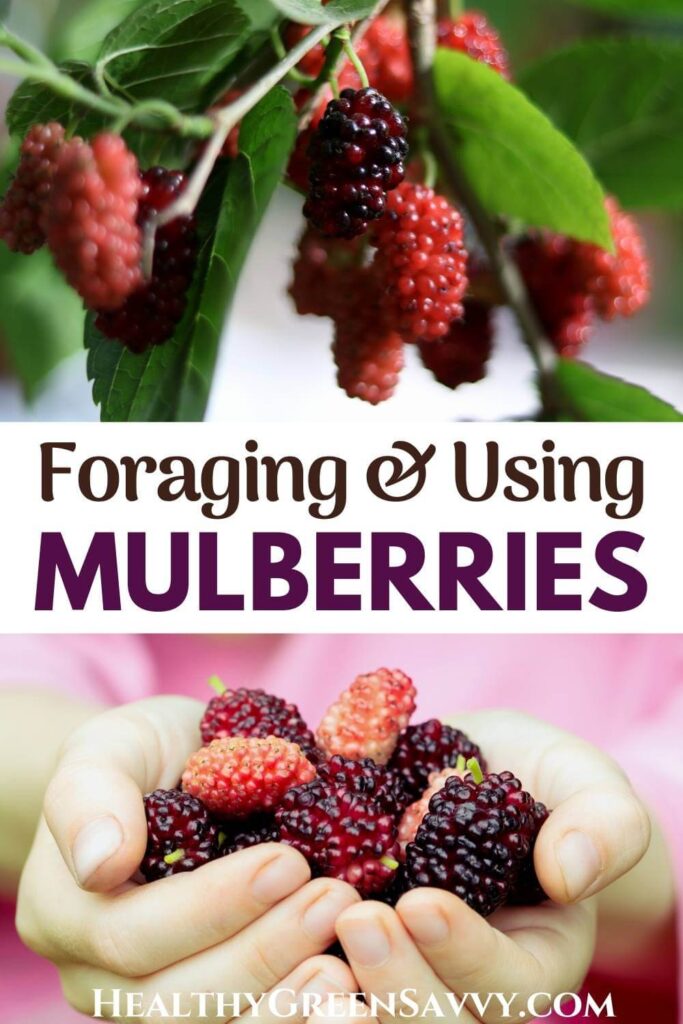
Photo credits: Chiemi Kumitani, Naciye Atlihan, sergiimostovyi; additional pin credits: Svetlana Monyakova, SafakOguz, peredniankina
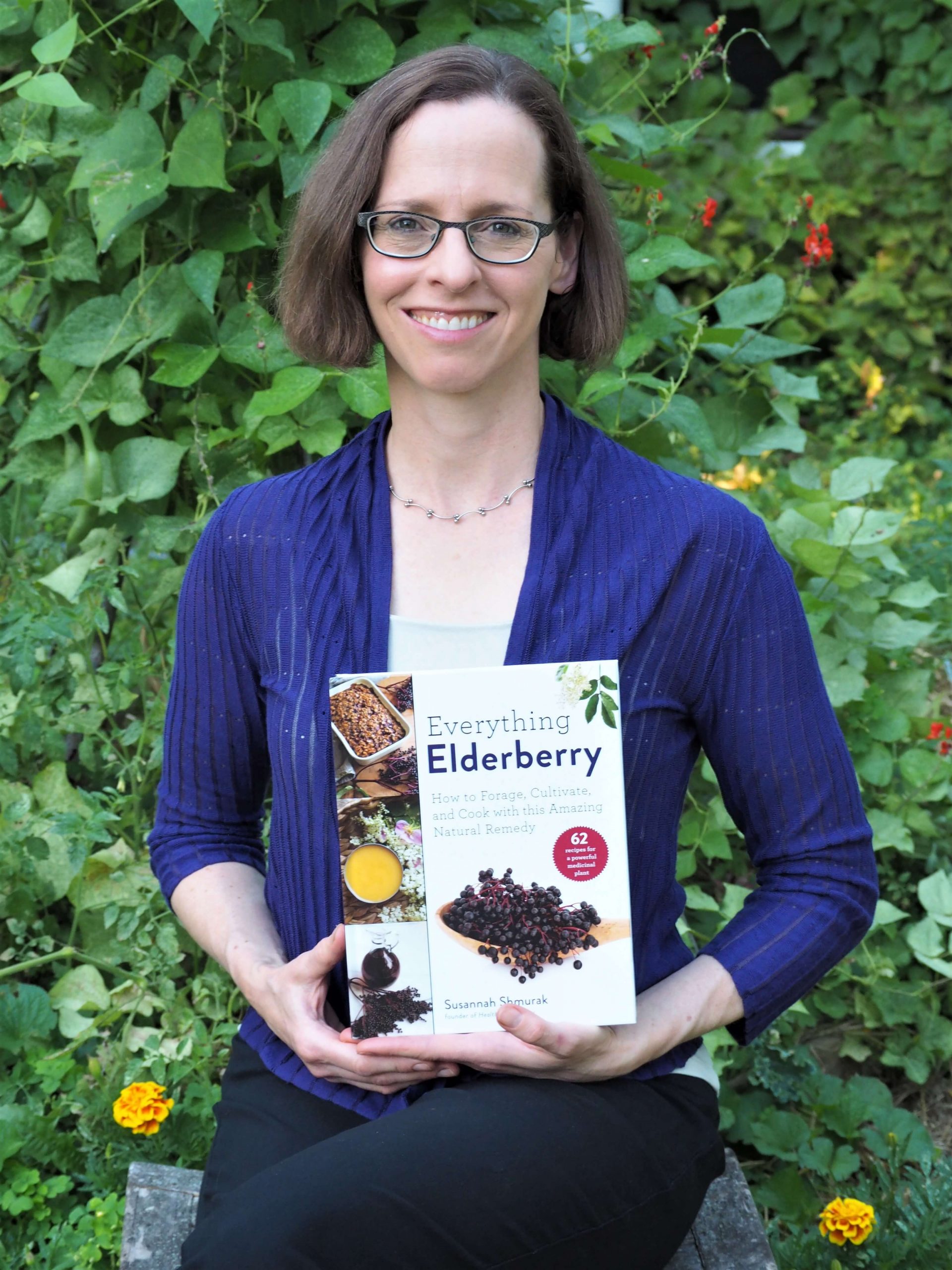
Susannah is a health and environmental writer focusing on gardening, foraging, medicinal plants, and sustainability. Her work has appeared in Mother Earth Living, Ensia, Northern Gardener, Sierra, and on numerous websites. Her first book, Everything Elderberry, released in September 2020 and was a #1 new release in holistic medicine, naturopathy, herb gardening, and other categories. Find out more and grab your copy here.
 Hi, I'm Susannah, a garden geek, energy nerd, and fan of healthy food and natural remedies. Need some simple, practical solutions for living healthier and greener? You've come to the right place! More about me and my green projects
Susan says
I have an ever bearing dwarf mulberry and I’ve plucked a few berries and there’s a lot of green plant growth between the individual “sacs” of the berry and an occasional web or silk stuck to the berries- my question is :,do I need to worry about eating bugs or bug eggs ??? Or is everything edible?
Susannah says
Hmmm… I’ve never seen anything like that, and it sounds like you might want to run it by someone at your local extension service or the nursery where you bought the plant. It could be bugs, but it could also be some type of plant disease. As to whether to worry about eating bugs, that’s somewhat of a regional and somewhat a personal decision, I can’t say for certain that eating these bugs would hurt you or not 🙂 Hope you get some answers from a local expert!
Sam says
I have mulberry trees in my yard and I always notice these little small light brown worms that crawl on them. Not exactly sure what kind of worms they are but if I don’t put them in strong enough salt water. They will not die. Does anybody else see these worms on their berries?
Susannah says
Mulberry trees are famously popular wiht silkworms. Is it possible that’s what you’ve got?