

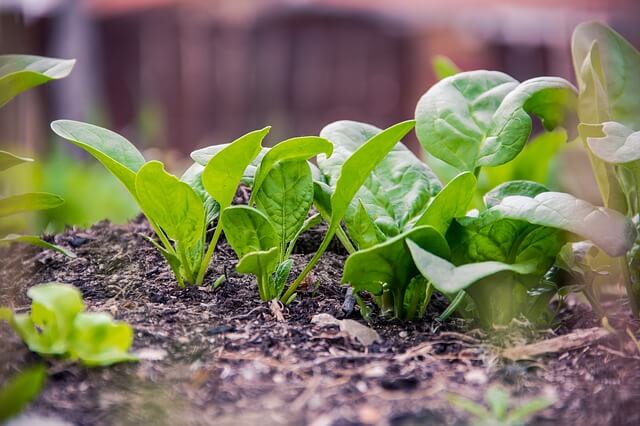
Looking to boost your yields of delicious spinach and get more out of your garden this year? Consider growing your spinach alongside some of the best spinach companion plants to make the most of your garden space.

WHY CHOOSE SPINACH COMPANION PLANTS?
Those of us with smaller gardens are always looking for ways to grow more food in less space. Companion planting is a smart way to fit in more crops while improving the yields of both your spinach and its companion plantings.
Permaculture is another. Find out how to start a permaculture garden to grow more food with less work.
Like zucchini companion plants and strawberry companion plants, spinach can benefit from growing near other plants that help protect against pests and disease and improve yields. In turn, planting spinach near these other crops may benefit them as well.
In general, pests and diseases are more likely to cause problems when you grow a lot of a single crop. The diversity you gain in the garden from interplanting different crops can help thwart insects and diseases that may damage your harvest.
In some instances, substances in your spinach companion plant will benefit the health and growth of your spinach plants and vice versa.
Interested in trying companion planting? Here are some rhubarb companion plants and elderberry companion plants to look into as well.
SO WHAT IS COMPANION PLANTING EXACTLY?
Companion planting is a garden technique where different plants are planted near one another for mutual benefits. This savvy gardening strategy can improve fertility, protect against pests, and encourage pollination.
Companion planting can benefit your garden in many ways:
- Boost yields
- Encourage beneficial insects while keeping pests at bay
- Limit weed growth
- Protect the health of plants
- Save garden space
- Promote pollination
- Diversify garden crops
Intrigued? Here are more than 35 excellent choices for spinach companion plants to plant this season.
For step-by-step growing information, be sure to check out this post on how to grow spinach.
WHERE TO BUY SEEDS FOR SPINACH COMPANION PLANTS
You can find seeds for these spinach companion plants at most garden centers and online from your favorite seed supplier. High Mowing Seeds, Botanical Interests, Eden Brothers, True Leaf Market, and Seeds Now carry many of them. You can also find a huge selection of seeds of all kinds from small growers on Etsy.



You can also probably get a number of seeds from friends who buy fresh packets every year, since most seed packets come with waaaaaay more seeds than a home gardener needs.
Some libraries and community organizations host seed exchanges and giveaways, another way to get spinach companion plants for free.
Pro tip: Though most people think of spinach as a spring vegetable, you may have more success planting it toward the end of the growing season. Spinach bolts in heat, so in areas with short springs, the spinach season can get cut very short. However, spinach loves cool weather, and a good frost will make your spinach far more flavorful and sweet than any you’ve ever tasted.
TOP SPINACH COMPANION PLANTS
Some of the best spinach companion plants will include those with powerful smells to deter pests or those requiring very different nutrients. If your spinach growing season might be shortened by heat that causes spinach to bolt, growing more heat-tolerant plants that can shade your spinach is another possibility to consider.
Below is a long list of possible companion plants for spinach, but there are a few to put toward the top because they’re so well suited to growing as spinach companion plants.
RADISHES
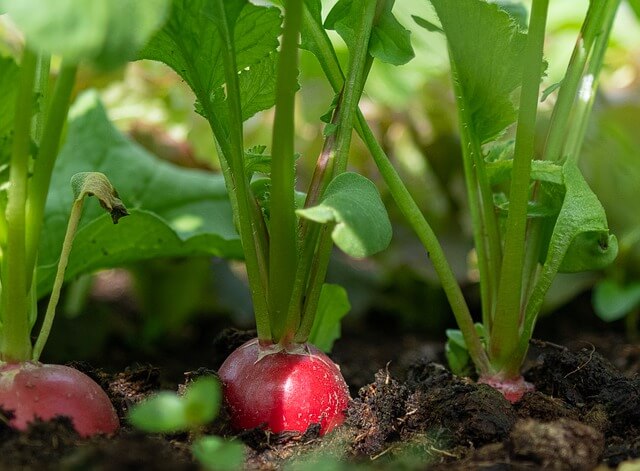
These fast-growing vegetables will attract flea beetles that might attack your spinach crop, but since the root is what you’re going to harvest, some damaged radish leaves shouldn’t cause too much of an issue.
Seeds Now has a wide array of radishes to choose from.
Don’t care for radishes? Me neither! But I absolutely adore these delicious Japanese salad turnips, which are succulent and sweet, with none of the bite that radishes have. Also members of the brassica family, salad turnip leaves should likewise help lure away pests that would eat your spinach.
GARLIC
The powerful odor of garlic (and other alliums) helps deter pests, especially aphids, beetles, and slugs. It also accumulates sulphur in the soil, which then is available for your spinach plants to use.
Garlic may also help with Japanese beetles, so consider planting some near plants prone to infestations, like roses, elderberries, and grapevines.
Garlic is planted in the fall, so when your garlic shoots appear in spring, it’s time to tuck in some spinach companions for them to grow with.
Here’s what to know about how to grow garlic.
NASTURTIUMS
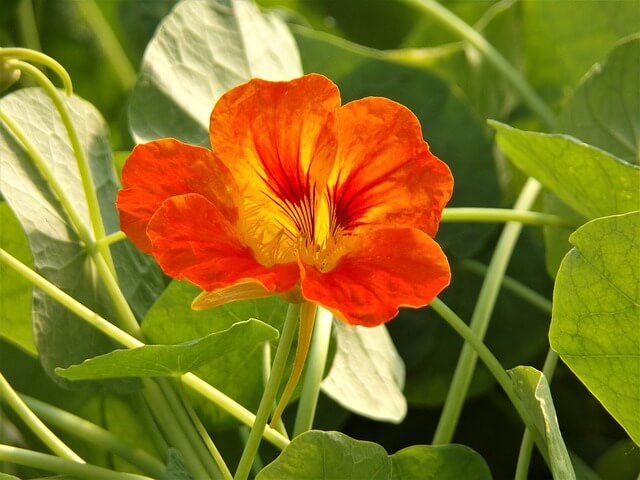
These gorgeous and spicy flowers are a wonderful addition to the garden and the salad bowl. They repel beetles and aphids, and both leaves and the beautiful edible flowers are full of flavor.
Botanical Interests carries a stunning array of these garden lovelies. Check out ‘Black Velvet’ or ‘Mahogany’ for some elegant color as well as benefits for your spinach crop.
Below are lots more spinach companion plants to consider.
ALLIUMS
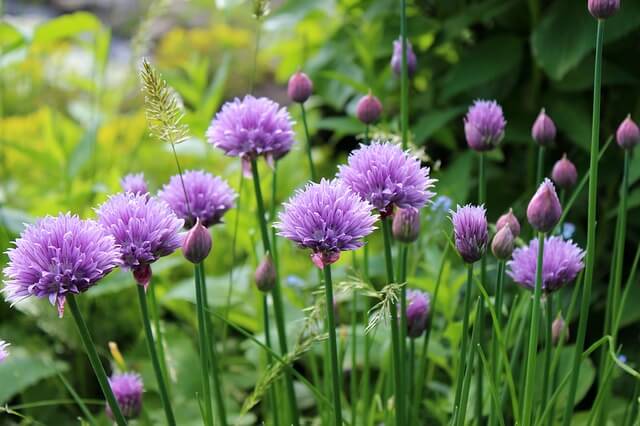
Like garlic, other alliums like leeks, chives, scallions, and onions give off pest-repelling odors and add useful nutrients to the soil for your spinach to use.
Alliums to grow as companion plants for spinach:
BRASSICAS

Brassicas — including radishes, turnips, broccoli, kale, arugula, mustard greens, bok choy, and cauliflower — require different nutrients and pull from different soil depths than spinach, so these spinach companion plants won’t be competing with your spinach crops.
Additionally, brassicas work as a natural fungicide for your soil, which can benefit many crops in your garden.
Check out the varieties of brassica you can choose as spinach companion plants at Eden Brothers and Botanical Interests.
Brassicas to consider:
- Radishes
- Turnips
- Arugula
- Bok choy
- Kale (I recommend growing a lot to keep you in addictive baked kale chips!)
- Broccoli rabe
- Broccoli
- Cauliflower
- Collards
- Brussels sprouts
- Cabbage (here are instructions for how to grow cabbage)
- Mustard greens
- Kohlrabi
- Romanesco broccoli
BEANS & PEAS

Legumes like beans and peas fix nitrogen from the air into the soil. Since spinach requires nitrogen to thrive, planting them together helps feed the spinach. In turn, the spinach helps crowd out weeds at the base of your bean and pea plants.
There are SO many choices of beans and peas to grow! In addition to your garden staple snap peas and green beans, check out some of the fantastic varieties of beans to dry for your next bean soup!
Some of my favorites:
- Calypso bean
- Scarlet runner bean (can be grown as a perennial vegetable in milder climates)
- Purple dragon’s tongue (best fresh-eating bean out there, IMO)
You’ll find loads more bean varieties to choose from at Seeds Now, High Mowing Seeds, Eden Brothers, and True Leaf Market.
NIGHTSHADES

The nightshade family includes garden favorites like tomatoes, eggplant, and peppers. It also includes potatoes, which are generally not recommended as a companion plant for spinach because it competes with spinach for nutrients.
Tomatoes, eggplants, and peppers, on the other hand, do not, and their leaves may offer some beneficial shade for your spinach, which in turn can help with weed suppression at their base.
Note that nightshades love heat, which means their planting time is considerably later than spinach. Your spring spinach will likely be coming to the end of its season as it’s time to put out your transplants of tomatoes, peppers, and eggplant, and these plants may help extend the spinach season a bit longer while you wait for these slower crops to bear fruit.
In late summer, interplant your fall spinach among your nightshades to get more out of your growing space.
The variety of nightshades available is mind-boggling. Whether you’re looking for cherry tomatoes, slicers, hot or sweet peppers, or eggplant, know that you have a lot of decisions to make!
Here are dozens of tomato varieties to consider. Did you know how many pepper and eggplant options exist?
If you have a less sunny yard and a short growing season like I do, you may find getting these crops to maturity a challenge. Here are a bunch of vegetables that grow in shade to consider instead.
CURCUBITS

Like nightshades, cucurbits — which include squash, melon, and cucumber — don’t compete with spinach for nutrients. Especially when grown vertically, cucurbits benefit from the weed suppression offered by spinach.
With big sprawling vines trailing on the ground, you need to be careful that your cucurbit vines don’t crowd out your spinach. But because most cucurbits aren’t planted till the soil warms, your spring spinach will likely be winding down by the time your squash and melon vines are taking off.
Cucurbits to consider:
- Cucumber
- Watermelon
- Cantaloupe
- Pumpkin
- Spaghetti squash
- Zucchini (fantastic in zucchini chips or in other healthy zucchini recipes)
STRAWBERRIES
Strawberries are a must in the home garden. They also make a fantastic companion plant for spinach because they keep the soil shaded and cool the way spinach plants like it. In turn, the saponin in spinach helps prevent diseases that strawberries are prone to.
Strawberries and spinach get their nutrients from different levels of the soil, so they don’t compete for them.
Seeds Now carries a couple of varieties of popular strawberries. If you want a larger variety, I’ve liked my experiences ordering from Hirt’s Gardens, which has competitive prices and good service.
STRONG-SMELLING HERBS
Interplanting fragrant herbs with your spinach can help repel pests and give you a second crop of herbs from your growing space. A few to consider:
If you love growing herbs like I do, be sure to check out these options for herbs that grow in shade, perennial herbs, and herbs for a medicinal herb garden.
CROPS TO AVOID PLANTING WITH SPINACH
While it can seem from the list above that pretty much anything can work as a companion plant for spinach, there are a few crops to avoid planting near your spinach patch.
- Potatoes: Though in the nightshade family, potatoes will compete with spinach for nutrients, so they’re generally not recommended as spinach companion plants.
- Fennel: Fennel emits a compound that inhibits the growth of other plants, so it should be planted well away from your spinach (and other crops as well).
- Dill: Though young dill may benefit your spinach, as it matures, dill can inhibit other plants growing near it. Though some people recommend dill as a companion plant for spinach, they note that you wait to plant it until spinach is about 1/3 of its mature size. With all the other options available, I don’t why a busy gardener would make extra work and take extra risk trying to get the timing right.
Last, I’ve seen tansy recommended as a companion plant for spinach several times, and while it may well benefit your spinach, it’s not a great choice for the home garden. Why? In addition to causing skin reactions in some people, tansy is quite toxic, causing liver damage that can be fatal if ingested. Why would you put a potentially dangerous plant in your garden instead of growing more food?
LEARN MORE ABOUT COMPANION PLANTING
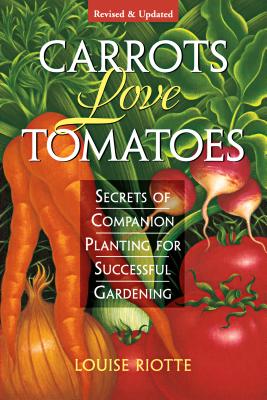
Want to know more about companion planting for crops in your garden? The go-to guide to companion planting is Carrots Love Tomatoes by Louise Riotte. Here are some of the other best gardening books to consider for your home library.


Have you tried growing any companion plants for spinach? Please share your favorites in the comments!
If you grow a ton of spinach with these helpful companion plants, you might want to freeze some to use after the season ends. Here’s what to know about how to freeze spinach.
Pin to save this info on spinach companion plants for later!

Spinach companion plants photo credits: Deiyan Georgiev, Devanth, Michaela Wenzler, The Zesty Bohemian, Leonie Schoppema, OlinEJ, NewWorldPics, Katharina N., Alexei_other, Milosz Guxowski, koromelena

Susannah is a health and environmental writer focusing on gardening, foraging, medicinal plants, and sustainability. Her work has appeared in Mother Earth Living, Ensia, Northern Gardener, Sierra, and on numerous websites. Her first book, Everything Elderberry, released in September 2020 and was a #1 new release in holistic medicine, naturopathy, herb gardening, and other categories. Find out more and grab your copy here.

 Hi, I'm Susannah, a garden geek, energy nerd, and fan of healthy food and natural remedies. Need some simple, practical solutions for living healthier and greener? You've come to the right place! More about me and my green projects